
Why everyone should wear mask

Health ministry issues advisory, precautionary measure for asympromatic people

geetanjali

Geetanjali Minhas | April 5, 2020 | Mumbai

#mask   #healthcare   #epidemic   #coronavirus   #COVID-19   #health ministry  
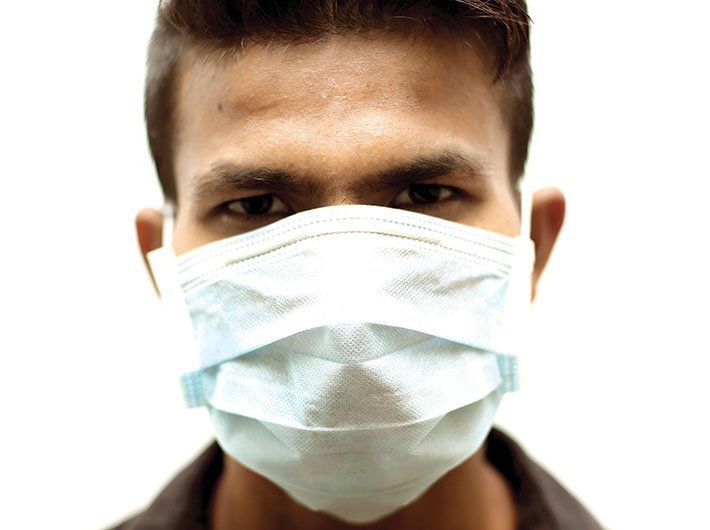
(Representational image: GN Photo)

In view of the increasing number of COVID -19 cases in the country, the ministry of health and family welfare (MoHFW) has now advised that everyone must voluntarily wear a mask and especially those living in densely populated areas.
 
Not just as a matter of maintaining personal hygiene but also looking at overall health conditions, the ministry has advised that general public while stepping out of the homes must wear a cloth mask. “It is suggested that such people who are not suffering from medical conditions or having breathing difficulties may use the handmade reusable face cover (mask) particularly when they step out of their house. This will help in protecting the community at large,” says the advisory issued on Saturday.

These face covers could be made out of any clean cotton cloth available at home which must be thoroughly cleaned and washed before stitching or preparing them. The mask should be prepared in such a manner that it covers the mouth and nose completely and can be easily tied around the face.

India has been facing acute shortage of medical masks and PPE for doctors, healthcare workers and others on the frontline since the outbreak of coronavirus. These cloth masks however are not to be worn by health workers, those in close contact with COVID-19 workers or patients.

“Wearing homemade reusable face covers (masks) is a preventive measure to reduce the chances of inhaling droplets in the air from an infected person and do not give full protection.”

Homemade reusable face covers must be washed and cleaned every day as instructed in the ministry manual on Homemade Protective Cover for Face and Mouth, should be never reused without washing nor shared with anyone. The manual has step by step guidelines for making face covers for curbing the spread of SARS- COV-2 Coronavirus.   

Social distancing must still be maintained. Besides frequently washing hands with soap and water for 20 seconds, the guidelines emphasize repeating the same before wearing and after removing the mask besides strictly maintain social distancing.
     
A  recent study, titled ‘Presymptomatic  Transmission of SARS -COV-2-Singapore, January 23-March 16, 2020’, published in CDC’s Morbidity and Mortality Weekly Report, has documented seven clusters of COVID-19 cases in Singapore that were fueled by infected people who showed no signs of illness thus making it clear that asymptomatic people are spreading the virus. Regions like Singapore and Taiwan where people wear masks on a routine basis have not witnessed uncontrolled spread of the virus.  


Comments


Other News

The Sardar biography that throws light on our times

Patel: A Life By Rajmohan Gandhi Aleph Books, 568 pages, Rs 1,199   There are many biographi

Climate change, El Niño rewrite Indian monsoon

The month of July exceeded its rainfall target despite forecasts of a below-normal month under a strengthening El Niño. The reason could be that climate change is amplifying monsoon complexity: West Pacific warming, Western Disturbances and evolving ocean conditions increasingly interact with El Ni&

Mumbai has just 1.28 sq.m. of open space per person: Study

Mumbai`s public space crisis is as much about mismanagement as it is about scarcity, and offers a governance roadmap that can be implemented without new legislation, according to a new report by the Urban Design Research Institute (UDRI) and the NGO Alliance for Governance and Renewal (NAGAR).  

Lok Sabha passes amendment bill to improve public examination system

The Lok Sabha on Wednesday passed the Public Examinations (Prevention of Unfair Means) Amendment Bill, 2026 by a voice vote after an extensive discussion. Replying to the debate, minister of state (independent charge) for science & technology; earth sciences and MoS in the PMO, Dr. Jite

Shri Abhijit Phukon (IES, 2004) appointed as Joint Secretary, Department of Agriculture & Farmers Welfare.

 Shri Abhijit Phukon (IES: 2004) has been appointed as Joint Secretary, Department of Agriculture & Farmers Welfare, Government of India. His appointment, approved by the

Shri Avanish Kumar Mishra (ISS, 2000) appointed as Joint Secretary, Department of Administrative Reforms & Public Grievances.

 Shri Avanish Kumar Mishra (ISS: 2000) has been appointed as Joint Secretary, Department of Administrative Reforms & Public Grievances (DARPG), Government of India. The appointment, approved by the Appointments

Upcoming Conferences


-->

Archives

Current Issue

Opinion

Facebook Twitter Google Plus Linkedin Subscribe Newsletter

Twitter






