Beware of dalit fury

Dalits are increasingly becoming restless and are now gearing up to dictate the political discourse of this country

rahul

Rahul Dass | August 19, 2016


#Narendra Modi   #Rohith Vemula   #scheduled caste   #Mayawati   #Dalit   #Una   #Dalit Protest   #Dalit Atrocities  
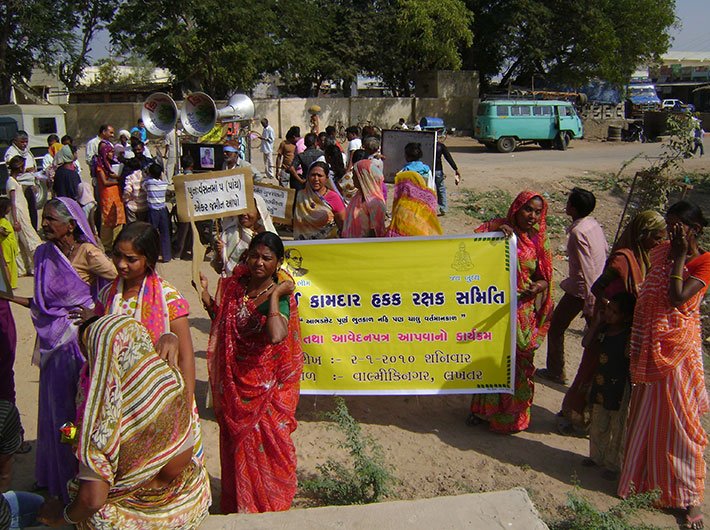
Anti-manual scavenging rally in Lakhtar taluka, Gujarat

A mass mobilisation of dalits is now taking place across the country, a move that may well change the way they have been treated over the years. The dalits are upset, particularly after four of them were ruthlessly beaten up by cow vigilantes in Gujarat’s Una town.

“We will be congregating in Delhi during the winter session of parliament. We will tell the national leadership that the dalits are restless. They are feeling cheated and their voices are not being heard,” Ashok Bharti, chairman, National Confederation of Dalit Organsiations (NACDOR), told Governance Now.

“We do exist and the political system has to deliver,” said Bharti while making an impassioned plea for the rights of dalits.

He said that the congregation will take place at Ram Lila Maidan on November 22 and “people from across the country will attend”. He said that a charter of demands will be prepared and handed over to the political leadership.

Referring to the Una incident which sent shock waves through the country, Bharti explained that “Una is not the turning point. It is part of the process. After all, every tide is followed by a bigger tide”.

There have been a string of incidents against the dalits in the recent past in the country. Besides, four dalits being mercilessly beaten up by cow vigilantes in Gujarat, a dalit family was attacked in Karnataka over rumours that they had eaten beef and a dalit couple was hacked to death over Rs 15 in Uttar Pradesh.

There are about 200 million scheduled caste people in the country. What this means is that a sixth of the Indian populace feels that their rights are being repeatedly violated.

According to the International Dalit Solidarity Network, India’s demographic imbalance is reflected in the number of SCs of which there are 103.5 million males and 97.9 million females. More than three-fourths of India’s SCs are still living in rural areas, but since the 2001 census, there has been a 40 percent increase in the number of SCs living in urban areas.

This figure is now approaching 50 million, while more than 150 million still live in rural India. India’s scheduled castes are distributed across 31 states and union territories. The states with the highest total numbers of SCs are Uttar Pradesh, with more than 40 million, and West Bengal with approximately 20 million. The less populous Punjab has the highest proportion of SCs to its total population – 31.9 percent.

Well aware of the anguish among the dalits, prime minister Narendra Modi had tried to assuage their feelings. "If you have a problem, if you feel like attacking someone, attack me, not my Dalit brothers. If you want to shoot anyone, shoot me, not my dalit brothers," said Modi on August 7 in Hyderabad, the home of dalit scholar Rohith Vemula who committed suicide on January 17, triggering a students' agitation.

Bahujan Samaj Party leader and former Uttar Pradesh chief minister Mayawati was quick to point out that Modi’s statement outside parliament was “politically inspired and mischievous”.

“After incidents like Rohith Vemula's death and Una, the BJP's image among dalits has taken a beating. That's why this is damage control," she alleged and added, "Dalits don't need the PM's sympathy. Instead, he should ensure that dalits can exercise their constitutional rights."

The political colours are quite clear as key elections will be held next year in Punjab and Uttar Pradesh where dalit votes matter. Later in the year elections will be held in Gujarat, where dalits are already unhappy with the BJP government after the Una attack.

The congregation of dalits in Delhi could well set the stage for them to have a greater say in the political and social narrative.
 

Comments


Other News

What the US–Iran peace deal means for India

After months of rising tensions, the United States and Iran have reached a memorandum of understanding called the "Islamabad Agreement." This agreement allows for the immediate reopening of the Strait of Hormuz without tolls and provides Iran with relief from sanctions, depending on its complianc

V. M. Tarkunde: A legal luminary par excellence

14 Lawyers: Portraits from The Bar By Raju Ramachandran  Juggernaut, 248 pages, Rs. 799  

The Cost of Obesity

The latest episode of Checks and Balances focuses on the ticking time bomb of obesity in India, and Geetanjali Minhas of Governance Now spoke with a panel of experts. You can watch the episode here: https://youtu.be/mH

US-Iran deal: Path to peace or prelude to deeper regional quagmire?

In the midst of deep mistrust, the US and Iran are reported to have reached a framework deal for ending the West Asian conflict. But whether it will result in any meaningful breakthrough or pave the way for any lasting peace in the region, is in the realm of speculation.   During

Lived life, philosophy, spirituality and other enigmas

The Ashes Are Warm: Memories of a Lifetime Spent with UG Krishnamurti By Mahesh Bhatt and Sunita Pant Bansal Rupa Publications, 384 pages, Rs 495  

In Varanasi, fringe expansion vs. core heritage

For centuries, the urban framework of Varanasi was defined not just by its relationship with the sacred Ganga but by its multifaceted network of urban commons. Historic kunds, seasonal talabs (ponds), and open maidans served as the city’s basic ecological infrastructure. Th


Archives

Current Issue

Opinion

Facebook Twitter Google Plus Linkedin Subscribe Newsletter

Twitter