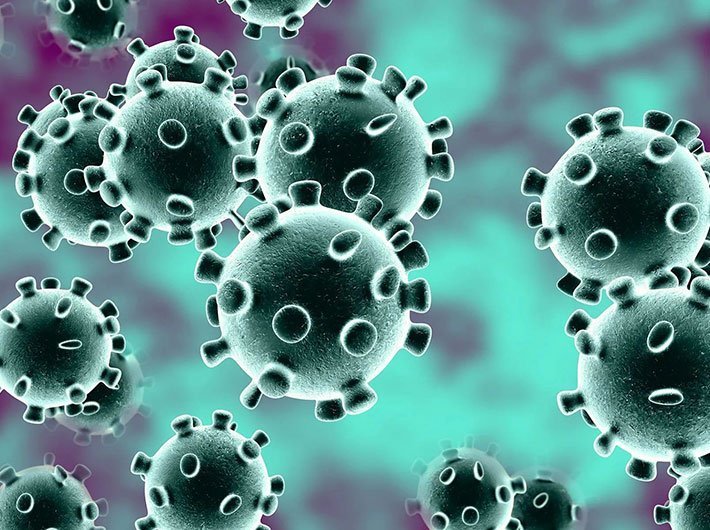
In a bid to break the “chain of transmission” of the deadly Covid-19, India, a country with more than 1.3 billion population, observed a voluntary ‘Janata Curfew’ on March 22. This has been followed by a 21-day, nationwide lockdown from March 24. Prime minister Narendra Modi also requested people to gather at their gates, balconies and rooftops to clap and bang utensils as a gesture to acknowledge and appreciate the efforts of the country’s healthcare workers
It is not a hidden fact that the number of confirmed Novel Coronavirus cases in India have been growing at a rapid rate. Many public healthcare experts have also discussed the possibility of an exponential rise in infections in the coming weeks. Time and again, healthcare professionals have explained how the outbreak of the coronavirus pandemic might be worse in India, considering the country’s high population density. According to the World Bank, there are 455 people per sq. km in India, compared with 148 people in China, 205 people in Italy and 50 people in Iran. Additionally, a recent data issued by the Union Health Ministry shows that India has only one isolation bed per 84,000 people and one quarantine bed per 36,000 people. Another report estimates that India has only 40,000 working ventilators for the huge population. Moreover, we have no accepted prophylaxis or treatment for this entity. Such reports amid the Covid-19 scare only highlight that we in India are woefully unprepared to face this disease if it badly hits the community at large.
One of the highly exposed and vulnerable groups to the pandemic is the healthcare personnel, working tirelessly across the country. There have been instances when the healthcare personnel have highlighted the issue of shortage of quality personal protective equipment available. In a country like India where healthcare is delivered mostly by the private sector, estimated to be about 73%, medical care is not just a matter of accessibility and affordability, but also quality, as demographic and epidemiological changes are shifting the disease burden. With Covid-19 spreading rapidly across the globe, the Indian government is trying its best to contain the virus by taking up certain precautionary measures. But the question is, is only government action enough?
Imagine a hypothetical situation: What if the pandemic spreads even further through the country via community transmission – as some experts worry. Is India prepared to contain it? This is the time to wonder if India’s healthcare apparatus is equipped well enough to diagnose, prevent and cure a rapidly expanding communicable disease like coronavirus when medically far more advanced countries like Italy, the UK or the USA are unable to cope with it.
The death rate across the world with respect to Covid-19 suggests that the elderly population is at a maximum risk, especially those with underlying conditions like uncontrolled diabetes, hypertension, lung diseases or diseases with immune-compromised status. According to the WHO, India has the highest TB burden. Out of the 10 million people diagnosed with TB in 2018, 26,90,000 people are in India. Heart disease and stroke together contribute 28.1% of total deaths in India in 2016. As per the Global Hunger Index (GHI) 2019, India’s child stunting rate stands at 37.9%, which is categorized as very high in terms of its public health significance. Only 9.6% of all children between 6 and 23 months of age are fed a minimum acceptable diet in the country.
In this context, it is appreciable that the Ministry of Health has so far been able to handle the spread of the virus through airport screenings, testing and quarantining. But the big question is, will India be able to escape the “community transmission” it has been trying to play hide-and-seek with so far? This disease does remind us of the famous Spanish Flu of 1918 which though a pandemic did affect the Indian subcontinent more severely than anywhere else in the World; it killed 18 million in India alone and brought the moral hypocrisy of then governing British to the fore (they had a much better healthcare infrastructure in Britain than in their colonies). Fast forward more than a century, the health infrastructure in India is far better than that in the colonial British era, but it is quite clear that we do require innovations in drug and healthcare infrastructure even now.
It is crucial to understand that while the biggest healthcare scheme, Ayushman Bharat, aims at increasing accessibility and affordability at present, emphasis on quality will become the main focus in near future. It will be unacceptable if Indians die due to poor quality of healthcare rather than due to access to healthcare. According to a new study published by the medical journal, The Lancet, 1.6 million Indians die due to poor quality of care, nearly twice as many as due to non-utilisation of healthcare services. I sincerely believe that quality should be the next frontier health services goals and there should be a fair balance of quality along with affordability. Any health service would be a waste, ineffective and unethical if the aspect of quality is missing.
For a developing country like India with a massive population and evolving health infrastructure, it will not be possible to overcome the coronavirus crisis without improved access to globally renowned quality and innovative healthcare of both drugs and equipment. India will have to gear up and prepare itself for the long battle coming its way. As a country with limited resources, we need to come up with innovative solutions and globally harmonised policies. The need to fight Covid-19 virus should serve as a clarion call towards a longer-term vision involving more investment in healthcare sector by both government and private players.
This is the right time for us the Indians to rethink our healthcare priorities in line with a globally harmonized system that will not only ensure the quality of products but also enable an ecosystem for manufacturing and research for benefit of patients in India. Realizing the existing infrastructural gaps – the need of the hour is to work on a robust healthcare ecosystem, which can solely be achieved by strengthening and building capacity within the existing health sector.
Sundeep Mishra is the Professor of Cardiology at AIIMS, New Delhi.