The issue of the shrinking commons in expanding cities is often dismissed as an unavoidable cost of modernization, but a closer look at the spatial data reveals a deeply fragmented urban crisis
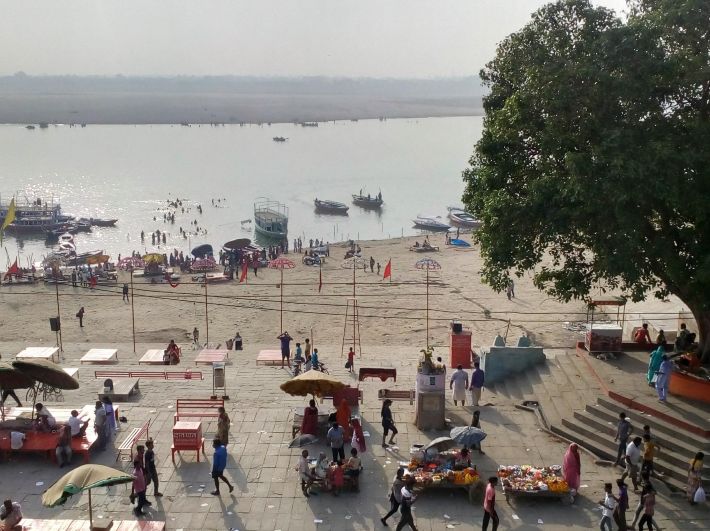
For centuries, the urban framework of Varanasi was defined not just by its relationship with the sacred Ganga but by its multifaceted network of urban commons. Historic kunds, seasonal talabs (ponds), and open maidans served as the city’s basic ecological infrastructure. They acted as natural flood mitigators during the intense monsoon spells and critical groundwater rechargers during the blistering Indian summers.
However, as India’s tier-II cities experience an unprecedented real-estate and infrastructure boom, the nature of these spaces is changing fundamentally. Walk through the peripheral expansion of Varanasi today along the newly made ring roads, and the expanding airport corridor, and the ancient topography is unrecognizable. The open fields where communities gathered are rapidly being paved over by concrete grids. The issue of the shrinking commons in expanding cities is often dismissed as an unavoidable cost of modernization, but a closer look at the spatial data reveals a deeply fragmented urban crisis.
The 2026 spatial layout reveals a deeply fragmented urban landscape, exposing a stark contrast between Varanasi's historic urban core and its rapidly evolving peri-urban fringes. By analyzing the intersection of spectral indicators,which map vegetation via the Normalized Difference Vegetation Index (NDVI), surface water via the Modified Normalized Difference Water Index (MNDWI), and concrete infrastructure via the Normalized Difference Built-Up Index (NDBI), The map highlights how aggressively the physical footprint of the city is changing along its fringes.
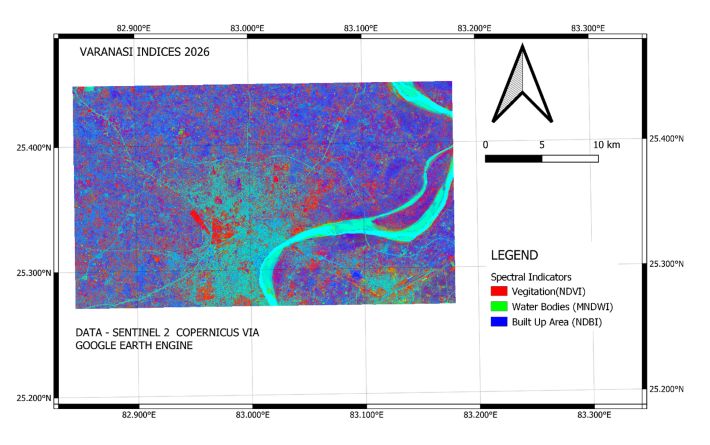
Figure 1 - Spectral Indicators of Varanasi
The spatial distribution of these indicators tracks two different urban realities on the ground.
The Consolidated Core is a prominent purple matrix of built-up areas that traces the historic core along the prominent crescent bend of the Ganga with a high degree of compactness and density. There is high water reflectance, and isolated regions of density are present in this dense fabric. These reflect the city's iconic heritage kunds and community tanks, systematically revived, dredged, and concrete-lined as a part of the recent Smart City initiatives, which now have a clear and reflective water even in the scorching heat of May.
The Fragmented Peri-Urban Fringe: As the urban fabric progresses further towards the north and the west, it becomes chaotic along the transit corridors to Harhua and the axis to Babatpur airport. It is quite a different scene here, with numerous small, disjointed water pixels making a big impact. The ground-level realities make it clear that these are not ecological commons nor healthy wetlands but instead are the imprint of aggressive resource extraction. They are deep excavations of brick kilns and infrastructure clearings that pierce through the urban edge, for a while bringing stagnant run-off to the surface, while the surrounding agricultural lands are systematically paved over.
The spatial configuration of the built fabric in Varanasi has been observed through the lens of the concrete matrix, as it gets expanded outwards in the spatial arrangement of 2026. This has been systematically replacing the open, permeable surfaces of the city with impermeable concrete grids, measured by the high density of the Normalized Difference Built-Up Index (NDBI). This large-scale conversion of peripheral catchments comes at a time of significant dual crisis in a dense historic urban environment – localized flooding of streets and urban heat intensification. Seasonal lows and isolated talabs, as well as low-lying agricultural fields, are covered with asphalt and concrete, and the natural drainage pattern of the landscape is immediately disrupted. The shallow water table in this locality is lowered, and rainfall no longer infiltrates into the soil to recharge the area. Rather, as soon as the pre-monsoon rains or early monsoon hit the area, local roads turn into artificial drains, and run-off rushes straight through the newly created pockets of residences, which are devoid of any formal stormwater drainage system.
Simultaneously, this spatial transformation changes the microclimate of the area. The vegetative commons (the little red dots on the map) are replaced by massed buildings, which retain heat and acquire the properties of a building structure. These surfaces, both concrete and brick, are very hot in the day and cool slowly at night, reflecting the strong solar radiation they absorb. This trade will create a series of recognizable micro Urban Heat Islands (UHIs) in the “new commercial zones” located in the outer corridors of the city: this will be a local environmental change that will cause a seasonal heat stress on the periphery of the city, which will be increasingly pronounced and problematic over the course of a season.
Mapping the fragmentation in the urban landscape of the peri-urban fringe in Varanasi raises a significant institutional challenge in current urban management. The physical change of open ground to concrete is very fast, while the statutory planning systems, whose job it is to control this change, are extremely conservative and reactive.
The Master Plans created for Tier-2 cities are often inaccurate once formally notified, and are unable to keep up with or safeguard the edge-land commons from aggressive real estate and infrastructure development pressures.
One of the major structural reasons for this peripheral crisis is the issue of serious technical and fiscal capacity deficit in Urban Local Bodies (ULBs). The 74th Constitutional Amendment Act entails a decentralized mandate for municipalities with the idea of them functioning as self-governing institutions for environmental and spatial planning. In practice, however, local authorities often do not have a dedicated and functional GIS or spatial monitoring cell. Municipal administrations are in the dark on the urban fringe, unless evaluated routinely by satellites and/or automated geo-fencing tools.
Encroachments on Gram Sabha (village council) common lands, natural drainage, and minor local water bodies usually do not get identified at the outset. In contrast, the illegal activities are generally only identified after permanent concrete construction has been completed, and the local government is forced to attempt to clean up the mess of illegal growth in a piecemeal fashion by trying to fix the problems that already occurred. As a result, the urban commons are "managed" as empty space that has lower value and can be constructed upon, instead of a very important element of nature, which is crucial for the city's long-term climate resilience.
Shashwat Bhatnagar is a Master's student pursuing a Master's in Cities and Governance from the School of Public Policy and Governance, Tata Institute of Social Sciences, Hyderabad.