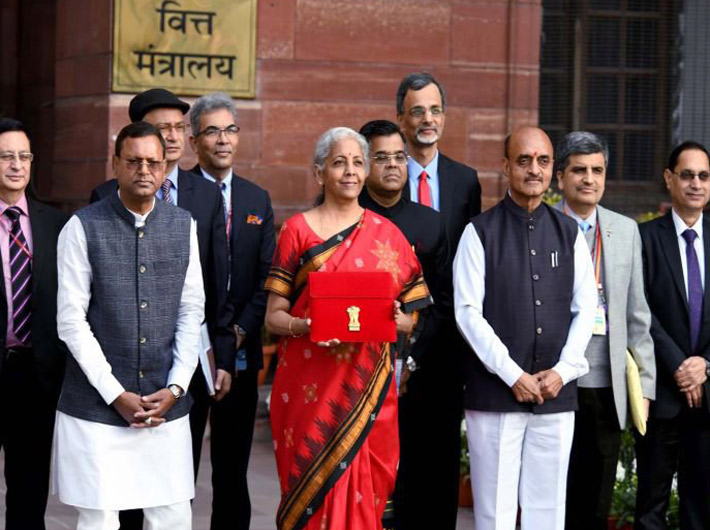
It is likely to be a step further on the path of becoming a trillion-dollar economy
As the fiscal year concludes, heightened expectations surround the upcoming interim budget, which serves as a precursor to the comprehensive budget. This interim budget is anticipated to address key sectors and initiate reforms that align with the vision of achieving a trillion-dollar economy envisaged by prime minister Narendra Modi. In this article, we delve into the expected budgetary measures that may significantly impact education, healthcare, technology, hospitality, telecom, pharma and tax reforms. Drawing inspiration from the financial commitments outlined in the Union Budget 2023 and parallels from global economies, the forthcoming interim budget sets the stage for various expectations, marking a pivotal step towards realising this ambitious economic milestone.
Education: Fostering Growth through Deductions
Education, a linchpin for societal prosperity, sees substantial investment in India's Union Budget 2023-24, with Rs. 1,12,898.97 crore allocated to the Ministry of Education (Economic Survey, 2023). This commitment stems from the recognition that an educated and skilled workforce is crucial for innovation, productivity, and economic growth. Drawing parallels with global counterparts, the U.S. sets a precedent with the Biden-Harris Administration's FY 2023 Budget proposing a historic investment in science and technology, emphasising basic and applied research with a $205 billion allocation, a 28% increase over FY 2021 levels (White House, 2023).
Increased spending on education globally underscores the economic rationale for a well-equipped workforce in evolving technological landscapes. In India, expectations of tax benefits and deductions for tuition fees and professional courses align with the international understanding that investing in education is a catalyst for economic development. The anticipation of a tax deduction limit increase the current limit of Rs. 1.5 lakh, particularly for those who have no more than two children, strategically encourages enrolment in educational institutions, ensuring a more educated populace. The emphasis on education in tax benefits mirrors the global call for innovation, as seen in increased research and development spending in the U.S. Overall, the parallels between India and the U.S. in budget allocations highlight the shared understanding of education's pivotal role in economic growth. As India anticipates increased tax deductions, it echoes the global trend, emphasizing significant investments in education for a competitive and prosperous economy.
Healthcare and technology: embracing telemedicine reforms
The ongoing global health crisis has emphasized the vital role of healthcare and technology integration. Healthcare has been a focal point in budgetary allocations globally. In India's Union Budget 2023-24, a substantial Rs. 89,155 crore was allocated to the health sector, reflecting a commitment to fortifying this critical area (Economic Survey, 2023). Expectations are high for reforms recognising the importance of telemedicine, projected to reach US$5.4 billion by 2025 with a CAGR of 31%. This anticipated budget allocation aims to enhance telemedicine services, fostering a more connected and resilient healthcare system. Drawing parallels globally, the UK government sets an example with a commitment of up to £3.5 billion to support the future of technology and science, including £1 billion for supercomputing and AI research (UK Government, 2023).
This investment underscores the critical role technology plays in advancing healthcare. The economic rationale behind increased spending on healthcare is grounded in the understanding that a robust healthcare system is indispensable for a nation striving for economic stability. A healthy workforce is not only more productive but also contributes significantly to overall economic well-being. As India anticipates increased spending on healthcare, drawing inspiration from the UK's commitment to technology and science, it emphasises the need for global investments in healthcare infrastructure. The call for more significant investments is not just about addressing immediate healthcare needs but also about building a foundation for a resilient and connected healthcare system, echoing the global sentiment that health is fundamental to economic stability and growth.
Hospitality: boosting tourism and religious places
In India's Union Budget 2023-24, the hospitality sector received an allocation of Rs. 2,400 crore, laying the foundation for expectations of growth in 2024 (Economic Survey, 2023). The anticipated measures aim to increase accessibility to tourist destinations and promote religious places' development, strategically aligning with India's vision of achieving a trillion-dollar economy. Drawing parallels with the UK, where the hospitality industry is projected to grow from USD 24.81 billion in 2024 to USD 28.11 billion by 2029 at a CAGR of 2.53%, reinforces the economic significance of investing in this sector (UK Government,2023).
The rationale for increased investments in the hospitality sector lies in its role as a catalyst for economic expansion and job creation. Strategic allocations in infrastructure and amenities at tourist spots not only enhance visitor experiences but also drive tourism revenue, contributing significantly to the nation's economic growth. The recent emphasis on home tourism further enhances the sector's potential, promising not only an uplift in the local economy but also aligning with the broader economic vision of fostering a resilient and thriving economy. As India aspires to become a trillion-dollar economy, the growth of the hospitality sector becomes a crucial component. The symbiotic relationship between strategic investments, economic growth, and the local economy emphasises the attainability of India's dream of a trillion-dollar economy through comprehensive and targeted sectoral development.
Telecom: catalysing 5G development and airlink services
The telecom sector is poised for transformation, with the government having allocated a significant Rs. 1.23 trillion for telecom and postal projects in the Union Budget 2023-24 (Economic Survey, 2023). Expectations revolve around fostering the development of 5G technology and supporting telecom services like airlink, which is not just a technological advancement but a strategic imperative for national economic progress. The rationale behind this substantial investment is rooted in recognizing the indispensable role of a robust telecom infrastructure in propelling the nation forward in terms of enhanced connectivity, innovation, and sustained economic growth, positioning it competitively on the global stage.
Pharma industry: nurturing research and development
The pharmaceutical sector received a substantial boost in the Union Budget 2023-24, with an increase in fund allocation by more than 12 times, from Rs. 100 crore to Rs. 1,250 crore (Economic Survey, 2023). This significant financial commitment underscores the government's commitment to nurturing research and development, as demonstrated by the industry's expense of 83 billion dollars on R&D. Increased funding in this area can accelerate the discovery of new drugs, vaccines, and therapies, positioning the country as a leader in the global healthcare landscape. Nurturing research and development is not just an investment in healthcare but a strategic imperative for economic growth, positioning the country as a frontrunner in the global healthcare landscape and contributing substantially to the overall economic vision of a thriving trillion-dollar economy.
Tax reforms: easing burden on middle and low-income households
Tax reforms are perennially in the spotlight, and this budget is expected to address the concerns of middle and low-income households, as was with the introduction of the new tax regime in the pervious budget. One key expectation is an increase in the tax exemption limit to Rs 5 lakh, aiming to ease the tax burden on individuals in these income brackets. Such a measure not only provides relief to taxpayers but also stimulates consumption, thereby contributing to economic growth. As a result, the proposed tax reforms align with the broader economic vision, contributing to the resilience and prosperity of the nation's journey.
A way ahead
In all, the expectations from the upcoming budget are diverse and far-reaching. The envisioned reforms in education, healthcare, technology, hospitality, telecom, pharma, and tax are poised to create a more inclusive and progressive economic landscape. As we await the unveiling of the budget, the hope is that it will set the stage for transformative changes that will propel the nation toward a brighter and more resilient future.
Naman Mishra is a postgraduate researcher at FS University. Dr Palakh Jain is associate professor at Bennett University and senior visiting fellow at Pahle India Foundation.
Views are personal and not of the organisation of the authors.