
On a personal note: Sanjay Mishra

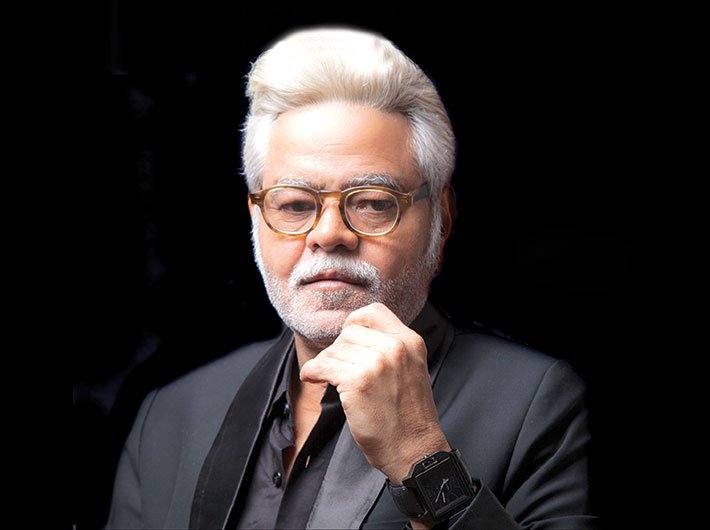
Actor Sanjay Mishra talks to Governance Now about his journey from working in TV commercials to Bollywood

geetanjali

Geetanjali Minhas | March 8, 2019 | Mumbai

#bollywood   #Actor   #Sanjay Mishra   #interview   #personal note   #movies   #TV  


Sanjay Mishra, an alumnus of the National School of Drama, worked in TV commercials and serials before choosing to exclusively work in films. He has worked in Hindi, Telugu, Bhojpuri and Punjabi films. People love him for his comedy; and connoisseurs appreciate his versatility and finesse. Mishra received the Filmfare Critics Award for Best Actor for his role in Ankhon Dekhi and the Best Actor Award at the Indian Film Festival Los Angeles for his role in the film Masaan, among other honours.

If not an actor, you would be: A musician. Definitely something related to the entertainment  industry, artistic and creative. When I came to Mumbai, I wanted to survive in this industry not as an actor but as working on anything creative. 

Acting to you means: Acting is my life and my lifestyle. I’m passionate about acting. This is what I’m meant for. 

Your most memorable role so far: My role as Hedu in Kadvi Hava. The message the film conveyed through that character left people thinking.

How has your long struggle to get work shaped you? It is an ongoing and continuous process and shaping me every day. 

You have been called an underrated actor. What are your views about the industry typecasting actors? My only answer to that question is: Bas itna hi.

How has the film and television industry changed over the years: Digitisation is changing cinema in every aspect. With the camera getting digitised, the entire process of film- making is changing. There is a technical change. Content-wise, content is the king. 

How necessary is prior training in the craft of cinema? It is all about how much time you give to think about the script, character, music, and observe people. More than training, it is important to analyse things. 

How does the social and political environment impact your creative expression? Not only my own creative expression but it affects the industry as whole too. It affects each and every one’s life in all aspects. 

What are the governance issues that matter to you the most? Since the time I was born, I see things are the same. There is no change. Bas baatein ho rahin hain. 

What can the government do to promote parallel cinema and low-budget films? We need action. If the government wants it can do many things. Like in Maharashtra, Marathi films get huge respect even though they are of small budget. This is a good thing. 

Your favourite pastime: Walking, playing the sitar and cooking. 


– As told to Geetanjali Minhas

(This interview appears in the March 15, 2019 edition)

Comments


Other News

Five ways to realise the potential of India’s handicraft and handloom sector

India`s economic ambitions are increasingly defined by the industries of the future. Semiconductors, electronics, artificial intelligence and advanced manufacturing dominate policy conversations. Yet one of India`s largest employment-intensive sectors continues to occupy a surprisingly marginal place in ec

Beyond toilets: Why open defecation persists in rural India

Despite the awareness campaigns on sanitation across India, open defecation (OD) is practised openly and widely in both rural and urban areas. Research shows that rural respondents are well aware of the negative impacts of OD, yet this awareness does not lead to toilet construction or use. In rural North I

What unpaid nation builders want from policymakers

The Supreme Court recently described homemakers as “nation builders” and fixed a notional monthly income of Rs 30,000 for them in motor accident compensation cases. The judgment was not about wages. It was about compensation. Yet it inadvertently raised a larger economic question: If a homemake

What the US–Iran peace deal means for India

After months of rising tensions, the United States and Iran have reached a memorandum of understanding called the "Islamabad Agreement." This agreement allows for the immediate reopening of the Strait of Hormuz without tolls and provides Iran with relief from sanctions, depending on its complianc

V. M. Tarkunde: A legal luminary par excellence

14 Lawyers: Portraits from The Bar By Raju Ramachandran  Juggernaut, 248 pages, Rs. 799  

The Cost of Obesity

The latest episode of Checks and Balances focuses on the ticking time bomb of obesity in India, and Geetanjali Minhas of Governance Now spoke with a panel of experts. You can watch the episode here: https://youtu.be/mH


Archives

Current Issue

Opinion

Facebook Twitter Google Plus Linkedin Subscribe Newsletter

Twitter






