
BOOK EXCERPT: How Aadhaar initiates a new era where ID systems would create personalised profiles of beneficiaries to ultimately determine whether they (otherwise eligible) even deserve to avail the said benefits
Shivangi Narayan | May 20, 2021
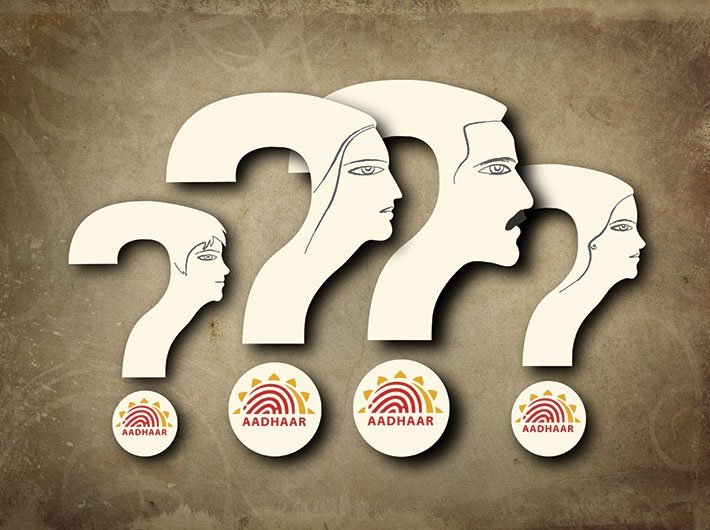
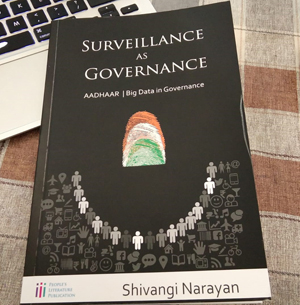
Shivangi Narayan’s ‘Surveillance as Governance: Aadhaar, Big Data in Governance’ is a valuable addition to the literature on the new identification system that is changing the architecture of state welfare schemes while also creating new structures of surveillance.
This book is a humble attempt to look at how the needs of information of the ruling bodies have led to the development of identification systems across history. It tries to understand how Aadhaar is a break from the older system where the role of ID systems was limited to identifying the beneficiary correctly, and initiates a new era where ID systems would create personalised profiles of beneficiaries to ultimately determine whether they (otherwise eligible) even deserve to avail the said benefits.
The book, published by People's Literature Publication, Kharghar, Maharashtra, is based on Narayan’s research on her research on identification systems, especially UID/Aadhaar, in India. Narayan, a Delhi-based researcher, is currently looking at predictive systems in policing, especially technologies like facial recognition that can harmful effects on marginalised populations under the garb of being objective and neutral technologies. She has submitted her PhD, ‘Policing and the construction of the criminal: A study of Bureaucracy and Algorithms in Delhi Police’ at CSSS, JNU, New Delhi.
See her website for more: https://www.shivanginarayan.com/
An excerpt from the book:
 ‘Discipline’ and ‘Knowledge and Power’ have been the bedrocks of the Foucauldian analysis of surveillance. At the individual level, the constant watch of the prison guard disciplined the prisoner. It made little difference whether the guard actually watched the prisoner or not. The architecture of the Panopticon made the prisoner feel that he was being watched every minute and that was all that was needed to make him do what he was supposed to do. At the population level, knowledge about people enabled governments to exercise ‘biopower’ on them. Foucault contends that the exercise of power doesn’t have to be always repressive but on the contrary can have productive results. It is similar to athletes giving themselves completely to practice, disciplining their bodies to behave in a certain way in the final performance.
Similarly, Richard Ericson (1998) argues that surveillance by governments is not to repress its people but to administrate them. The old societies of deviance, control and order have given way to societies of surveillance, security and risk. People are profiled according to their data, their risk determined and they are governed accordingly.
Well, it would be naïve to think that this governance would be done without any discrimination or that the already discriminated societies would not go down further with such profiling. For any technocrat, such a kind of profiling would be a dream come true of an ordered society, but social scientists need to ask how much information is too much. Would profiling of Dalits, Muslims, Women, Christians, Adivasis lead to their extinction? In a personal conversation with Reetika Khera, she mentioned how the human rights record of a country should be checked before entrusting it with such finely grained information of the people. She was talking in the context of Aadhaar and centralized databases, but I think it is a valid check on any state’s information excesses. On the contrary, even though the worries about the state knowing too much are true and need to be curbed, we need to also inspect the capacities of the state to know.
While researching for a story on the digitization of state records, I visited the National Informatics Centre (NIC) in Delhi. I was amazed to see that in the name of digitization of records, the technicians were merely scanning and putting the documents online. There was a person in a corner who was straightening out the old documents and another who scanned them into PDF files and uploaded it online. It was clear that providing the data in a machine-readable format was nowhere in their definition of ‘digital’. Digital just meant being online. In this context, I was always suspicious of the grand claims of some scholars and journalists who said that the Orwellian, all-seeing state is upon us. If this is what a premier government technical institution thinks and does, it is not difficult to imagine the state of affairs of other institutions.
This is when I happened to read Daniel Solove’s idea of privacy invasion in his work (2001). Solove’s work is interesting because he incorporates the actual ways of the working of government institutions and explains how privacy is compromised in such a setup. He doesn’t assume the seamlessly operating utopia that the Orwellian metaphor assumes. Through Kafka’s novel ‘The Trial’, Solove explains that the fundamental flaw in a primarily data led setup is that the data profiles could be faulty, something similar to what Haggerty and Ericson (2000) call ‘decontextualized data doubles’. These data doubles don’t always convey who you are, leading to faulty decisions being taken by bureaucrats.
Solove says problems arising out of this data conundrum could be messy because bureaucrats are generally indifferent to citizens, often considering all of them as a mere case, a file number. Privacy here is not just some overt peeping in the personal affairs of people but is the complete denial of their right to live with dignity.
While analysing a few flagship schemes of the government where Aadhaar seeding was made mandatory, for example, Public Distribution System (PDS), National Rural Employment Guarantee Scheme (NREGS), and some in the education and health sectors, I understood the claims and realities of Aadhaar seeding and digitization in governance and realised that the incomplete infrastructure or the circuitous bureaucracy doesn’t just pry into people’s lives but takes away their right to live with dignity.
We have all heard stories about ration shops sending scores of people away because of lack of functioning one of the following things: electricity, internet and POS machines. Biometric authentication does not work for many daily labourers and old people; rural areas suffer from electricity outages for 8-10 hours a day and internet connectivity is such that people have to climb trees or buildings to get a feeble network so that they may authenticate themselves. If a PDS beneficiary has to stand in line for four to five hours before he can stake his claim on ration – which is denied because his fingerprints fail to get scanned on the POS machine, then Aadhaar is much more than an Orwellian surveillance machine. There are several reports of delayed or denied wages in case of NREGS and how Aadhaar doesn’t remove any bogus beneficiaries in the scheme but denies the right people their rights.
If the government wanted to work with people’s data on health and education to improve the system, there was nothing to prove that it was serious about it. The large databases envisioned of people’s health and children’s education were null from the beginning, save a fancy website. In some ways I was relieved with this; with the cybersecurity loopholes in India a centralized databases about health would be a disaster, so would be one about children and their education. In financial inclusion too, Aadhaar did not play much of a role because, as Khera (2011) put it, the real problem in financial inclusion is not the lack of identification but the lack of banks.
[Excerpt reproduced with the permission of the author.]
For decades, policing has followed a familiar sequence: a crime occurs, the police respond, an investigation produces records and those records become part of the institutional memory of the criminal justice system. Artificial intelligence is beginning to alter that sequence. Instead of merely recording
“We are making a Constitution forever and not only for today.” Shibban Lal Saksena said this in the Constituent Assembly on June 15, 1949. He was warning that a ruling party might one day choose a loyalist to run India’s elections. Seventy-seven years later, the Supreme Court is wrestli
The Cabinet Committee on Economic Affairs (CCEA), chaired by prime minister Narendra Modi, has approved implementation of the ITMS Project by Delhi Police at an estimated cost of Rs.1,789.52 crore, inclusive of taxes. The project will cover 42 identified traffic corridors and will be implemented in three
The extraordinary transaction volumes and value (₹29.82 Lakh crore in August 2026 alone) of the Unified Payments Interface (UPI) have made it not only an Indian success story, but a global one. In 2024, UPI accounted for nearly 49% of the world’s real-time payment transaction volume, with more th
Diplomacy is akin to an art, wherein the summitry, conflict resolution and negotiations form apt constituents of the entire context of deal making and “playing for keeps” in the international arena. The Xi-Trump summit in Washington last week, in which the American president broke all conside
Moving to Delhi-NCR for education can be an exciting experience for students from Northeast India. It gives us a chance to meet new people, experience a different culture and become more independent. But living away from home also comes with challenges that people who have not experienced them may not al










