
How to listen to the great storytellers that the trees are

T. R. Shankar Raman’s new book is a natural history of India in arboreal pen-portraits

GN Bureau | July 4, 2026
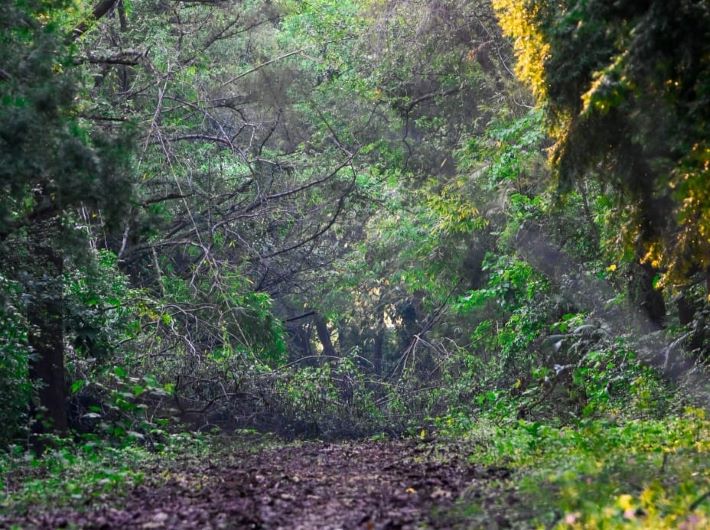

#Ecology   #Heritage   #Environment   #Science   #Climate Change  


The Trees of My Country: A Natural History of India in 50 Trees
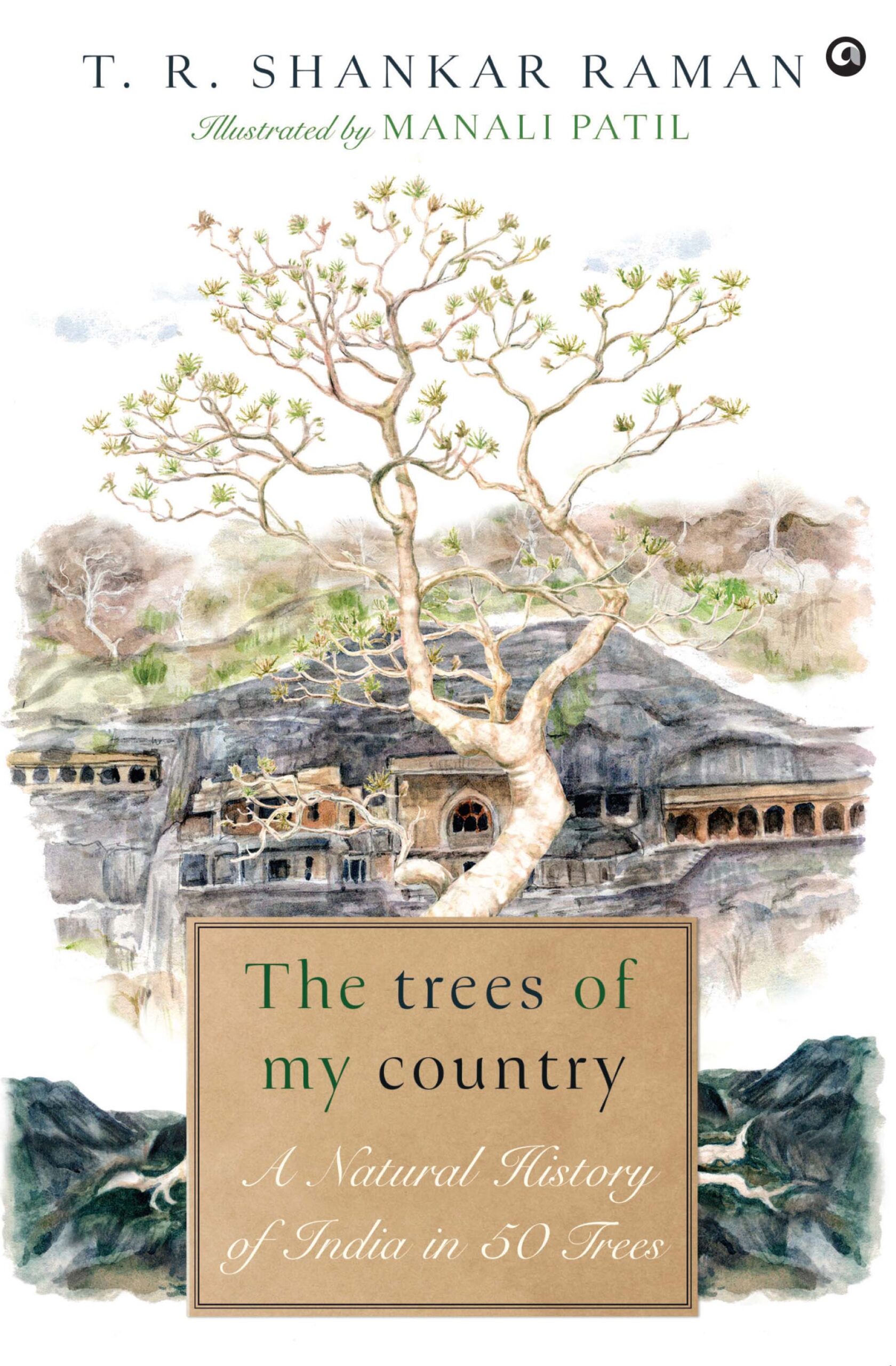
By T. R. Shankar Raman, with illustrations by Manali Patil
Aleph Book Company, 284 pages, Rs 1,499
 
There is a very old banyan tree in Munger, Bihar. People thought that it was planted in front of a historic 'Burra Bungalow', as a spot for dialogue between rulers and commoners. Given its architectural style, the bungalow seems to date back to the late Mughal-Early British period, which is 300-350 years old. But a new carbon-dating method found [https://www.governancenow.com/news/regular-story/this-tree-in-bihar-turns-out-to-be-the-oldest-accurately-dated-banyan] that the venerable tree is actually about double that age. The 700-year-old tree is possibly a surviving remnant of a natural forest that once existed in the region. Imagine the events it has, in a manner of speaking, witnessed! 
 
If you find this piece of news exciting, here’s a book exactly for you: ‘The Trees of My Country: A Natural History of India in 50 Trees’, by T. R. Shankar Raman with illustrations by Manali Patil.
 
Shankar Raman is a wildlife scientist – and an excellent writer. His book of essays, ‘The Wild Heart of India: Nature and Conservation in the City, the Country, and the Wild’, based on the findings of his field work and also his observations, has been a contemporary classic of nature writing in India. His latest work is a celebration of trees and of India’s landscapes and geographies through these trees.  
 
“Every tree is a storyteller, a historian, a chronicler of place. In their rootedness to particular places, in their long-lived and silent attention to the changes around them, and in their tendrils of connection to other life-forms, trees embody a perspective both unique and invaluable for us to understand the world,” he writes in the prologue. 
 
Trees, thus, help us better understand the people and the places around them. By the same logic, a closer look at 50 native trees of India, each remarkable and magnificent in its own way – like every other tree, can help us see our country in a new light. These trees have been witness to history, they have been grounded in geography, they have been interacting with their surroundings. 
 
As an ecologist, the author prefers to look at the trees as trees, and not in what they do for us, with their products or with the aesthetics of their presence. Getting acquainted with them is the idea.
 
Consider Ficus elastica, or Dieng-jri, from Meghalaya. They form the jingkieng jri or living root bridges. “Deep in the forest-clad gorges below one of the wettest places on earth are a number of these remarkable bridges. Khasi and Jaintia people have crafted these bridges using the peculiar roots of an astonishing tree, dieng-jri or India rubber, a wild fig tree known to science as Ficus elastica.” Or, Deodar: “The deodar is truly the cedar of the gods. They are among the oldest, the tallest, the most exalted, and impressively grand trees of India. Trees on relatively flat terrain or along river valleys can grow to great size, reaching a height of 75 metres, a tad taller than the Qutb Minar in Delhi.” In 1865, a forester found a tree whose age he estimated to be over 900 years – witness to a lot of historical upheavals in the subcontinent.
 
Many would have been entranced by Rhododendron arboreaum, better known as dupa, burans or billi. “Some Rhododendrons are so toxis that even consuming the honey that bees make from their flowers can make a person fall ill. But dupa is not such a species. The flowers of dupa (or burans) are used to make a syrup or sherbet popularly sold and consumed along the Himalaya.”
 
Every essay reminds us that the trees are great storytellers and living historians of place. By paying attention to trees, we can hear the stories they tell, the histories they document, and the places they describe. They shape their surroundings even as they themselves are shaped by their environment. 
 
The author brings together his study of botany and taxonomy, and unravels for us the intricacies of ecology and natural history of trees. We come to better appreciate their connections to the places they inhabit, to other species, and to people. The book also traces how changes in the world wrought by people influence trees and ultimately the people themselves. As the temperatures have soared in India, Europe and elsewhere this summer and climate change has become a more pressing concern, getting to know trees better might be our first line of defence.
 
Manali Patil, an artist and illustrator from Sindhudurg, Maharashtra, adds value to this beautifully produced book with her meticulously detailed illustrations.

Comments


Other News

Dharmendra Pradhan tenders resignation

Dharmendra Pradhan, education minister at the centre of the storm of the NEET paper leak, offered his resignation to the prime minister on Saturday.   He posted a two-page letter on X, saying he was pained by the events of the last ten days. "This is not a matter of personal

Cabinet approves scheme of chemical parks

The union cabinet chaired by the PM has approved Bharat Audyogik Vikas Yojana Rasayan or BHAVYA - Rasayan Scheme for establishing three dedicated Chemical Parks in the country. The Scheme was announced in the Union Budget of FY 2026–27.   The Scheme will have a total financ

Anurag Jain, IAS appointed as Chief Executive Officer, NITI Aayog

 Anurag Jain, a 1989-batch IAS officer of the Madhya Pradesh cadre, has been appointed as the Chief Executive Officer (CEO) of NITI Aayog for a two-year term after serving as the Chief Secretary of Madhya Pradesh. A distinguished administrator with extensive experience in infrastructure, industrial de

Shri Ashok Barnwal, IAS has been appointed as the Chief Secretary of Madhya Pradesh

 Ashok Barnwal, a 1991-batch IAS officer of the Madhya Pradesh cadre, has been appointed as the Chief Secretary of Madhya Pradesh, succeeding Anurag Jain following his appointment as CEO of NITI Aayog. Prior to assuming the state`s top bureaucratic position, Barnwal served as Additional Chief Secretar

PM announces fast-track courts for paper leak cases

Prime minister Narendra Modi on Thursday stated that the government has decided to set up fast-track courts to ensure swift and stringent punishment for those involved in paper leaks. Emphasising that nothing is more important than the welfare and future of the youth, he noted that h

Making India’s textile & apparel sector sustainable

India’s textile and apparel sector sits at the heart of the economy but is constrained by traditional manufacturing approach. It contributes close to 2% of GDP and around 11% of manufacturing gross value added, with GDP share expected to reach 5% by the end of the decade. The sector employs around 45

Upcoming Conferences


Archives

Current Issue

Opinion

Facebook Twitter Google Plus Linkedin Subscribe Newsletter

Twitter






