Mahesh Bhatt writes about his agonies, ecstasies and about the times spent with unusual thinker-friend, UG
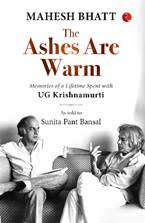
The Ashes Are Warm: Memories of a Lifetime Spent with UG Krishnamurti
By Mahesh Bhatt and Sunita Pant Bansal
Rupa Publications, 384 pages, Rs 495
If you were of a certain age in the 1980s, you saw Mahesh Bhatt as a unique figure on the culture scene. The ‘love him, hate him but can’t ignore him’ type. After a couple of commercial movies he had made ‘Arth’ and ‘Saransh’, which were neither exactly “art films” nor “middle-of-the-road” ones and mainstream commercial they were certainly not. And yet these films appealed to the audiences of each of those categories. ‘Arth’ was a raw, autobiographical film, in which its maker had revealed his vulnerabilities; without shame, without inhibitions. ‘Saransh’ reminded you of the best of Bergman – and of Kurosawa’s ‘Ikuru’ too.
When he made the first telefilm for Doordarshan, ‘Janam’, again autobiographical, it was an exciting event in the history of broadcasting in India. In his interviews, he called himself names and blasted pretensions of art. On making films, he apparently said a cobbler’s son becomes a cobbler and a filmmaker’s son becomes a filmmaker. There was also his affair with Parveen Babi, the subject of ‘Arth’. After his ‘Naam’ became a super-hit, he however went mainstream with a vengeance in the 1990s, even if there continued autobiographical elements in ‘Daddy’, ‘Kaash’, ‘Zakham’ and others.
Later, he turned to political activism, and remained an outspoken critic at the risk of inviting backlash. Now, at the age of 77, he is not as active on the scene as he used to be, and the scene is poorer for that.
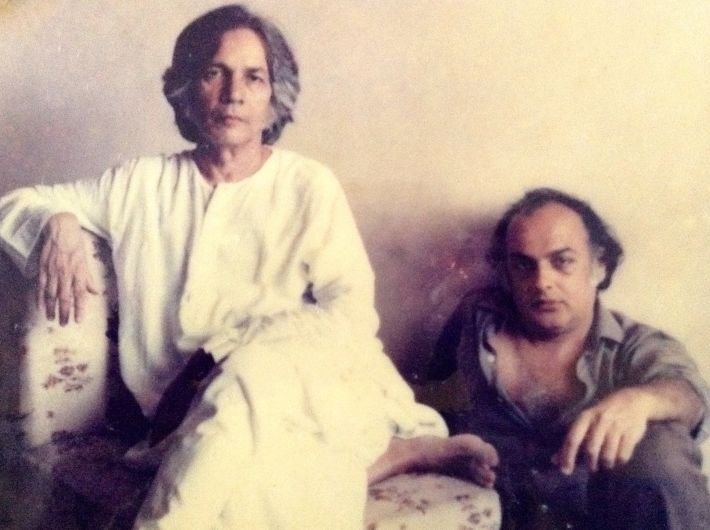
Alongside this Bollywood story, there was something peculiar with Bhatt. He was one of the many film industry figures who turned to Acharya Rajneesh in the 1980s. But he famously broke away from the guru after getting to know an enigmatic person called UG Krishnamurti.
But who was “UG”? In the 1990s, if you went to a decent bookshop and asked for a book by him, you were likely to be shown the shelf with J. Krishnamurti’s books. (Something like that happened to UG himself in a New York bookshop. Thankfully, works about UG are now easily available and YouTube has many videos of his conversations.) The two Krishnamurtis, who were acquaintances, could not be more different. UG, who died in 2007, has been described as a non-guru, a spiritual terrorist, a nihilist and much worse. His own take was: “I am not a God-man. I would rather be called a fraud.” For Bhatt, he was a friend, philosopher and guide; and remained his anchor for life.
Bhatt wrote his first book about him in 1992 (‘U.G. Krishnamurti, A Life’). After UG passed away, he penned a touching tribute (‘A taste of Life: The last Days of U.G. Krishnamurti’). The book under review, ‘The Ashes Are Warm: Memories of a Lifetime Spent with UG Krishnamurti’, is his third – and covers a lot more ground. Written by Sunita Pant Bansal based on Bhatt’s diaries and conversations, this is Bhatt’s full-fledged memoir, something like an autobiography (though that title is already taken by Kurosawa).
It features an array of entries, beginning with a short script, ‘The Man Who Refused to be God’, written last year for Anupam Kher’s acting school. Putting chronological order aside, there are reminiscences of his Bollywood career, recalling milestones in his filmography, his childhood, anecdotes about his mother, his affairs and more. The tone is usually of the agony and ecstasy of a life lived on the edge. And then there are memories of UG.
“I thought I had knowledge. I had read the books. Sought the masters. Played the part. But all that was scaffolding.
“And when I met UG, it collapsed.
“What’s left today is this:
“A man unmade. Not ruined—but revealed.”
Bhatt recalls here the beginning as well as the end of this one-of-a-kind companionship, featuring also facsimiles of UG’s old letters to him. His love for UG as well as UG’s maxims and provocations cannot be fit into a neat structure, leaving the book in an uneven shape. Open any page, read on, and come back again.
UG was an enigma. While J. Krishnamurti questioned the role of the Guru and the tradition in one’s spiritual quest, UG questioned that quest itself. In unvarnished language, he not only blasted spiritual masters and traditions but also the itch for a spiritual high. If someone else said so, it would have been labelled mere cynicism. Not in case of UG. Why? Because he himself claimed to have a transformative experience, but he called it a “catastrophe” and said there was nothing mystical about it and there was no path that could lead anybody to it. He refused to paint that experience in mystical colours. He said he had no message for humankind, he had nothing to teach – he never wrote books (though his friends did) and never delivered public discourses.
All of that makes him unique, but leaves the reader with a bunch of paradoxes. There was something spiritual about him, apparently, but it was not something that could be captured in words. He called spiritual seekers deluded, but he and his friends (others may call them ‘disciples’) talked nothing else for hours on end. One suspects his presence exuded something that supplied answers and resolved paradoxes for those close to him. Such a presence is by nature ineffable, yet Bhatt’s memoir, via Pant Bansal, shares a palpable glimpse of it for the rest of us.