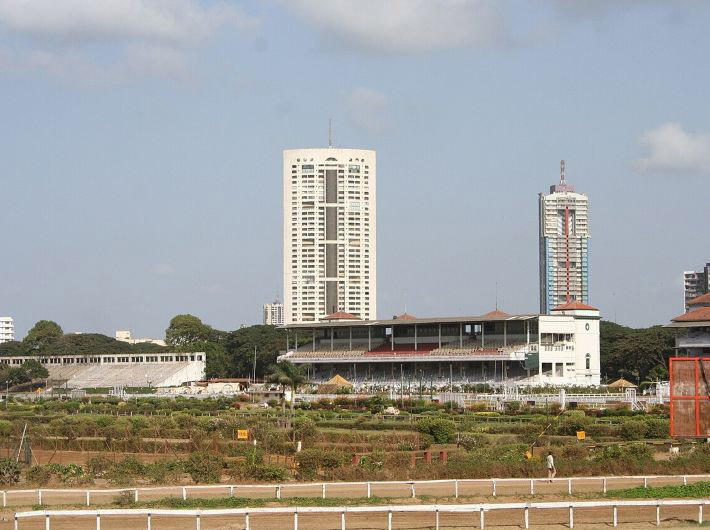
Mumbai Architects Collective welcomes withdrawal of proposed underground sports complex and multilevel parking at Mahalaxmi Racecourse
Calling the decision to drop the proposed underground sports complex, convention facility and multilevel car park at Mahalaxmi Racecourse a welcome step, the Mumbai Architects Collective (MAC), representing 138 architects, urban designers, planners and allied professionals, has urged the Maharashtra government and the BMC to introduce a permanent policy protecting the city's public open spaces from construction and commercial exploitation.
In a formal representation addressed to the Maharashtra chief minister and the BMC municipal commissioner, the collective has called for a written government order confirming the withdrawal of the proposed Racecourse development, along with an interim Government Resolution prohibiting underground parking and construction beneath playgrounds and open spaces designated in Mumbai's Development Plan.
Racecourse infield envisioned as an urban wetland
Highlighting the ecological importance of Mahalaxmi Racecourse, the architects have proposed transforming its infield into a world-class urban wetland park. According to the collective, the infield retains rainwater during the monsoon and supports seasonal wetlands as well as resident and migratory bird populations.
The proposed vision is to strengthen these existing natural features and develop a landscape that can absorb floodwater, reduce urban heat and enhance biodiversity, while retaining and improving everyday recreational facilities for walkers, runners, children and families.
Citing international examples such as Benjakitti Forest Park in Bangkok and Qunli Stormwater Park in Harbin, the collective has emphasised that urban landscapes can function simultaneously as flood-management infrastructure, biodiversity habitats and accessible public parks.
Architects seek permanent protection against underground construction
The collective has pointed out that the Racecourse decision follows earlier public debates surrounding Pushpa Narsee Park and Patwardhan Park, where the city had also faced concerns over construction beneath natural public spaces.
MAC argues that citizens should not have to repeatedly intervene to protect public land. It has therefore reiterated its earlier demands, made through representations dated February 19 and 26, 2026, for an interim Government Resolution prohibiting underground parking and construction beneath playgrounds and designated open spaces.
The collective has also sought a permanent city-wide Open Space Policy covering public gardens, playgrounds, wetlands, mangroves, hills and other natural areas.
Public control of open spaces must remain with BMC
Another major concern raised by the architects is the management of Mumbai's public open spaces. Welcoming the Maharashtra Government's stated commitment to retaining civic control over these spaces, MAC has called for its formal adoption and implementation across the city.
The collective has specifically emphasised that the BMC should remain responsible for the upkeep and management of all public open spaces, without transferring their operation to private entities.
The Coastal Road gardens have been cited as an important example of why a consistent public-space management policy is necessary.
According to the representation, the development of these gardens was estimated at approximately Rs.400 crore. The collective notes that this represents less than half of one per cent of this year’s BMC's annual budget. It has also raised concerns over proposals for private management of approximately 173 acres of publicly funded reclaimed land for periods of up to 60 years, with ticketed attractions reportedly envisaged across 15 per cent of the area.
While acknowledging the potential role of Corporate Social Responsibility (CSR) funding, MAC has maintained that private financial contributions should not come at the expense of public ownership, control and accessibility.
Proposal for an integrated 300-acre public landscape
One of the key proposals in the representation is the creation of an integrated landscape connecting Mahalaxmi Racecourse and the Coastal Road gardens.
Together, the two areas account for nearly 300 acres of public space, which the architects describe as an exceptional opportunity to create a connected urban green network for Mumbai.
The collective has called for an integrated planning exercise that allows people to move seamlessly between the two spaces while retaining their distinct identities and ensuring that both remain under direct BMC management.
It has recommended that the planning process begin with a comprehensive ecological survey, followed by an open design process involving professionals, citizens and experts from relevant disciplines.
Five priorities proposed for Mumbai's Open Space Policy
At its meeting on November 25, the Mumbai Architects Collective agreed on five key priorities that it wants incorporated into the forthcoming Open Space Policy:
Free and universal public access: Public spaces should remain freely accessible without entry fees or memberships, ensuring safe and independent use by children, senior citizens and persons with disabilities.
Protection of existing recreational activities: Open maidans should remain available for play, while walking paths should be well-drained, properly lit and designed for everyday public use.
Ecological protection and biodiversity: Seasonal wetlands, green cover and biodiversity should be protected and enhanced. Water movement and natural drainage patterns must be mapped before finalising landscape plans.
No commercialisation of public parks
Simple and sustainable design: Planning should prioritise shade, pathways, drainage and basic amenities rather than expensive monumental structures that require high recurring maintenance expenditure.
The collective has further stated that the proposed policy should be guided by two fundamental principles: public land must be held in trust for the people of Mumbai and every increase in urban density must be accompanied by a corresponding increase in public open spaces and civic infrastructure.
Collective seeks meeting with government and BMC
In its representation, MAC has formally requested three key actions from the state government and civic administration:
A written order confirming the decision to withdraw the proposed Mahalaxmi Racecourse development, together with an interim Government Resolution protecting designated open spaces from underground construction.
A permanent city-wide Open Space Policy based on the five priorities and two guiding principles, ensuring direct public management of all open spaces, including the Coastal Road gardens.
An integrated planning exercise connecting Mahalaxmi Racecourse and the Coastal Road gardens, beginning with a comprehensive ecological survey and retaining direct public management of both spaces.
The collective has also requested a meeting with the authorities to contribute professional expertise during the preparation of the planning brief and the public consultation process. It has called for the participation of citizens and specialists in ecology, hydrology, transport, public health, economics and law.
Knowing when not to build is as important as knowing what to build
Emphasising the long-term responsibility of urban planning, the architects have argued that Mumbai must prioritise international standards of everyday civic life over expensive attractions and monumental infrastructure.
The collective has observed that if buildings barely a generation old can be rebuilt to meet changing needs, there is equally an opportunity to rethink landscape plans for public land that will serve the city for centuries.
The Mumbai Architects Collective brings together architects, planners, designers and allied professionals committed to improving Mumbai's built environment. The November 27 representation carries the names of 138 signatories.
The collective has called upon the state government and the BMC to treat the protection of public open spaces as a long-term civic commitment, stating: "Mumbai will outlive all of us. Let us plan for its future."
Photo credit: https://commons.wikimedia.org/wiki/File:Bombay18.jpg