
GST: Achhe din for retail sector

The new tax regime is expected to boost exports with reduced costs of goods and services

Dinesh Kaushal | October 24, 2016

#GST   #GST Bill   #Good and Services Tax  


The Goods and Services Tax (GST) will be a game-changing reform for the Indian economy, creating a common market and reducing the cascading effects of tax on the cost of goods and services. It will impact the tax structure, tax incidence, tax computation, tax payment, compliance, credit utilisation and reporting, leading to a complete overhaul of the current indirect tax system.

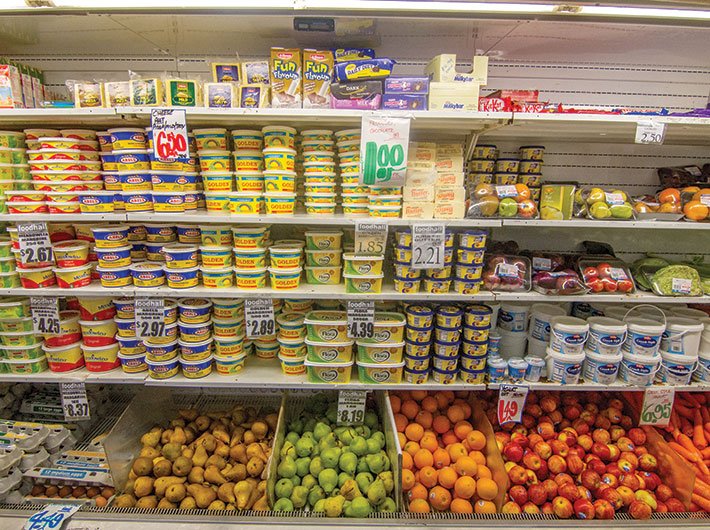
The fast-moving consumer good (FMCG) sector of India comprises more than 50 percent of the food and beverage industry and another 30 percent from personal and household care, thereby spanning the entire rural and urban parts of the country. It is estimated that the sector contributes a significant $6.5 billion in direct and indirect taxes.

Five major impacts of GST on the FMCG industry:
 

  • The FMCG sector is likely to see a significant impact as the companies set up warehouses across the states in a bid to have a more tax efficient system.
     
  • GST would result in reducing the overall tax burden on products and services, thereby propelling demand.
     
  • This will potentially boost exports with reduced costs of manufactured goods and services.
     
  • There will be a transparent taxation for the consumers.
     
  • The tax base will be comprehensive, as virtually all goods and services will be taxable, with minimum exemptions.

Looking at these benefits, it is safe to say that GST has been hailed as the most powerful tax reform that India has seen as it aims to do away with multiple tax regimes on goods and services and bring them under one rate. GST will alter the present system of production-based taxation to a consumption-based one. While manufactured consumer goods will become cheaper as the incidence of excise duty and VAT will come down from 25-26 percent at present, the cost of services would by and large go up from the present 15 percent level. The sheer efficiency of GST and its design is such that the credits do not stick to the business and are passed on in the value chain, so there will be benefits even from an efficiency perspective for a FMCG industry. Furthermore, the FMCG industry today has a network design which is also entirely driven by the concept of stock transfers and then sale through depots and hence the FMCG sector can see this as a boon to the industry.

The government is committed to replace all the indirect taxes levied on goods and services by the centre and states and to implement GST from April 2017. The constitutional amendment bill for GST has been approved by the president after its passage in parliament (Rajya Sabha on August 3 and Lok Sabha on August 8) and ratification by more than 50 percent of state legislatures.

Kaushal is chief financial officer, Vi-John Group.


(The article appears in the October 16-31, 2016 issue)

Comments


Other News

Strong El Nino threat over India`s monsoon, food & water security

India is heading into the southwest monsoon season this year under the shadow of a rapidly strengthening El Nino, with meteorologists warning that the climate phenomenon could significantly disrupt rainfall patterns, intensify heat stress and place additional pressure on the country’s agriculture-d

How corporates can nudge real change

The Business Of Business Is (Not) Just Business: How Behavioural Tools Can Drive Real Change Edited by Sutapa Banerjee, with Foreword by Nadir Godrej HarperCollins, 336 pages, Rs 699  

India stopped jailing people for paperwork. Now comes the hard part

A small pharmacist in Rajkot neglects to change a notice in his store under a little-known clause of a public health law. This was not only a non-compliance matter, but also a criminal offence, and a jail sentence was the punishment under the old system. Not a fine. Not a warning. Jail. Now scale

How to make our cities climate-resilient

Indian cities are growing at a pace that our infrastructure and climate can no longer sustain. This rapid urban sprawl increasingly strains urban systems, overshadowing the severe environmental fallout produced in its wake. The repercussions include Urban Heat Island Effect (UHI), Urban Floods, and many mo

Trump’s China setback pushes US to woo India

A week after Donald Trump’s visit to China – the first by an American president in nine years, US secretary of state Marco Rubio arrived in India on May 23 on a four-day visit aimed at resetting Washington DC’s relations with New Delhi and attending the third Quad ministerial meeting.

EU–India FTA 2026: A high‑stakes prescription for Indian pharma and healthcare

India’s pharmaceutical industry stands as one of the world’s market leaders of generic pharmacy with market valuation of USD 50 billion in 2026. Characterised by high volume, low-cost generic manufacturing, with an annual growth rate of 10-12% primarily propelled by exports and domestic demand,


Archives

Current Issue

Opinion

Facebook Twitter Google Plus Linkedin Subscribe Newsletter

Twitter






