
India makes it more difficult to deal in black money

A report by Ambit Capital estimates India’s black economy to be around 20 percent of India’s GDP

GN Bureau | June 6, 2016

#Modi   #Ambit Capital   #Black money  


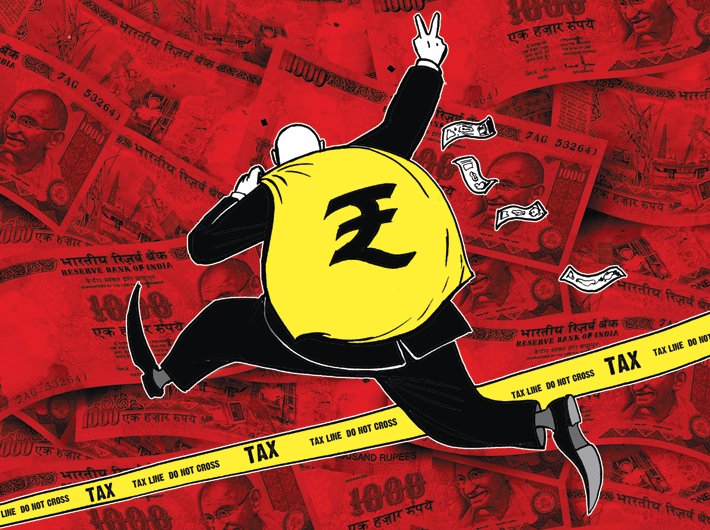
The Modi government’s crackdown on black money has “jammed” traditional black money laundering machines in the country, resulting in an increase in preference for cash and a decline in the usage of formal banking channels. This was highlighted in a report titled ‘The unintended consequences of India’s battle with black money’, prepared by Ambit Capital.

The report, however, adds that “this crackdown has also led to an increase in the cost of debt capital in the economy owing to a confluence of certain unique factors. As banks are unwilling to lend to sub-investment grade creditors owing to their own NPA [non-performing asset] troubles, this credit demand has shifted entirely to informal channels of lending. This, in turn, has driven increase in lending rates in the black economy to as high as ~34% p.a. as per our primary data sources (vs ~24% a year ago).”

According to the report, as of today, India’s black economy is equivalent to 20% of the size of India’s GDP. “Given that India’s GDP in CY16 is expected to be US$2.3tn, the size of India’s black economy is about S$460bn, which is larger than the stated GDP of emerging markets like Thailand or Argentina.”

“Even as India is characterised by a high savings rate of 33% of GDP, India has a high cost of debt capital and poor accessibility to capital mainly because more than two-thirds of India’s household savings are held in physical form, which includes real estate and gold,” says the report.

The report is also of the view that given that liquidity in the formal banking system is likely to remain under pressure and the cost of borrowing in the black economy appears to be rising, GDP growth is expected to remain flat at 6.8% in FY17.

Here's the full report

Also read our previous stories on black money: Plug the loopholes and get back black money

India still in the dark on black money

Comments


Other News

The transformation trap: Why efficiency is not innovation

Every company is transforming, or so it claims.   There was a time when the word ‘transformation’ carried weight. It signified bold strategic shifts, reinvention of business models, and breakthrough technologies that fundamentally changed how organizations created

The Sardar biography that throws light on our times

Patel: A Life By Rajmohan Gandhi Aleph Books, 568 pages, Rs 1,199   There are many biographi

Climate change, El Niño rewrite Indian monsoon

The month of July exceeded its rainfall target despite forecasts of a below-normal month under a strengthening El Niño. The reason could be that climate change is amplifying monsoon complexity: West Pacific warming, Western Disturbances and evolving ocean conditions increasingly interact with El Ni&

Mumbai has just 1.28 sq.m. of open space per person: Study

Mumbai`s public space crisis is as much about mismanagement as it is about scarcity, and offers a governance roadmap that can be implemented without new legislation, according to a new report by the Urban Design Research Institute (UDRI) and the NGO Alliance for Governance and Renewal (NAGAR).  

Lok Sabha passes amendment bill to improve public examination system

The Lok Sabha on Wednesday passed the Public Examinations (Prevention of Unfair Means) Amendment Bill, 2026 by a voice vote after an extensive discussion. Replying to the debate, minister of state (independent charge) for science & technology; earth sciences and MoS in the PMO, Dr. Jite

Shri Abhijit Phukon (IES, 2004) appointed as Joint Secretary, Department of Agriculture & Farmers Welfare.

 Shri Abhijit Phukon (IES: 2004) has been appointed as Joint Secretary, Department of Agriculture & Farmers Welfare, Government of India. His appointment, approved by the

Upcoming Conferences


-->

Archives

Current Issue

Opinion

Facebook Twitter Google Plus Linkedin Subscribe Newsletter

Twitter






