
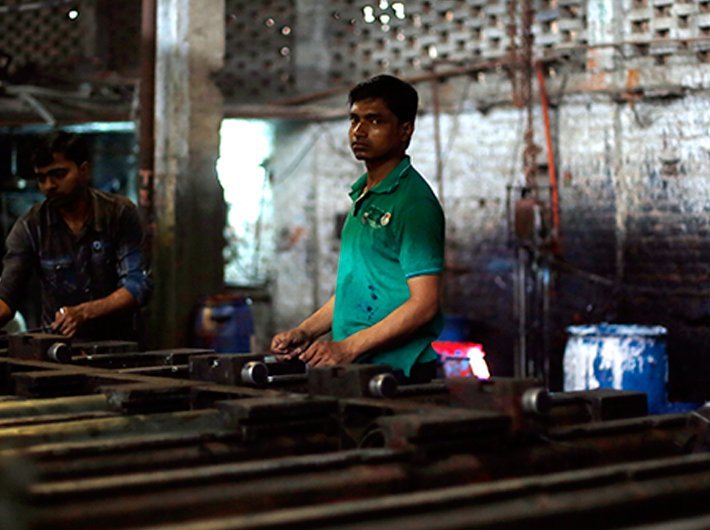
The initiatives will reduce the complexity in compliance due to multiplicity of labour laws and facilitate setting up of enterprises
GN Bureau | February 6, 2017
The interaction between active Western Disturbances, increased atmospheric moisture and the region’s complex topography aswell as global warming are important factors behind intense rainfall in the Himalayas, leading to flash floods in Nepal, according to meteorologists. Nepal
Last summer, the two of us spent several weeks in rural Madhya Pradesh with a non-profit that works on gender justice through women’s self-help groups. We went in with a notebook full of laws. The Protection of Women from Domestic Violence Act. The Dowry Prohibition Act. Free legal aid for every wo
Digital payments have become a reflex for urban India, but the confidence earned in paying has not yet carried over to borrowing. That is the central finding of `How Urban India Pays Report 2026`, released by Pahlé India Foundation in collaboration with Amazon Pay. Based on a survey of 5,149 consu
Commerce and industry minister Piyush Goyal has called upon businesses in India and the United Kingdom to translate the opportunities created by the India-UK Comprehensive Economic and Trade Agreement (CETA) into expanded trade, investment, partnerships and job creation. Addressing the Bu
The Gandhian movement in India, after Gandhi’s death, failed, says Ramachandra Guha, and blames Vinoba Bhave for it. But the movement found new, fertile grounds around the world and succeeded in bringing about a change in South Africa, the US and elsewhere. It is high time it returned home. Of cour
Tavleen Singh, noted journalist and political commentator, has turned to fiction, with her debut novel ‘The Actor’ (HaperCollins India). Set in the near future, it has a superstar, Amit Singh, turning to politics, when the political landscape is dominated by prime minister Guru Gaynendraj










