The Infosys lesson for India Inc

Infosys chooses an outsider pro to lead it through transition.

seema

Seema Sindhu | July 7, 2014


Infosys Technologies, a bellwether firm for India’s infotech sector that is making waves across the globe, has defied the traditions of the domestic sector at the best of times. So, as it goes through a transition, it has continued to set what could be new trends.

On June 12, its executive chairman NR Narayana Murthy decided to step aside, and the company named Vishal Sikka as its CEO. What was significant is that the baton was passed on to an outsider professional for the first time since the company’s inception in 1981.
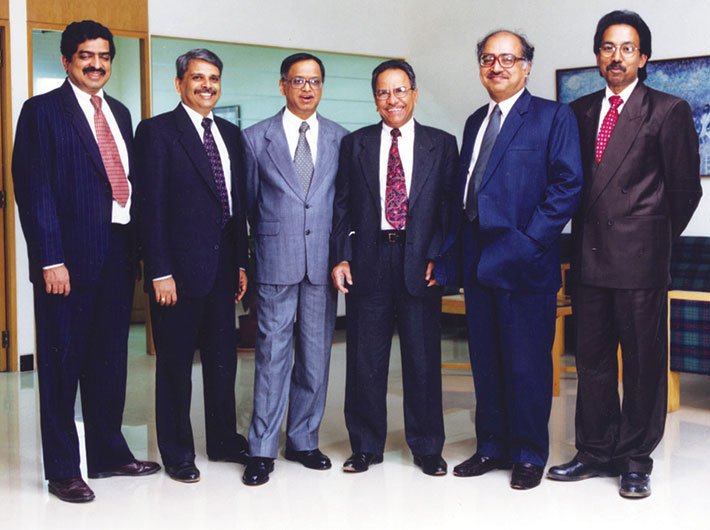
A group of IITians – Narayana Murthy, Nandan Nilekani, NS Raghavan, S Gopalkrishnan, SD Shibulal, K Dinesh and Ashok Arora – who founded the company have taken turns in various roles in running it, but in the face of mounting challenges decided to let the former SAP chief technology officer do the job.

Also read: Sikka at helm, it's time to hit the Refresh key at Infy

During Narayana Murthy’s second term his son Rohan Murthy was appointed his executive assistant, triggering speculation over his future role. At most other Indian firms, Rohan’s further elevation might have been taken for granted, but at Infosys, he will be moving out now that his father is only a non-executive chairman.

Analysts believe this could be a fresh start for Infosys.

Sanchit Vir Gogia, chief analyst and CEO, Greyhound Research, says, “I believe India Inc is moving up the ladder to add value to their business. A business needs a team of leaders; it cannot be run by one person. The leader needs to be professionally sound to lead the company. I see the baton moving from family to professionals with a business sense.”

Harish Bijoor, brand expert and CEO, Harish Bijoor Consults Inc., concurs, “This surely is the trend. Founders and owners reach a glass ceiling all their own. This glass ceiling occurs at different points of time. In the case of Infy it has taken 33 years. This should have happened earlier.”

Although there have been instances of professional CEOs in family-run enterprises, for example at Dabur, Thermax, Jindal Steel and Power, Wipro and some of the Tata Group firms, “Vishal’s appointment is a learning that various other companies will implement in the coming years. Innovation is the key that every company needs to remember. It should be the core competency of any company,” experts believe.

While some look at it from the perspective of an insider-outsider debate, others say the appointment should be seen purely in business sense.

Ganesh Natarajan, vice chairman and CEO, Zensar Technologies, says, “India Inc is run by an assortment of CEOs – some are from families and many are independent professionals. I do not think the second- or third-generation family CEOs are in any way inferior to professionals and every board and shareholder group should look at the CEO appointment on individual merit.”
As for Sikka, there is unanimity in industry that he is a true innovator and thought leader, and that his contributions at SAP have been extraordinary. Experts feel if Sikka can deliver and give a new vision to Infosys, many family-run firms too may consider bringing in professionals at the top.

“I believe it is only a matter of time that these companies consider getting a professional rather than passing on the baton to the next family member,” says Gogia.


(This story appeared in the July 1-15, 2014 issue of the print issue)

Comments


Other News

RBI pauses to assess inflation risks, policy transmission

The Reserve Bank of India (RBI) has begun the new fiscal year with a calibrated pause, keeping the repo rate unchanged at 5.25 per cent in its April Monetary Policy Committee (MPC) meeting. The decision, taken unanimously, reflects a shift from aggressive policy action to cautious observation after a signi

New pathways for tourism growth

Traditionally, India’s tourism policy has been based on three main components: the number of visitors, building tourist attractions and providing facilities for tourists. Due to the increase in climate-related issues and environmental destruction that occurred over previous years, policymakers have b

Is the US a superpower anymore?

On April 8, hours after warning that “a whole civilisation will die tonight,” US president Donald Trump, exhibiting his unique style of retreating from high-voltage brinkmanship, announced that he agreed to a two-week ceasefire with Iran. The weekend talks in Islamabad have failed and the futur

Machines communicate, humans connect

There is a moment every event professional knows—the kind that arrives without warning, usually an hour before the curtain rises. Months of meticulous planning are in place. And then comes the call: “We’ll also need a projector. For the slides.”   No email

Why India is entering a ‘stagflation lite’ phase

India’s macroeconomic narrative is quietly shifting—from a rare “Goldilocks” equilibrium of stable growth and contained inflation to a more fragile phase where external shocks are beginning to dominate domestic policy outcomes. The numbers still look reassuring at first glance: GDP

Labour law in India: A decade of transition

The story of labour law in India is not just about laws and codes, but also about how the nation has continued to negotiate the position of the workforce within its economic framework. The implementation of the Labour Codes across the country in November 2025 marks a definitive endpoint in the process. Yet


Archives

Current Issue

Opinion

Facebook Twitter Google Plus Linkedin Subscribe Newsletter

Twitter