
The new high (and low) in scams: govt lost Rs 10.7 lakh cr in coal allocation

From 2004-2009 government did not auction coal blocks; instead gave away coal that could have fuelled 50 years of power

GN Bureau | March 22, 2012
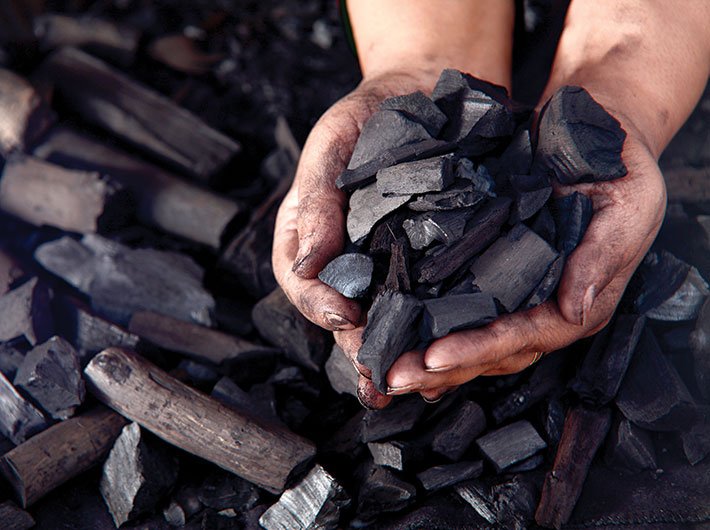


The government has lost over Rs 10.7 lakhs crore by not auctioning coal blocks, according to a report in the Times of India. The report, based on a comptroller and auditor general report on the sale of coal blocks, says that the government extended “undue benefits” to both private sector and public sector companies in the power and steel sectors. Some cement companies also figure in its list.

According to the 110-page CAG report titled ’Performance Audit of Coal Block Allocations’, the government lost the money by allotting nearly 155 coal acreages without an auction process. The CAG has said in the report that its Rs 10.7 lakh crore estimate is a conservative figure as it has used the price of the lowest grade coal in calculating it. The report is expected to be table in Parliament after the union budget is passed.  According to the apex auditor, the total coal in these blocks stands at 33,169 million tonnes which, according to the ToI report, is enough generate 150,000 megawatt of power for 50 years.

Of the total windfall to the companies, rs 4.79 lakg crore went to the private ones while central and state government utilities got Rs 5.88 lakh crore. Most PSUs, however, employ private miners to extract coal — thus, the allocation may have benefited the private sector more than the CAG estimates in its report.

Some of the major private sector gainers are Tata Group, the Jindals, Electro Steel Castings ltd., Anil Aggarwal group, Essar Group, arcelor Mittal, lanco Group, Adani group, Aditya Birla Group while the largets public sector gainer was national thermal power corporation (NTPC).

Parliament adjourned as ruckus erupts over coal losses

Both houses of parliament were adjourned by noon on Thursday after the opposition mounted an attack on the government over the CAG report of losses from the allocation of coal in between 2004 and 2009.


Comments


Other News

How the flora and fauna evolved in the Indian subcontinent

Mammals of India  By A.J.T. Johnsingh and P.O. Nameer HarperCollins India in association with Bombay Natural History Society  

India`s renewable race is moving beyond megawatts

When Shell bought Sprng Energy in 2022, India`s renewable energy market appeared to offer precisely what global energy majors were seeking: scale, growth and a place in one of the world`s largest energy transitions. Four years later, Shell is selling the same business to Aditya Birla Group for an enterpris

Nepal Floods: India keeps close watch on the situation

India`s central government has been keeping a close watch on the situation arising out of the flash flood in Nepal on Wednesday. Union home minister Amit Shah spoke with the chief ministers of Bihar and Uttar Pradesh, the two states that share the border with Nepal, regarding the disaster

UPI completes 10 years of digital payments revolution

The Unified Payments Interface (UPI), launched on August 25, 2016 by the National Payments Corporation of India (NPCI) under the regulatory oversight of the Reserve Bank of India (RBI), has completed 10 years of transforming digital payments in India. UPI has emerged as the backbone of India’s digi

Here’s an I.D.E.A. for career growth and success

Success in today’s professional organisation is no longer solely determined by academic qualifications, technical expertise or years of experience. While these attributes do matter, organisations increasingly value individuals who demonstrate the right mindset and behavioural qualities. The ability

PM interacts with CEOs, founders of space startups

Prime minister Narendra Modi interacted with CEOs and Founders of 20 Space Startups at Seva Teerth on Friday.   CEOs of leading companies in the space sector working in diverse fields ranging from building rockets and reusable semi-cryogenic launch vehicles, avionics, satelli

Upcoming Conferences


-->

Archives

Current Issue

Opinion

Facebook Twitter Google Plus Linkedin Subscribe Newsletter

Twitter






