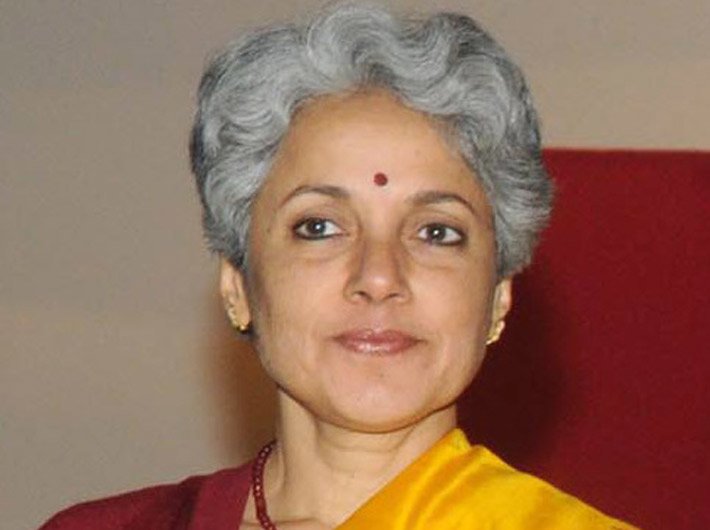
Soumya Swaminathan to head M S Swaminathan Research Foundation

Former WHO chief scientist to use science for sustainable development of rural and coastal communities
geetanjali

Geetanjali Minhas | January 31, 2023


#Soumya Swaminathan   #agriculture   #science   #policy   #WHO   #Covid-19  


Former World Health Organisation (WHO) chief scientist Soumya Swaminathan takes charge as chairperson of M S Swaminathan Research Foundation (MSSRF) from February 1.
 
Founded by her father, the legendary agricultural scientist M S Swaminathan, MSSRF was set up to accelerate the use of modern science and technology for agricultural and rural development and to improve lives and livelihoods of marginalised communities. Over 5,50,000 farm families and 2,50,000 fisherfolk from 4,000 villages across 14 states are benefitted by it every day.
 
“The pandemic has taught us that science and technology can help solve humankind’s problems but need to be used with ethics and equity as the foundation. I look forward to working with the staff of MSSRF and rural, tribal and coastal communities to use science for sustainable development,” Soumya Swaminathan said in a statement.
 
Prior to working as WHO chief scientist, she was the deputy director-general for programmes at that global health body. As the WHO’s inaugural chief scientist, she was instrumental in building its Science Division with a focus on research, quality assurance of norms and standards and digital health. During the Covid-19 pandemic, she played a key role in coordinating scientific efforts at the WHO as well as in setting up Covax with a focus on equitable vaccine distribution to LMICs.
 
Swaminathan was secretary to the Government of India for Health Research and Director General of the Indian Council of Medical Research from 2015 to 2017 where she focused on bringing science and evidence into health policy-making, building research capacity in Indian medical schools  and forging south-south partnerships in health sciences. Between 2009 to 2011 she also served as coordinator of the UNICEF/ UNDP/ World Bank/ WHO Special Programme for Research and Training in Tropical Diseases in Geneva.
 
Swaminathan has published more than 450 peer-reviewed publications and book chapters. She is a Fellow of the US National Academy of Medicine, the Academy of Medical Sciences of the UK and a Fellow of all the science academies in India. She has received several honorary doctorates, including from EPFL, Lausanne and the London School of Tropical Medicine and Hygiene. She serves on several national and global advisory bodies and committees and is an adjunct Professor at Karolinska University in Sweden and Tufts University in Boston, USA.

Comments


Other News

The health sector research we are not doing

Some neglect is loud. This kind is quiet. It sits in research never commissioned, data never collected, questions never asked. In South Asia, that quiet has let the region’s worst health problems stay understudied, underfunded, and out of sight of those who could act.  

Study flags accessibility and last-mile challenges on Mumbai Metro Aqua Line

Mumbai Metro Line 3 (Aqua Line), the city`s first fully underground metro corridor and one of its largest public transport investments, represents a major engineering achievement and has been widely welcomed by commuters. However, the overall commuter experience continues to be constrained by accessibili

Centre intensifies preparedness as El Niño threat looms

Amid uncertainty in the southwest monsoon due to the potential impact of El Niño, the government is addressing the situation with comprehensive preparedness, a clear strategy, and strong ground-level action. While challenges remain, the entire system has been activated in advance and is working proa

India is crossing a climate threshold

On June 28, Delhi recorded a maximum temperature of 41.3°C, four degrees above the seasonal normal. But the “feels like” temperature, which factors in humidity, showed more than 51°C. What the body experienced was very different from what the thermometer recorded.  India`

The Geography of India’s inflation

India today finds itself in an unusual position. At a time when geopolitical conflicts, trade fragmentation, and supply-chain disruptions are reshaping the global economy, the country`s macroeconomic fundamentals remain relatively upwards. Growth remains among the highest in the world, inflation has larg

How to listen to the great storytellers that the trees are

The Trees of My Country: A Natural History of India in 50 Trees By T. R. Shankar Raman, with illustrations by Manali Patil Aleph Book Company, 284 pages, Rs 1,499  


Archives

Current Issue

Opinion

Facebook Twitter Google Plus Linkedin Subscribe Newsletter

Twitter