Special Intensive Revision and poll promises both run a risk of excluding the crucial segment of voters
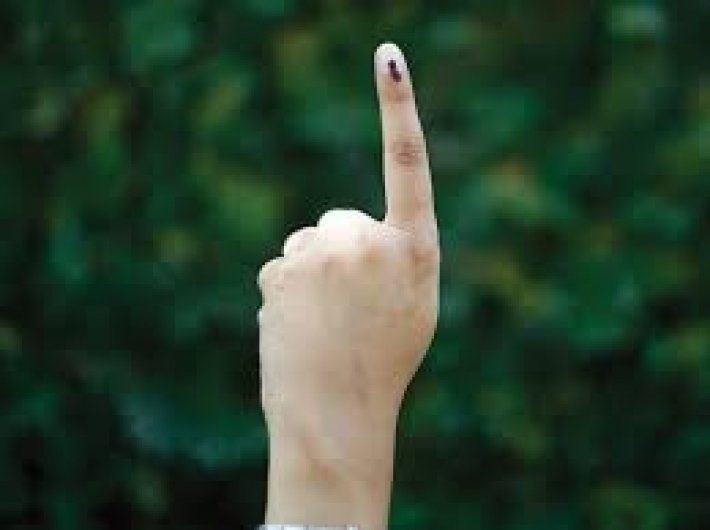
As Bihar prepares for the 2025 Vidhan Sabha elections, the women of the state are now grappling with two significant challenges: the bureaucratic obstacles posed by the Election Commission’s Special Intensive Revision (SIR) process and the empty promises of inclusivity made by politicians. Women, who have long been a silent yet decisive force in Bihar’s elections, are now at the centre of a storm triggered by the ECI’s introduction of the SIR process on June 24. With just over a few weeks left for the elections, the SIR has ignited debates about accessibility, exclusion, and electoral justice. It is worth noting that the last revision was made in 2003, which is more than 20 years ago.
Increasing Turnout: Not Worthy of Applause??
The significance of women in Bihar’s electoral arena cannot be overstated. In both the 2020 Vidhan Sabha and the 2024 Lok Sabha elections, women voters outnumbered men. Women’s turnout in the 2020 assembly polls stood at 59.7%, surpassing the male participation rate of 57.05%. This trend held steady in the 2024 general elections, where women again outpaced men, with 59.45% turnout compared to 53% for men. These numbers are not merely statistics, but they reflect a shift in electoral agency, a growing assertion of political identity by women in Bihar.
Yet, the question looms large: How inclusive is the system that seeks to count their votes? The introduction of the SIR aims to update electoral rolls and ensure authenticity. However, its timing, so close to the elections, raises more concerns than confidence. The process demands submission of detailed documentation to verify eligibility. While on paper this may seem procedural, on the ground it creates daunting barriers for those who lack literacy, access, resources, and in some cases, all of these.
The most affected by this are women, especially those from marginalised castes and communities. According to NFHS-5 data, Bihar’s female literacy rate stands at 60.5%, nearly 10 percentage points below the national average. A staggering 40% of women of reproductive age have never attended school and the percentage decreases with increase in their age (implying the older the women, the less probability of her being literate). And these numbers worsen among Dalit and Adivasi communities. For instance, women from the Musahar community have literacy rates as low as 17%. For such women, navigating the bureaucratic complexities of SIR, like filling out forms, arranging documents, understanding official communication, is not just difficult, it’s rather exclusionary.
Proof in the land of the landless
One of the main documents accepted for SIR validation is land ownership papers. In a deeply patriarchal society like Bihar, where property is predominantly registered in the names of men, how many women, especially those from backward or minority communities, can furnish such documents? For example, as per the caste census of 2022, about 86% of Dalits do not own any land. For Muslim women, Dalits, and landless labourers, the requirement is a non-starter.
Another document often required is a birth certificate. According to NFHS-5 (2019-21) data, only about 56% of children born in Bihar were issued birth certificates. The figures for earlier years are even more dismal. There are two critical points to consider here. First, a significant number of births in Bihar still occur outside formal healthcare systems, particularly among the lower socioeconomic strata, making documentation difficult, if not rare. Second, given the entrenched preference for male children in the state, it is worth questioning what proportion of girls actually receive birth certificates. When basic identity documents seem to be out of reach for the women, especially the marginalised women, any exercise to make them inclusive seems challenging.
These gaps are not just administrative oversights; they reflect deeper societal biases that continue to limit women’s visibility in official records, and now, potentially, in the voter rolls as well.
Promises worth considering?
At the same time, political parties are busy tailoring their manifestos to woo this crucial demographic. Chief minister Nitish Kumar’s recent announcement of 35% reservation in government jobs for women who have a “permanent address in Bihar” is an example. On the surface, it seems progressive. But scratch a little deeper, and it reveals exclusionary undertones. What about Bihari women who live outside the state for education or employment? What about those who migrated out of compulsion, not choice, due to the lack of opportunities within Bihar? Are they now outsiders in their own home?
The idea of linking electoral rights or job benefits to a permanent address within the state ignores the lived reality of migration. PLFS 2023 data shows that Bihar continues to have one of the highest migration rates in India. More than 50% of households have at least one earning member working outside the state. Often, women accompany their husbands or are themselves part of the mobile labour force. In this context, expecting families to return to Bihar on short notice to verify voter eligibility, amid high travel costs (arbitrary pricing of airlines way beyond the capacity of the majority of this workforce, shortfall of train tickets and other travel sources), is unrealistic and unfair.
Even more concerning is that while women are courted as voters, little is being done to address the root issues of their economic and social vulnerability. Bihar’s female workforce participation remains one of the lowest in the country. According to PLFS 2023, the unemployment rate among women in Bihar is significantly higher than the national average. Underemployment is rampant, with many women stuck in informal, low-paying, or seasonal jobs.
And amidst all this cacophony, we are not even talking about women who had to shift to another part of Bihar due to their marriages in distant locations. (In Bihar, people rarely get married within the same village.) So how viable is it for these women to get their new addresses verified and registered?
Policy announcements like a cash dole of Rs 2,500 per woman may grab headlines, but they are mere palliatives. Financial independence cannot be built on one-time handouts. The 35% job reservation sounds more promising, but even that raises questions about feasibility and reach. How many jobs are being created in Bihar in the first place? Is the reservation backed by structural investments in education, training, and placement support? Without expanding the size and diversity of Bihar’s economy, such announcements risk becoming hollow promises.
Does Voting imply Belongingness?
The core issue, then, is not just about voting rights or employment quotas, but about creating a Bihar that women can thrive in, and return to. The ongoing outmigration from Bihar is not just a labour market phenomenon; it’s a vote of no confidence in the state’s ability to provide for its people. Any serious effort to empower women must also aim to reverse this migration. That means generating meaningful jobs at every level: blue-collar, white-collar, and entrepreneurial. It means improving healthcare, education, and safety infrastructure. And it certainly means crafting policies that are inclusive of those who have left but wish to return.
The Special Intensive Revision (SIR), if not implemented sensitively, could end up being a barrier rather than a bridge. It risks disenfranchising precisely those who have the most at stake in Bihar’s future-marginalised women. A truly inclusive election must not only count every vote but also account for the structural inequalities that determine who gets to cast one. The ECI must ensure that the SIR process is extended, simplified, and made accessible through offline and community-based support.
The Supreme Court Reminder: What Inclusion Means
On July 28, the Supreme Court, while hearing petitions challenging the SIR process in Bihar, directed the ECI to accept Aadhaar and the Elector Photo Identity Card (EPIC) – both widely held documents – as valid proof of identity for the voter revision exercise. The Court emphasized that the objective must be one of “mass inclusion”, not exclusion and also highlighted the ECI’s affidavit that stated that voters already listed in the electoral roll published on January 7, 2025, would continue to appear in the draft roll shared with all District Magistrates (cum District Election Officers) on August 1, as long as they had submitted their enumeration forms - even if these were submitted without supporting documents. The process for filing claims and objections is to remain open until September 1, with verification of entries to be completed by September 25.
In a state like Bihar, where socio-economic and gender-based exclusions are deeply entrenched, the Court’s intervention serves as a crucial reminder that administrative precision must not come at the cost of democratic participation. For Bihar’s women, especially those standing at the intersection of caste, poverty, and migration, this moment is a test of whether the state will honour their political agency or merely offer symbolic gestures.