
Mallya case: banks to learn their lesson

The amount that Mallya failed to repay to banks is more than the total default on education loan in the country at a little over Rs 5,000 crore

jasleen

Jasleen Kaur | March 14, 2016 | New Delhi

#Kingfisher Airlines   #Rajya Sabha   #Vijay Mallya   #Banks   #Banking   #Column  


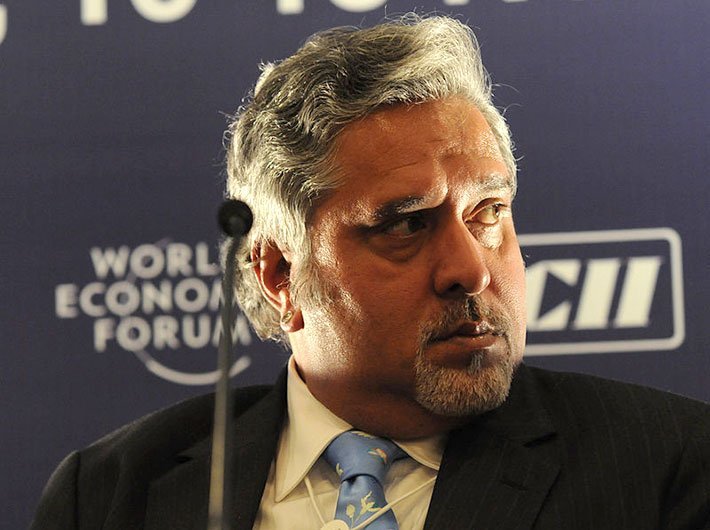
The recent statement from the liquor baron Vijay Mallya indicating he may not return to India at all has another bad news for banks which are putting efforts to recover Rs 7,000 crore from him. 

Putting the entire onus on banks, Mallya has said banks give out loans knowing the risk involved and he should not be made a villain. Of course he should not be. After all his intentions were best, as he claims and it is a bank which decides who gets the loan. It is not the first instance where banks are running after a business giant for recovery of loans. But it seems they have not learnt the lesson yet.
 
Not an easy road ahead for Indian banks

The poor accountability mechanisms have reduced the banking sector, specifically the state-run banks, to weak financial institutions burdened with huge debt of non-performing assets.

Easy loan to big companies, without monitoring the end use of funds, has been some of the reasons for the poor state of banks. Though, the picture changes completely when it comes to giving or recovery of loans from poor farmers. Even today, poor farmers are forced to commit suicide if they fail to pay off small loans.

No one can be blamed alone in the entire episode of Rs 7,000 crores scam. While a clear case of default and fund diversion and financial irregularities happened way back in December 2011 by Mallya. It was only in November 2015, when the State Bank of India (SBI), leading lender in the consortium, tagged him as wilful defaulter.

Only in March this year, SBI, which heads the consortium of 17 lenders to the Kingfisher Airlines, sought arrest of Vijay Mallya, when the bank approached Debt Recovery Tribunal. It sought action against him defaulting on loans over Rs 7,000 crore.

It was considered to be a strong action, but it was little too late. Banks filed petition in the supreme court to ensure Mallya does not flee from the country. But the liquid baron, who was already tipped off about the banks moving court, had already left the country.

It created a huge political uproar with political parties blaming each other for creating an easy path for Mallya to escape. But the entire story reflects how easy it is to manipulate things and make mockery of India law and judiciary for at least some people in the country.

Mallya is accused of defaulting Rs 7,000 crore. According to an estimate this is more than the total default on education loan in the country at a little over Rs 5,000 crore. It would be difficult for anyone to accept that the government and investigating agencies were unaware that the system was manipulated.

So far Mallya has not showed any willingness to repay. He has managed to use the judicial system to delay the loan repayment to banks.
While there is a clear chance that banks recovers only a fraction of their several thousand crores of dues as have been the story in the past.

Picture will be clearer in the coming months when we will see how severely Rajya Sabha member Vijay Mallya is dealt with. But the only hope one can have is that the banks learn a lesson this time and do not repeat the same mistake again.

Comments


Other News

Five ways to realise the potential of India’s handicraft and handloom sector

India`s economic ambitions are increasingly defined by the industries of the future. Semiconductors, electronics, artificial intelligence and advanced manufacturing dominate policy conversations. Yet one of India`s largest employment-intensive sectors continues to occupy a surprisingly marginal place in ec

Beyond toilets: Why open defecation persists in rural India

Despite the awareness campaigns on sanitation across India, open defecation (OD) is practised openly and widely in both rural and urban areas. Research shows that rural respondents are well aware of the negative impacts of OD, yet this awareness does not lead to toilet construction or use. In rural North I

What unpaid nation builders want from policymakers

The Supreme Court recently described homemakers as “nation builders” and fixed a notional monthly income of Rs 30,000 for them in motor accident compensation cases. The judgment was not about wages. It was about compensation. Yet it inadvertently raised a larger economic question: If a homemake

What the US–Iran peace deal means for India

After months of rising tensions, the United States and Iran have reached a memorandum of understanding called the "Islamabad Agreement." This agreement allows for the immediate reopening of the Strait of Hormuz without tolls and provides Iran with relief from sanctions, depending on its complianc

V. M. Tarkunde: A legal luminary par excellence

14 Lawyers: Portraits from The Bar By Raju Ramachandran  Juggernaut, 248 pages, Rs. 799  

The Cost of Obesity

The latest episode of Checks and Balances focuses on the ticking time bomb of obesity in India, and Geetanjali Minhas of Governance Now spoke with a panel of experts. You can watch the episode here: https://youtu.be/mH


Archives

Current Issue

Opinion

Facebook Twitter Google Plus Linkedin Subscribe Newsletter

Twitter






