If it fails, the West Asian conflict can go the way of Russia-Ukraine war, dragging on for years
In the midst of deep mistrust, the US and Iran are reported to have reached a framework deal for ending the West Asian conflict. But whether it will result in any meaningful breakthrough or pave the way for any lasting peace in the region, is in the realm of speculation.
During the weekend, just hours after announcing that a deal was closer than ever, the US said it downed multiple Iranian drones targeting commercial ships in the Strait of Hormuz. Moreover, Israel continued its attack on Lebanon even though Iran said it was included in the deal with the US.
Clearly, tensions have not gone out of the region. In fact, several demands have to be accommodated by both the US and Iran before lasting peace could descend in West Asia that has pushed the entire world deep into energy crisis, slowing international growth and imposing unimaginable costs on developing and the poor countries.
The framework deal, as per media reports, includes 60-day ceasefire, reopening the Strait of Hormuz by Iran and lifting of the US naval blockade of the Strait. Iran would have to reaffirm its commitment that it would not develop nuclear weapons. But key issues such as the fate of Iran’s highly enriched uranium stockpile and lifting of US sanctions on Tehran would be resolved or not, have to be seen.
Since February 28, when the US and Israel jointly launched attacks on Iran, two formal ceasefires have already been announced: on April 8 and April 21. But their repeated violations have highlighted their fragility.
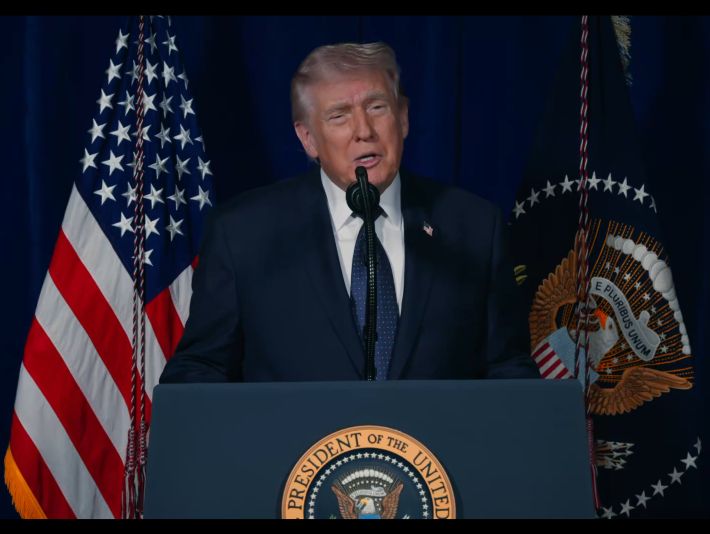
Against this backdrop, when Trump was recently asked by media persons whether the ceasefire with Iran remained effective, he replied, “That’s a different part of the world. You know, I’d say in that part of the world, a ceasefire is when you’re shooting in a more moderate manner.”
By stating this, Trump was, in hindsight, acknowledging that the ceasefire was largely ineffective. If the proposed framework deal meets the same fate, it risks pulling the US deeper into what many analysts describe as an expanding regional quagmire. That means America could find itself in a similar situation to what Russia is currently witnessing in Ukraine – a prolonged and costly conflict with no clear end in sight.
This is the fifth year into the war, Russia, burdened by thousands of the US and Europe-led sanctions, remains under significant economic strain. The budget deficit has widened, while economic growth has stagnated.
No amount of peace initiatives, diplomatic efforts and backdoor channel activities have worked enough to end Russia’s ongoing war with Ukraine even though Moscow continues to bear the mounting economic, military, and political costs of the war.
According to various estimates, Russia has lost between 2,80,000 and 5,18,000 military personnel since the start of war in February 2022. The BBC has so far confirmed the names of 2,23,539 soldiers and officers killed fighting for the Russian side in Ukraine. The BBC said that the real death toll could be much higher. However, the Kremlin has dismissed the report while terming it as western disinformation.
The Russian defence ministry last released an official data in September 2022, when it reported that 5,937 Russian military personnel had been killed in the Ukraine war. Since then, no official figure has been released by Russia.
However, to the dismay of analysts, Ukrainian president Volodymyr Zelenskyy said only 55,000 military personnel of his country have been killed since the war. He said this in an interview with France 2 TV on February 5. He admitted that a large number of people are considered officially missing.
On the economic front too, Ukraine is bleeding fast. According to the Kiev School of Economics, since the launch of full-scale war by Russia, total economic loss suffered by Ukraine has gone up to $1.7 trillion. Yet, there is little prospect of relief. Kyiv and Moscow remain far apart on the key issues underlying the conflict, with neither side willing to make concessions sufficient to bridge their differences. As a result, the war remains locked in a prolonged stalemate, prolonging both the human and economic devastation.
In the case of the US-Israel war against Iran, the long-term consequence cannot be overlooked. Even as the scale of destruction has so far been smaller than what is witnessed in Russia and Ukraine, the West Asia conflict has heightened regional instability, disrupted economic activity, and increased the risk of a wider confrontation.
The Iran war has already imposed a significant cost on the US. As per BBC, the US has suffered damages at 20 military sites, spread across eight West Asian countries in more than three months of the West Asian conflict. Although, some analysts say this figure could be a conservative estimate.
According to these analysts, as many as 28 US military sites in West Asia have suffered damages in the war so far. In addition to this, the US reportedly lost three state-of-the art anti-ballistic missile defence systems called THAAD (Terminal High Altitude Area Defence) deployed at Al Ruwais and Al Sader airbases of the UAE and Muwaffaq Salti airbase in Jordan. Each THAAD costs around $1 billion to the manufacturer and the US has, as per media reports, deployed eight THAAD missile defence systems around the globe.
The US refueling and surveillance aircraft stationed at Prince Sultan airbase in Saudi Arabia, fuel storage bunkers, aircraft hangers and troop accommodation at Ali Al Salem airbase and satellite communication hardware at Camp Arifjan airbase in Kuwait suffered extensive damage in Iranian strikes on the US military assets in the Gulf countries.
Shedding light on damages suffered by the US in the West Asian conflict, the Congressional Research Service (CRS) report said that at least 42 American military aircraft were lost or damaged during the conflict with Iran.
The CRS report said the aircraft losses ranged from advanced F-35 stealth fighters and F-15E Strike Eagles to MQ-9 Reaper drones and KC-135 aerial refuelling tankers. The report further said that the total financial cost of the damaged military aircraft could exceed $29 billion.
These losses underscore the growing material costs of a conflict whose ultimate objective remains uncertain. This is the reason why India consistently maintains that war is not the solution to a dispute.