
DeMo can’t fight black money: Leading business body

Assocham study finds note-scrapping can do little to stop parallel economy

GN Bureau | January 18, 2017

#business   #economy   #currency   #corruption   #black money   #Demonetisation   #Assocham  


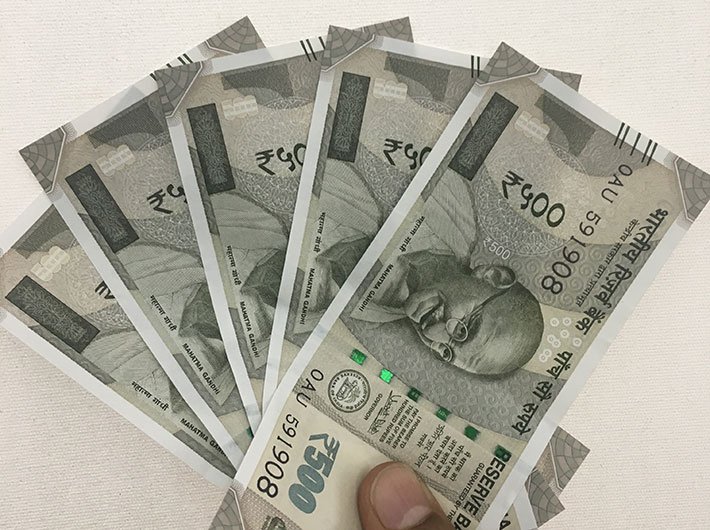
If fighting black money is the aim, demonetisation is the wrong weapon, says India’s largest and oldest business body. 
 
“Demonetisation may wipe out the stock of black money held in cash but can do little about the ill-gotten wealth converted to assets like gold and real estate and the scrapping of high value notes does not prevent the future generation of unaccounted money,” the Associated Chambers of Commerce and Industry of India (Assocham) said in a release on Tuesday, based on its study.  
 
While the study speaks of the possibility of wiping out the existing stock of black money, reports suggest that nearly all issued currency has come back in the banking system, and thus the move has failed to strike out even the existing stock of black money. In this context, Assocham secretary general DS Rawat noted in the press statement, “Indications that most of the scrapped currency has returned to the banking system through right or wrong means do suggest that demonetisation may not even fully wipe out the existing stock of ill-gotten cash. To that extent, even our study may turn out to be ambitious if the tax authorities are not able to trace the money laundered through different accounts. Given the resource constraints with the tax authorities, carrying out such an exercise for identification of laundered money may be a herculean task.”  
 
The argument, of course, has been made by many, yet coming as it does, even belatedly, from a leading business association shows unease in the economy about the move. 
 
“Invalidating existing high denomination notes addresses the stock of black money but little to address future flows. Eliminating such flows will require further reforms like lowering stamp duty on property transactions, electronic registration of real estate etc.,” the Assocham said. 
 
It also criticised loopholes in the high denomination currency withdrawal. “It is very difficult to separate black money from white money because distinction is not once-and-for-all. White money used to purchase something becomes black if the shop-keeper does not pay sales tax…”  
 
Much of conspicuous consumption is paid for in unaccounted money, which, in the hand of the recipients can again become perfectly legal income, it argued. Benami deals in real estate and commodity markets make it difficult to trace the transactions to the ultimate buyer or seller. “Even if the existing stock of illegal currency is wiped out by demonetization, it will be soon replaced as long as such points of contact exist between legitimate and illegitimate deals,” said the ASSOCHAM study quoting the Economic and Political Weekly journal. 
 
It said ultimately the problem of undisclosed incomes and wealth has to be tackled at the source. The government  must reduce  the opportunity and incentives for unaccounted  transactions by narrowing the gap between the market value and the one fixed by the government agencies for different levies like stamp duty etc.  
 
The chamber suggested several measures to check the menace of black money.  These include reducing discretionary powers to officers, which is possible if the rules and laws are crystal clear and are not left to individuals’ interpretation. 
 
“Ironically, several of our laws are badly drafted and framed, leaving scope for official discretion. The problem in a way starts here,” said the chamber, adding a strong political will would be required to deal with this issue.  Bureaucrats drafting the proposed legislations should be clearly instructed not to leave any grey areas.
 

Comments


Other News

Five ways to realise the potential of India’s handicraft and handloom sector

India`s economic ambitions are increasingly defined by the industries of the future. Semiconductors, electronics, artificial intelligence and advanced manufacturing dominate policy conversations. Yet one of India`s largest employment-intensive sectors continues to occupy a surprisingly marginal place in ec

Beyond toilets: Why open defecation persists in rural India

Despite the awareness campaigns on sanitation across India, open defecation (OD) is practised openly and widely in both rural and urban areas. Research shows that rural respondents are well aware of the negative impacts of OD, yet this awareness does not lead to toilet construction or use. In rural North I

What unpaid nation builders want from policymakers

The Supreme Court recently described homemakers as “nation builders” and fixed a notional monthly income of Rs 30,000 for them in motor accident compensation cases. The judgment was not about wages. It was about compensation. Yet it inadvertently raised a larger economic question: If a homemake

What the US–Iran peace deal means for India

After months of rising tensions, the United States and Iran have reached a memorandum of understanding called the "Islamabad Agreement." This agreement allows for the immediate reopening of the Strait of Hormuz without tolls and provides Iran with relief from sanctions, depending on its complianc

V. M. Tarkunde: A legal luminary par excellence

14 Lawyers: Portraits from The Bar By Raju Ramachandran  Juggernaut, 248 pages, Rs. 799  

The Cost of Obesity

The latest episode of Checks and Balances focuses on the ticking time bomb of obesity in India, and Geetanjali Minhas of Governance Now spoke with a panel of experts. You can watch the episode here: https://youtu.be/mH


Archives

Current Issue

Opinion

Facebook Twitter Google Plus Linkedin Subscribe Newsletter

Twitter






