
Ahmedabad district railway network to be expanded

Cabinet approves Rs 20,667 crore project, will be completed up to 2030-31

GN Bureau | May 13, 2026

#Railways   #Cabinet  
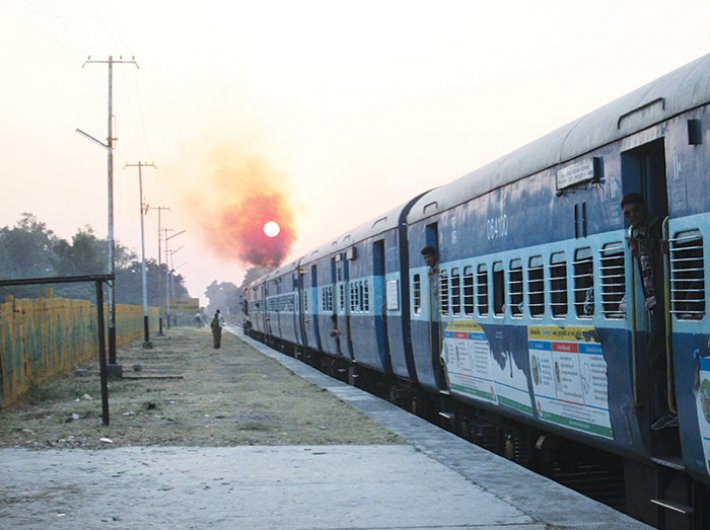
(Photo: Governance Now)

The Cabinet Committee on Economic Affairs, chaired by prime minister Narendra Modi, on Wednesday approved the Ahmedabad (Sarkhej) – Dholera Semi High-Speed Double Line project of Ministry of Railways with total cost of Rs. 20,667 crore (approx.). It will be Indian Railways 1st semi high-speed project, planned with indigenously developed technology.

 
The project section will provide faster connectivity between Ahmedabad, Dholera SIR, upcoming Dholera Airport and Lothal National Maritime Heritage Complex (NHMC). Connecting Ahmedabad with Dholera will cut down passenger travel time enabling comfortable daily commuting and same‑day return trips. This semi high speed railway would not only bring two cities closer but also bring the people living hundreds of kilometers away, closer to each other, an official release said.
 
As India’s first semi high-speed rail project, the project will serve as a pioneer project acting as a reference model for the phased expansion of semi high-speed rail across the country.
 
The new line proposal will provide direct connectivity and improve mobility, providing enhanced efficiency and service reliability for Indian Railways. The project is in line with the PM’s Vision of a New India which will make people of the region “Atmanirbhar” by way of comprehensive development in the area which will enhance their employment/ self-employment opportunities.
 
The project is planned on PM-Gati Shakti National Master Plan with focus on enhancing multi-modal connectivity & logistic efficiency through integrated planning and stakeholder consultations. These projects will provide seamless connectivity for movement of people, goods, and services.
 
The project covering Ahmedabad district in Gujarat will increase the existing network of Indian Railways by about 134 Kms.
 
The proposed projects will enhance connectivity to about 284 villages, which have a population above 5 lakh each.
 
The Railways being environment friendly and energy efficient mode of transportation, will help both in achieving climate goals and minimizing logistics cost of the country, reduce oil import (0.48 Crore Litres) and lower CO2 emissions (2 Crore Kg) which is equivalent to plantation of 10 lakh trees.

Comments


Other News

The women India doesn`t count enough

She runs a tailoring shop from a single room in her house. Every morning she stitches school uniforms, answers queries on WhatsApp, collects payments through UPI and orders fabric online. Officially, she still belongs to India`s informal economy. Yet her enterprise is no longer disconnected from the formal

“Cancer is just a mind game”

Dr. Ananda Shankar Jayant, a Padma Shri awardee, inspired audiences for decades through her mastery of Bharatanatyam and Kuchipudi. But it was her journey through cancer that taught some of life`s most powerful lessons in courage and resilience.

Why Swami Vivekananda is the pathfinder for our times

Swami Vivekananda for Our Times  Edited and compiled by Rajiv Sikri, with Introduction by S. Gurumurthy Rupa Publications, 552 pages, Rs 695  

Five ways to realise the potential of India’s handicraft and handloom sector

India`s economic ambitions are increasingly defined by the industries of the future. Semiconductors, electronics, artificial intelligence and advanced manufacturing dominate policy conversations. Yet one of India`s largest employment-intensive sectors continues to occupy a surprisingly marginal place in ec

Beyond toilets: Why open defecation persists in rural India

Despite the awareness campaigns on sanitation across India, open defecation (OD) is practised openly and widely in both rural and urban areas. Research shows that rural respondents are well aware of the negative impacts of OD, yet this awareness does not lead to toilet construction or use. In rural North I

What unpaid nation builders want from policymakers

The Supreme Court recently described homemakers as “nation builders” and fixed a notional monthly income of Rs 30,000 for them in motor accident compensation cases. The judgment was not about wages. It was about compensation. Yet it inadvertently raised a larger economic question: If a homemake


Archives

Current Issue

Opinion

Facebook Twitter Google Plus Linkedin Subscribe Newsletter

Twitter







