Sajid Mohamed’s ‘The Chromatic World Order: The Fiction That Rules Our World’ explores how race and racial hierarchies continue to influence global politics, institutions and society
The Chromatic World Order: The Fiction That Rules Our World
By Sajid Mohamed
Aakar Books
.jpg)
Race is making a return to the discourse. It may not be just a legacy of colonialism but a force that continues to shape the world today.
Sajid Mohamed, a practising lawyer and the founder of a law firm, has written a book that provides a timely perspective on important conversations around race, colonialism, international relations, geopolitics, inequality and the global struggle against racism. ‘The Chromatic World Order: The Fiction That Rules Our World’ (Aakar Books) explores how race and racial hierarchies have shaped the modern world and continue to influence global politics, institutions and society.
The book argues that the idea of white superiority has played a major role in European imperialism, colonialism, neocolonialism and the global systems that followed. It questions whether the end of colonial rule truly ended the influence of racial hierarchies in the world.
Written in an accessible style and supported by historical evidence, ‘The Chromatic World Order’ challenges readers to look at modern history from a different perspective and question the systems that continue to shape the global order.
Here is an excerpt from the book:
WHAT IS COLONIALISM?
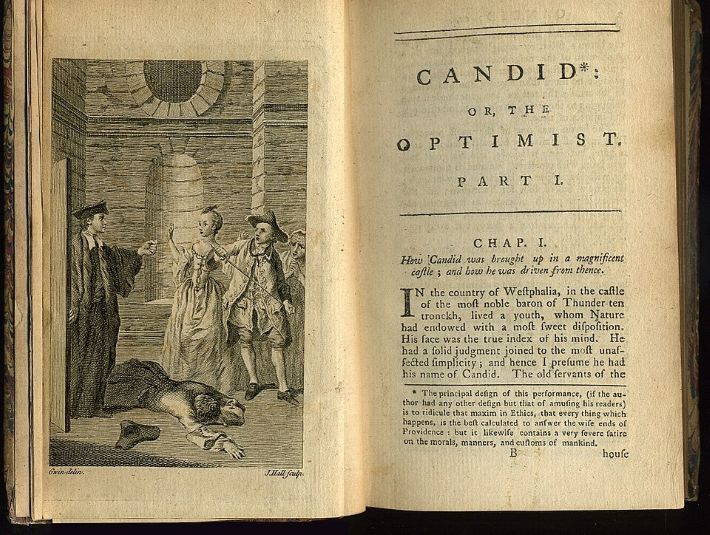
Two-and-a-half centuries after Voltaire’s ‘Candide’ offered a scathing satire of the Enlightenment and its moral contradictions, Europe continues to stage spectacles of violence that are cloaked in the language of civilization. In one of the most harrowing scenes in the novel, Candide encounters a mutilated enslaved African whose limbs have been severed; even this ‘wretched of the Earth’ disturbingly accepts his fate as a customary cost of Europe’s appetite for sugar.
In June 2024, that fictional scene from ‘Candide’ found a grim replay in Italy’s Lazio region, when 31-year-old Indian farmworker Satnam Singh was abandoned by his employer by the roadside to bleed to death with a severed arm cut in an agricultural accident. To perish like industrial waste. The parallels are unmistakable: both symbolize the hidden costs of Europe’s economy. Singh’s undocumented migration from ‘New India’ to the mythologized ‘Old World’ reverses the historical direction of empire but not its structure. The ideology that once used race and religion to justify enslavement has been sublimated into regimes of documentation and legal status, but the core remains unchanged; rendering Singh’s Brown, undocumented, migrant body killable because the system continues to code certain lives as disposable.
The Italian countryside, like many parts of Western Europe, depends on undocumented labour from Africa and South Asia, former colonial and peripheral zones. These workers contribute significantly to the Continent’s economies, informal economies in particular, but they are excluded from legal protection and basic humanity. Their ‘illegality’ is, therefore, a condition designed to ensure maximum economic extraction with minimal accountability. That Singh made it to the shore, unlike the thousands aboard migrant ships like the ‘Adriana’ that drowned in the Mediterranean, is of no consolation. It is proof that Europe has not ended its extraction, only rebranded it.
An essential dimension of the historical narrative that began with the ‘Santa Maria’ and unfolded through centuries of conquest is the construction of a colossal global machinery of exploitation, with race based on the ‘epidermal schema’ as its principal axis. As our earlier survey demonstrates, race was not a discovery but a fabrication – a conceptual tool that legitimized the hierarchy and dispossession that emerged alongside the expansion of European empires. Classification based on race, which gained intellectual validation in Enlightenment science, was later institutionalized through legal apparatus and science under the emerging disciplines of anthropology and natural philosophy. These ideologies, although cloaked in the language of reason or divine mission, shared a common purpose: to render colonial domination permissible, inevitable, historically necessary and intellectually palatable. What emerged from it was a deliberately constructed world system of asymmetrical power, in which Europe and its settler colonies became centres of accumulation, and the rest of the world became subjects for extraction and labour. In the sections that follow, we briefly survey this system of domination, what we call colonialism, with emphasis on its racial basis and enduring global legacy.
Colonialism is a system of domination in which a politically and militarily powerful entity establishes and sustains control over a subordinate territory and its population, primarily for economic exploitation, political control, and cultural imposition. It involves the extraction of material wealth and the imposition of the colonizer’s language, institutions, culture and knowledge base at the expense of indigenous ways of life. At its core, colonialism is a mode of systematic subjugation, not only of people but also of land, culture, memory, and future.
Jean-Paul Sartre asserts that colonialism is neither a series of chance occurrences nor the statistical outcome of thousands of individual undertakings. Rather, it is a system deliberately constructed around the mid-nineteenth century. It began to bear fruit around 1880, entered decline after World War I, and has since begun to turn against the colonizing nations themselves. According to Sartre, the system by its very nature effortlessly destroys all attempts at development; it can only maintain itself by becoming harder and more inhuman each day. Moreover, by increasing its rigour, Sartre says – in the context of French colony Algeria –
You begin by occupying the country, then you take the land and exploit the former owners at starvation rates. Then, with mechanization, this cheap labour is still too expensive; you finish up taking from the natives their very right to work. All that is left for the Algerians to do, in their own land, at a time of great prosperity, is to die of starvation.
The case of the Algerians, even in Sartre’s account, is extrapolatable to the concept universally. The system, ultimately, says Sartre, turns against the colonists, as it reaches a ‘point where the system destroys itself’ – the colonies cost more than they bring to the colonizers’ coffers, and
since the colonists have nothing but hardships to offer the colonized, since they keep them at a distance, since they make them a bloc which cannot be integrated, this radically negative attitude must have the necessary concomitant of producing an awakening among the masses.
This awaking causes nationalism, says Sartre.
Colonialism is often conflated with imperialism; however, the two are not synonymous. The critical distinction lies in their forms of operation: colonialism typically entails direct administrative rule or settler occupation, whereas imperialism may manifest through less overt means, including economic dependency, geopolitical coercion, or cultural influence. Colonialism, therefore, can be viewed as the institutionalized expression of imperial ambition, its most concrete and territorially invasive form. V. I. Lenin treated them as two sides of the same coin, with imperialism being the overarching, more advanced stage of capitalism that necessarily entails colonialism. Lenin defined imperialism as the monopoly stage of capitalism, arguing that by the late nineteenth and early twentieth centuries, capitalism had evolved beyond its earlier competitive phase and entered a new stage characterized by five fundamental economic features, one of which was the complete territorial division of the whole world among the biggest capitalist powers. This completion meant that future expansion could only come at the expense of other imperial powers, leading to inter-imperialist rivalries and wars. Imperialism, for Lenin, was not just a policy choice but an inevitable structural development of capitalism itself. It was driven by the inherent need of advanced capitalist economies to find new markets, sources of raw materials, and avenues for profitable capital investment as domestic opportunities became saturated and profits began to fall.
Although conquest and domination have long histories – evident in empires like Rome, Byzantium, and the Islamic Caliphates – what distinguished European colonialism in the early modern period was its unprecedented global scale and its ideological coherence among the colonizers (the West). This system, spirited by the belief that entire populations could be classified and subordinated according to purportedly scientific or moral criteria, featured racial hierarchy and civilizational exceptionalism in addition to capitalist extraction. Neither a mere political arrangement nor economic programme, it was a totalizing regime of control that sought to reconfigure the very fabric of colonized societies. Thus, this ‘new’ colonialism was more than Lenin’s ‘highest form of capitalism’, and it marked a fundamental shift in global relations.
[The excerpt reproduced with the permission of the publishers.]
Image credit: https://commons.wikimedia.org/wiki/File:VoltaireCandidFrontis%2BChap01-1762.jpg