
A photo story capturing the journey of Amarnath yatris in Jammu and Kashmir
Photos by Javeed Shah | August 23, 2018

A curving throng of devotees outside the cave shrine of Amarnath, where water dripping from the ceiling freezes into a cylindrical mound worshipped by the devout as a Shivling. Legend has it that it was discovered by Bhrigu Muni, a rishi. Texts dating to the 11th century and to the Mughal era have been cited referring to the shrine. The most recent ‘discovery’ of the shrine is attributed to a shepherd called Buta Malik in the mid-19th century. Since then pilgrims have been visiting the shrine by the thousands daily during the Amarnath Yatra season, making the five-day journey from Pahalgam on foot or pony, braving, in recent decades, militancy, in addition to the weather and the steep mountain path. More than 2.6 lakh have already visited it this year.
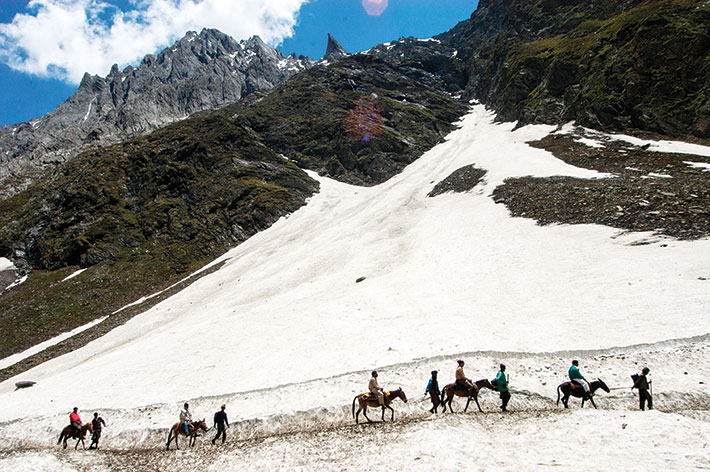
Rendered into toy figures by the tall, dark mountains and the stark white expanses of ice and snow, a string of pilgrims on ponies led by pony-walas who double up as guides makes its way towards the cave shrine. Of late, global warming has been a major concern in the Himalayas, considered by scientists to be the ‘Third Pole’. If the increased rate of glacial melting is a scientific concern, pilgrims worry about what global warming could do to the ice Shivling.
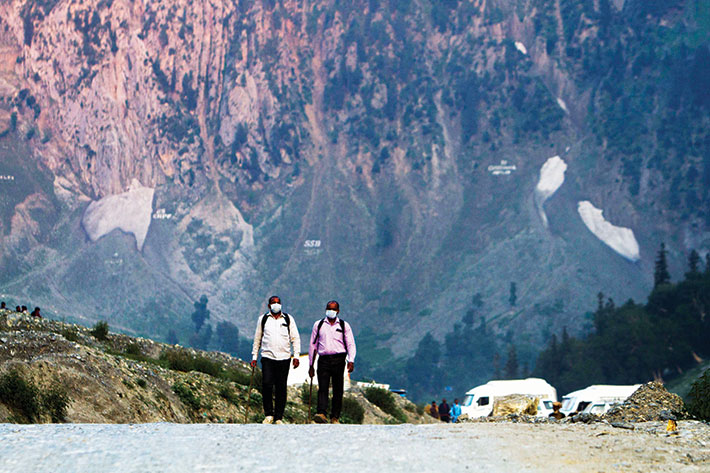
Incongruous in this looming, mountainous diorama, two pilgrims seem like office-goers but for the trekking sticks. The ambulances made available by the government make the Yatra safer for pilgrims who are unable to take the strains imposed by the high altitudes.
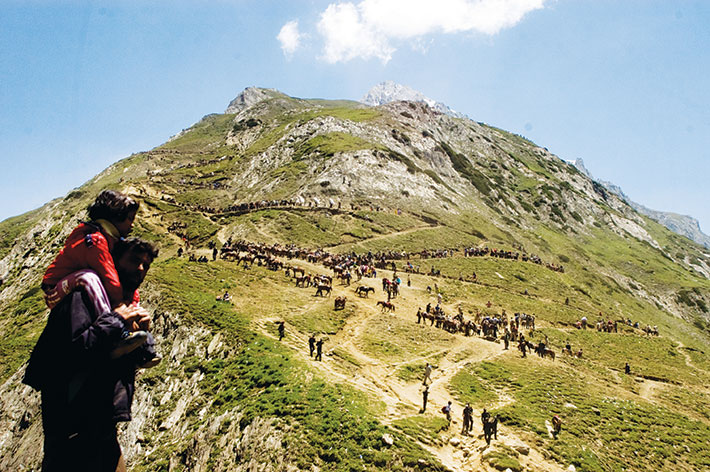
Ponies rest and wait for pilgrims to take up to the cave shrine. A child, meanwhile, gets a ride on a relative’s shoulders.
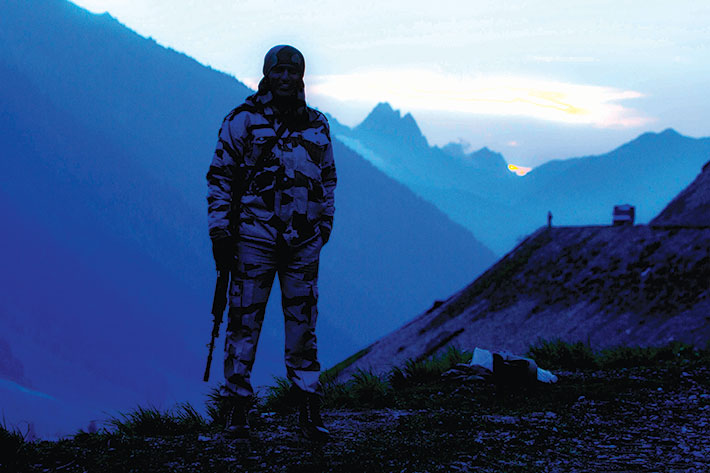
There have been many terrorist attacks on Amarnath pilgrims in this state beset by miltancy. Only last year, seven people were killed. Understandably, security is a major concern. This year, over 40,000 CRPF and state police personnel have been deployed to secure the yatris’ safety.
Success in today’s professional organisation is no longer solely determined by academic qualifications, technical expertise or years of experience. While these attributes do matter, organisations increasingly value individuals who demonstrate the right mindset and behavioural qualities. The ability
Prime minister Narendra Modi interacted with CEOs and Founders of 20 Space Startups at Seva Teerth on Friday. CEOs of leading companies in the space sector working in diverse fields ranging from building rockets and reusable semi-cryogenic launch vehicles, avionics, satelli
In 2012, Anita Dash wasn`t dreaming of building a dairy brand. She wasn`t studying business models or planning market expansion. Like countless mothers across India, her focus was on something much simpler: giving her children a better future. At the time, her most valuable
India`s crude oil consumption is estimated to be around 88.5% imported from abroad. This one single figure is also responsible for why ethanol has become both an economic strategy and fuel policy at the same time. In an economy like India, which depends so heavily on foreign oil, any increase in internat
India`s retail inflation shows a reassuring picture at first glance. According to the latest data, Consumer Price Index (CPI) inflation edged up to 4.38% in June 2026 from 3.93% in May 2026, but continued to remain within the Reserve Bank of India`s (RBI) target band of 4% (+/- 2%). However, beneath this
When a company founder opens their personal chequebook to buy shares in their own business, stock markets usually applaud. To the average retail investor, it feels like the ultimate vote of confidence, a sign that the people running the show have real skin in the game and believe brighter days are ahead.











