
Cash subsidy under DBT to go up to Rs 1 lakh crore: ASSOCHAM

Total subsidy paid under DBT in 2016-17 was Rs 74,502 crore

GN Bureau | August 29, 2017

#Aadhaar   #DBT   #direct benefit transfer   #ASSOCHAM  
(Illustration: Ashish Asthana)

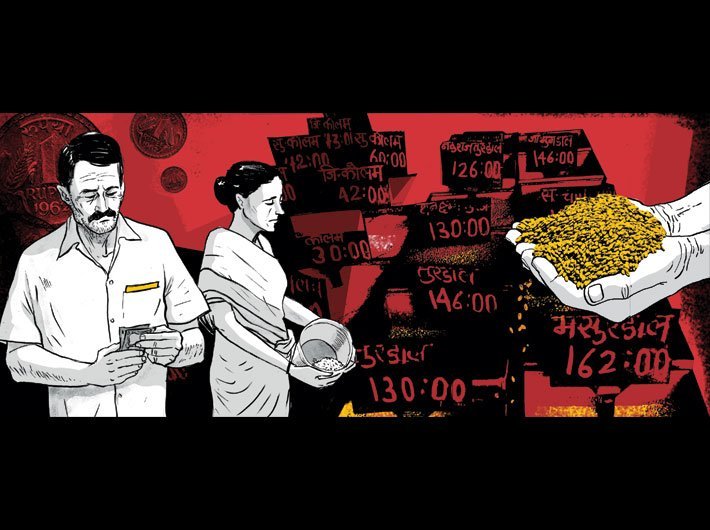
Aadhaar cards have facilitated payment of as much as Rs 83,184 crore to beneficiaries of the Direct Benefit Transfer (DBT) schemes, said a study.
 
An ASSOCHAM–Thought Arbitrage Report Card of three years of the Narendra Modi government said that total subsidy paid under DBT in 2016-17 was Rs 74,502 crore.
 
The new target is to cover 534 schemes in by March 2018, out of which 300 are cash schemes and more than 200 are in-kind schemes. Hence, cash subsidy paid under DBT is expected to increase to Rs 1 lakh crore subsequently.
 
“Real benefit of Jan Dhan and Aadhaar is finally reflected in the number of beneficiaries of government DBT schemes. The amount of funds transferred under DBT schemes between January 1, 2013 and March 31, 2017 is Rs 83,183.79 crore, but the real achievement lies not in the amount disbursed, rather in the fact that these amounts were disbursed with minimum leakages or malpractices and that is important in terms of good governance,” the study said.
 
DBT schemes have resulted into weeding out 3.34 crore duplicate consumers under PAHAL and a further 2.33 crore ration cards being deleted, bringing transparency in governance. Total savings under DBT has been Rs 49,500 crore till December 2016. DBT savings have been highest under the PAHAL scheme, amounting to Rs 26,408 crore till December 2016.
 
The ASSOCHAM report card  said the ‘Prime Minister Jan Dhan Yojana (PMJDY)’  is the back bone of financial inclusion, and the first step of creating bank accounts for hitherto uncovered population has been done quite efficiently within a short span of time
 

Comments


Other News

India faces critical shortage of skin donors amid rising burn cases

India reports nearly 70 lakh burn injury cases every year, resulting in approximately 1.4 lakh deaths annually. Experts estimate that up to 50% of these lives could be saved with adequate access to skin donations.   A significant concern is that around 70% of burn victims fall wi

Not just politics, let`s discuss policies too

Why public policy matters Most days, India`s loudest debates stop at the ballot box. We can name every major leader and recall every campaign slogan. Still, far fewer of us can explain why a widow`s pension is delayed or how a government school`s budget is actually approved. That

When algorithms decide and children die

The images have not left me, of dead and wounded children being carried in the arms of the medics and relatives to the ambulances and hospitals. On February 28, at the start of Operation Epic Fury, cruise missiles struck the Shajareh Tayyebeh school – officially named a girls’ school, in Minab,

The economics of representation: Why women in power matter

India’s democracy has grown in scale, but not quite in balance. Women today are active participants in elections, influencing outcomes in ways that were not as visible earlier. Yet their presence in legislative institutions continues to lag behind. The Nari Shakti Vandan Adhiniyam was meant to addres

India will be powerful, not aggressive: Bhaiyyaji

India is poised to emerge as a global power but will remain rooted in its civilisational ethos of non-aggression and harmony, former RSS General Secretary Suresh `Bhaiyyaji` Joshi has said.   He was speaking at the launch of “Rashtrabhav,” a book by Ravindra Sathe

AI: Code, Control, Conquer

India today stands at a critical juncture in the area of artificial intelligence. While the country is among the fastest adopters of AI in the world, it remains heavily reliant on technologies developed elsewhere. This paradox, experts warn, cannot persist if India seeks technological sovereignty.


Archives

Current Issue

Opinion

Facebook Twitter Google Plus Linkedin Subscribe Newsletter

Twitter







