
India faces critical shortage of skin donors amid rising burn cases

70 lakh burn cases annually put thousands of lives at risk

geetanjali

Geetanjali Minhas | April 24, 2026 | Mumbai

#Organ Donation   #Healthcare  
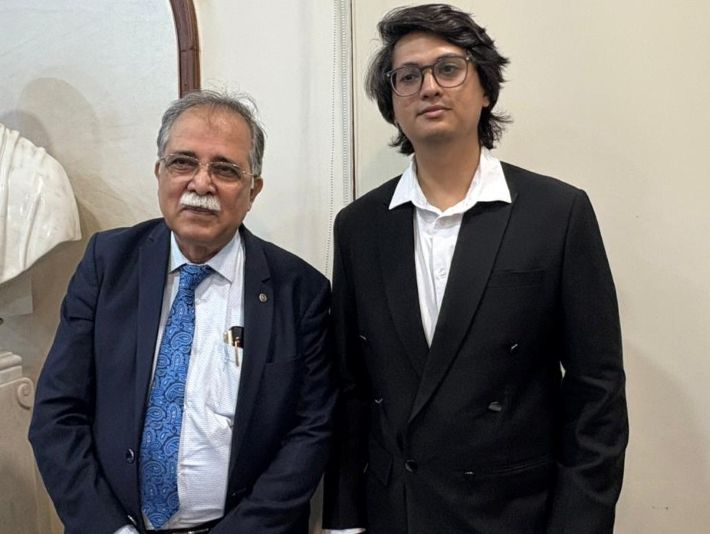
Dr Sunil Keswani and burn survivor Viraj Thakoor at the awareness meet

India reports nearly 70 lakh burn injury cases every year, resulting in approximately 1.4 lakh deaths annually. Experts estimate that up to 50% of these lives could be saved with adequate access to skin donations.

 
A significant concern is that around 70% of burn victims fall within the 15-35 age group, the most economically productive segment of the population. Women and children remain disproportionately affected, accounting for nearly 80% of cases, with kitchen-related accidents responsible for the majority of injuries.
 
Severe burn cases require immediate access to cadaveric skin (allografts), which can only be provided through skin banks. These grafts are often the difference between life and death for critically injured patients.Without adequate skin banks, survival chances drop drastically. While India initiated skin banking in 2002, the country currently has only 34 skin banks, far from sufficient for its population needs.
 
The National Burns Centre has raised serious concerns about the acute shortage of skin donations nationwide.
 
Speaking at an awareness drive, Dr. Sunil Keswani, director and plastic surgeon at the centre, said, “It is likely that only 1 in 10 people is aware of the option to donate skin. This lack of awareness means only a fraction of burn patients receive life-saving grafts.”
 
In Mumbai alone, skin banks receive just 25% of the required donations each month, highlighting a critical gap between demand and supply.
 
Limited awareness remains the biggest barrier to skin donation in India. Many people are unaware that:
 
* Skin must be donated within 6 hours of death
* The procedure involves no bleeding or disfigurement
* Only superficial layers are harvested from the legs, thighs, and back
* The process takes just 45 minutes
* No matching is required
* Timely access to skin grafts during the critical treatment window significantly reduces complications, mortality, and long-term disability, while also easing the emotional and financial burden on families.
 
Burn survivor Viraj Thakoor, treated at the National Burns Centre, said, “A workplace accident left me with 43% burns, and my survival depended on timely treatment. Skin donation saved my life. I urge more people to pledge skin donation-it can mean the difference between life and death.”
 
“Expanding the network of skin banks and increasing public awareness are critical to saving lives. With greater participation in skin donation, thousands of burn victims across India could receive timely treatment and a second chance at life. Skin donation is simple, dignified, and life-saving and awareness can turn silent potential into real impact,” added Dr Keswani.
 
The awareness initiative was supported by Rotary Club of Bombay North, Rotary Club of Deonar, Zonal Transplant Co-ordination Centre, Regional Organ and Tissue Transplant Organisation and included Sumati Group, Sunday Friends, Manavta Charitable Foundation, and the Federation of Body and Organ Donation. 

Comments


Other News

Not just politics, let`s discuss policies too

Why public policy matters Most days, India`s loudest debates stop at the ballot box. We can name every major leader and recall every campaign slogan. Still, far fewer of us can explain why a widow`s pension is delayed or how a government school`s budget is actually approved. That

When algorithms decide and children die

The images have not left me, of dead and wounded children being carried in the arms of the medics and relatives to the ambulances and hospitals. On February 28, at the start of Operation Epic Fury, cruise missiles struck the Shajareh Tayyebeh school – officially named a girls’ school, in Minab,

The economics of representation: Why women in power matter

India’s democracy has grown in scale, but not quite in balance. Women today are active participants in elections, influencing outcomes in ways that were not as visible earlier. Yet their presence in legislative institutions continues to lag behind. The Nari Shakti Vandan Adhiniyam was meant to addres

India will be powerful, not aggressive: Bhaiyyaji

India is poised to emerge as a global power but will remain rooted in its civilisational ethos of non-aggression and harmony, former RSS General Secretary Suresh `Bhaiyyaji` Joshi has said.   He was speaking at the launch of “Rashtrabhav,” a book by Ravindra Sathe

AI: Code, Control, Conquer

India today stands at a critical juncture in the area of artificial intelligence. While the country is among the fastest adopters of AI in the world, it remains heavily reliant on technologies developed elsewhere. This paradox, experts warn, cannot persist if India seeks technological sovereignty.

RBI pauses to assess inflation risks, policy transmission

The Reserve Bank of India (RBI) has begun the new fiscal year with a calibrated pause, keeping the repo rate unchanged at 5.25 per cent in its April Monetary Policy Committee (MPC) meeting. The decision, taken unanimously, reflects a shift from aggressive policy action to cautious observation after a signi


Archives

Current Issue

Opinion

Facebook Twitter Google Plus Linkedin Subscribe Newsletter

Twitter






