
A web portal to enhance transparency in environmental regulation

There are 43,000 industries dealing in hazardous waste, of which about 30,000 industries have been mapped through this application

GN Bureau | May 10, 2016

#waste management   #industries   #hazardous waste   #Prakash Javadekar   #environment  


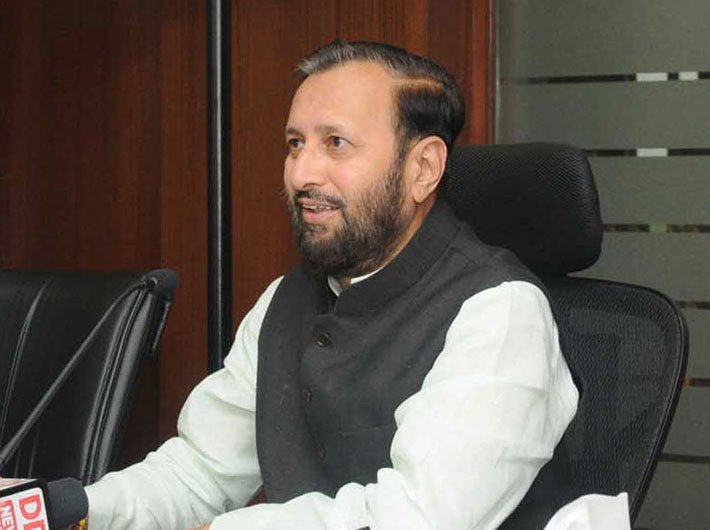
 The government has launched a web-based application on integrated waste management system (IWMS), ‘iwms.nic.in’, for better management of waste. All the industries dealing in hazardous waste can now apply online using this portal, said Prakash Javadekar, minister of state (independent charge) for environment, forest and climate change, at the launch here on Monday. 

“The objective of the web-based application is to enhance transparency in the working of the ministry and other central and state-level regulatory bodies. It will reduce the time taken by the regulatory bodies in processing applications, seeking various types of permissions under the recently notified waste management regulations,” a government release said. In addition to being a single window access, this application is expected to expedite the way the permission is granted and the way the analysis could be done not only for authorisation and consents, but also for import/export permission under the rules.
 
Javadekar said that the user-friendly application can track the movement of hazardous waste and will also help in ensuring its proper management. He said that there are an estimated 43,000 industries dealing in hazardous waste, of which about 30,000 industries have been mapped through this application.
 
The application, the release said, will help people to apply and get online permissions for import and export of certain categories of waste, which is for reuse or recycling or recovery or co-processing and ultimately to conserve our primary resource. It will help authorities in web-based processing, generation and grant of various types of certification/ permissions to the entrepreneurs and industries.
 
It is a step towards a paperless and green office, the press note said. The system has inbuilt arrangements for uploading the supporting documents and annexure, along with the online applications. It will provide an insight to the number of authorisation and certificates granted under consent to establish, or consent to operate, from time to time across the country and make available at any point the information regarding number authorizations and consent orders granted by the state pollution control boards (SPCBs).
 
The online system will enable user agencies to check the fate of their application any time through this web-based portal. The industry dashboard will show the application filed and sent to SPCB, central pollution control board (CPCB) or ministry for approval vis-a-vis authorisation, consent to establish, consent to operate or for import and export permission.
 
The application status, along with consent status across India, can be visualised on the SPCB and CPCB dashboard. The ministry dashboard will act as the administrative user of the system, with all rights on the access of any type of data with additional access to certificate generation right for import and export, authorisation and registration, etc.
 
It will help the ministry in creating a database on waste generating and processing industrial units under construction, or operation by consolidating the information regarding consent to establish, consent to operate and authorization, import and export permission. It will also help in generating database on different categories of wastes generated.
 

Comments


Other News

India faces critical shortage of skin donors amid rising burn cases

India reports nearly 70 lakh burn injury cases every year, resulting in approximately 1.4 lakh deaths annually. Experts estimate that up to 50% of these lives could be saved with adequate access to skin donations.   A significant concern is that around 70% of burn victims fall wi

Not just politics, let`s discuss policies too

Why public policy matters Most days, India`s loudest debates stop at the ballot box. We can name every major leader and recall every campaign slogan. Still, far fewer of us can explain why a widow`s pension is delayed or how a government school`s budget is actually approved. That

When algorithms decide and children die

The images have not left me, of dead and wounded children being carried in the arms of the medics and relatives to the ambulances and hospitals. On February 28, at the start of Operation Epic Fury, cruise missiles struck the Shajareh Tayyebeh school – officially named a girls’ school, in Minab,

The economics of representation: Why women in power matter

India’s democracy has grown in scale, but not quite in balance. Women today are active participants in elections, influencing outcomes in ways that were not as visible earlier. Yet their presence in legislative institutions continues to lag behind. The Nari Shakti Vandan Adhiniyam was meant to addres

India will be powerful, not aggressive: Bhaiyyaji

India is poised to emerge as a global power but will remain rooted in its civilisational ethos of non-aggression and harmony, former RSS General Secretary Suresh `Bhaiyyaji` Joshi has said.   He was speaking at the launch of “Rashtrabhav,” a book by Ravindra Sathe

AI: Code, Control, Conquer

India today stands at a critical juncture in the area of artificial intelligence. While the country is among the fastest adopters of AI in the world, it remains heavily reliant on technologies developed elsewhere. This paradox, experts warn, cannot persist if India seeks technological sovereignty.


Archives

Current Issue

Opinion

Facebook Twitter Google Plus Linkedin Subscribe Newsletter

Twitter






