
Demonetisation: Requests to change scrapped notes still pour in at RBI

RBI is everyday getting 600 applications and has already received more than 16,000-17,000 applications

geetanjali

Geetanjali Minhas | March 7, 2017 | Mumbai

#Mumbai   #scrapped currency notes   #RBI   #demonetisation   #PIO   #OCI   #India news  


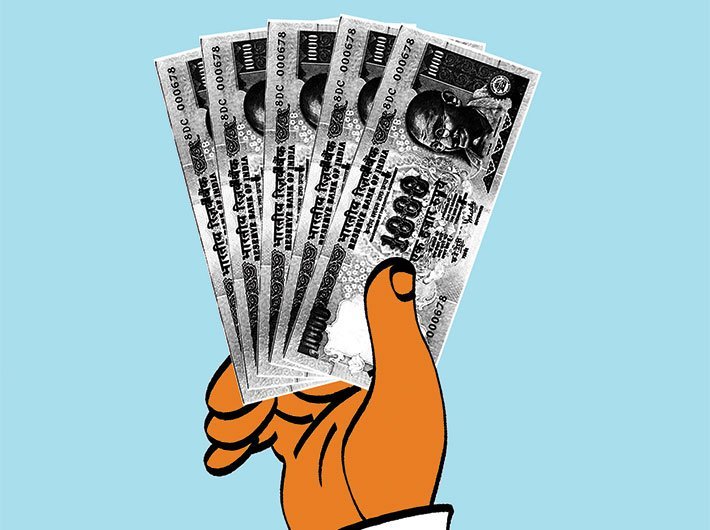
 It’s been four months since demonetization took place, yet requests to change the scrapped Rs 500 and Rs 1000 currency notes are still coming at the Reserve Bank of India (RBI).

Sources at the RBI told Governance Now that all windows are now closed. Many people have taken up the matter with government and it is now upto the authorities concerned to take a call. 
 
“We thought the government will open the window for a few days. People have been telling us they thought (depositing scrapped notes) is allowed up to March 31,” a source said.
 
The RBI is receiving several inquiries and requests from courts, police and the CBI to accept old currency. 
 
“Court (officials) are angry with RBI for not accepting their money. It is not court’s money, but pertaining to different cases which is lying in sealed covers.  We are told that Mumbai police alone has Rs 300 crore of old currency. Though RBI is not exchanging notes, it is accepting their letters,” the source said and added: “It appears that Rs 1lakh crore is still lying with public. But RBI has no discretion over it. Even if government gives a 15 day window it will be a big relief for people.”
 
In his November 8 address to the nation, prime minister Narendra Modi had said, “There may be some who for some reason are not able to deposit their old 500 or 1000  rupee notes  by December 30, 2016, they can go to specified offices of RBI upto March 31, 2017 and deposit notes after submitting a declaration form.”
 
The RBI too had said, “Any person who is unable to exchange or deposit the specified notes in their bank accounts on or before December 30,2016 shall be given an opportunity to do so at specified offices of Reserve Bank or other such facility until a later date as may be specified by the Reserve Bank.”
 
On December 30, the president approved the promulgation of the Specified Bank Notes (Cessation of Liabilities) Ordinance ,2016  and people are not allowed to change notes. The ordinance grants exemption to only those people who were out of the country between  Nov 8  to December 30..
 
NRIs can exchange notes at only five RBI offices (Mumbai, New Delhi, Chennai, Kolkata, and Nagpur). People hailing from the western region are coming to Mumbai to exchange demonetized notes. 
 
After landing at international airport, they first visit the RBI office to change old currency. Passports, immigration documents, inward and outward details are being checked. It takes time to verify details causing a crowd at RBI office.
 
“Old people who are dependent on small amounts are facing difficulties. RBI is getting 600 applications daily and already received more than 16000-17000 applications. By March 31st, the number will reach 25,000. It is a voluminous task. The central office of RBI is being flagged on all issues at the ground level along with several letters,” said sources.
 
Sources said that as many as 70-80% people coming to change notes are senior citizens. It’s not only some Indian citizens, including old and sick people, who were unable to change currency.  Overseas Citizenship of India (OCI) and Persons of Indian Origin (PIO) too are angry as they were not informed that the window period was  only for Indian citizens. To avoid exchange rate fluctuation, OCI’s  hold 4-5 different currencies for their travels and have large amounts of old currency to change.
 

Comments


Other News

New pathways for tourism growth

Traditionally, India’s tourism policy has been based on three main components: the number of visitors, building tourist attractions and providing facilities for tourists. Due to the increase in climate-related issues and environmental destruction that occurred over previous years, policymakers have b

Is the US a superpower anymore?

On April 8, hours after warning that “a whole civilisation will die tonight,” US president Donald Trump, exhibiting his unique style of retreating from high-voltage brinkmanship, announced that he agreed to a two-week ceasefire with Iran. The weekend talks in Islamabad have failed and the futur

Machines communicate, humans connect

There is a moment every event professional knows—the kind that arrives without warning, usually an hour before the curtain rises. Months of meticulous planning are in place. And then comes the call: “We’ll also need a projector. For the slides.”   No email

Why India is entering a ‘stagflation lite’ phase

India’s macroeconomic narrative is quietly shifting—from a rare “Goldilocks” equilibrium of stable growth and contained inflation to a more fragile phase where external shocks are beginning to dominate domestic policy outcomes. The numbers still look reassuring at first glance: GDP

Labour law in India: A decade of transition

The story of labour law in India is not just about laws and codes, but also about how the nation has continued to negotiate the position of the workforce within its economic framework. The implementation of the Labour Codes across the country in November 2025 marks a definitive endpoint in the process. Yet

Time for India to build genuine resilience in energy security

There is a strip of water barely 33 kilometres wide between Iran and Oman that connects the Persian Gulf to the rest of the world`s oceans. For most of India`s history, it was a distant geographic fact. Since late February, it has been a kitchen problem.   The Strait of Hormuz. T


Archives

Current Issue

Opinion

Facebook Twitter Google Plus Linkedin Subscribe Newsletter

Twitter






