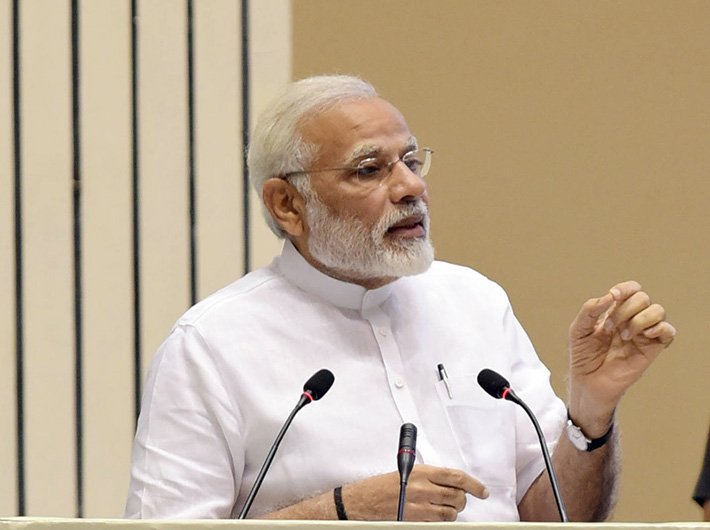
FDI is a major driver of economic growth and a source of non-debt finance for the economic development of the country
The foreign direct investment (FDI) policy has been further liberalised.
The union cabinet chaired by prime minister Narendra Modi has given its approval to a number of amendments in the FDI Policy.
These are intended to liberalise and simplify the FDI policy so as to provide ease of doing business in the country. In turn, it will lead to larger FDI inflows contributing to growth of investment, income and employment.
FDI is a major driver of economic growth and a source of non-debt finance for the economic development of the country. The government has put in place an investor friendly policy on FDI, under which FDI up to 100%, is permitted on the automatic route in most sectors/ activities. In the recent past, the government has brought FDI policy reforms in a number of sectors viz. Defence, Construction Development, Insurance, Pension, Other Financial Services, Asset reconstruction Companies, Broadcasting, Civil Aviation, Pharmaceuticals, Trading etc.
Measures undertaken by the Government have resulted in increased FDI inflows in to the country. During the year 2014-15, total FDI inflows received were US $ 45.15 billion as against US $ 36.05 billion in 2013-14. During 2015-16, country received total FDI of US $ 55.46 billion. In the financial year 2016-17, total FDI of US $ 60.08 billion has been received, which is an all-time high.
It has been felt that the country has potential to attract far more foreign investment which can be achieved by further liberalizing and simplifying the FDI regime. Accordingly, the government has decided to introduce a number of amendments in the FDI Policy, a press release said on Wednesday.
Highlights:
Single Brand Retail Trading (SBRT)
Extant FDI policy on SBRT allows 49% FDI under automatic route, and FDI beyond 49% and up to 100% through Government approval route. It has now been decided to permit 100% FDI under automatic route for SBRT.
It has been decided to permit single brand retail trading entity to set off its incremental sourcing of goods from India for global operations during initial 5 years, beginning 1st April of the year of the opening of first store against the mandatory sourcing requirement of 30% of purchases from India. For this purpose, incremental sourcing will mean the increase in terms of value of such global sourcing from India for that single brand (in INR terms) in a particular financial year over the preceding financial year, by the non-resident entities undertaking single brand retail trading entity, either directly or through their group companies. After completion of this 5 year period, the SBRT entity shall be required to meet the 30% sourcing norms directly towards its India’s operation, on an annual basis.
A non-resident entity or entities, whether owner of the brand or otherwise, is permitted to undertake ‘single brand’ product retail trading in the country for the specific brand, either directly by the brand owner or through a legally tenable agreement executed between the Indian entity undertaking single brand retail trading and the brand owner.
Civil Aviation
As per the extant policy, foreign airlines are allowed to invest under government approval route in the capital of Indian companies operating scheduled and non-scheduled air transport services, up to the limit of 49% of their paid-up capital. However, this provision was presently not applicable to Air India, thereby implying that foreign airlines could not invest in Air India. It has now been decided to do away with this restriction and allow foreign airlines to invest up to 49% under approval route in Air India subject to the conditions that:
Foreign investment(s) in Air India including that of foreign Airline(s) shall not exceed 49% either directly or indirectly
Substantial ownership and effective control of Air India shall continue to be vested in Indian National.
Construction Development: Townships, Housing, Built-up Infrastructure and Real Estate Broking Services
It has been decided to clarify that real-estate broking service does not amount to real estate business and is therefore, eligible for 100% FDI under automatic route.
Power Exchanges
Extant policy provides for 49% FDI under automatic route in Power Exchanges registered under the Central Electricity Regulatory Commission (Power Market) Regulations, 2010. However, FII/FPI purchases were restricted to secondary market only. It has now been decided to do away with this provision, thereby allowing FIIs/FPIs to invest in Power Exchanges through primary market as well.
Other Approval Requirements under FDI Policy:
As per the extant FDI policy, issue of equity shares against non-cash considerations like pre-incorporation expenses, import of machinery etc. is permitted under Government approval route. It has now been decided that issue of shares against non-cash considerations like pre-incorporation expenses, import of machinery etc. shall be permitted under automatic route in case of sectors under automatic route.
Foreign investment into an Indian company, engaged only in the activity of investing in the capital of other Indian company/ies/ LLP and in the Core Investing Companies is presently allowed upto 100% with prior Government approval. It has now been decided to align FDI policy on these sectors with FDI policy provisions on Other Financial Services. Thus, if the above activities are regulated by any financial sector regulator, then foreign investment upto 100% under automatic route shall be allowed; and, if they are not regulated by any Financial Sector Regulator or where only part is regulated or where there is doubt regarding the regulatory oversight, foreign investment up to 100% will be allowed under Government approval route, subject to conditions including minimum capitalization requirement, as may be decided by the government.
Pharmaceuticals
FDI policy on pharmaceuticals sector inter-alia provides that definition of medical device as contained in the FDI Policy would be subject to amendment in the Drugs and Cosmetics Act. As the definition as contained in the policy is complete in itself, it has been decided to drop the reference to Drugs and Cosmetics Act from FDI policy. Further, it has also been decided to amend the definition of ‘medical devices’ as contained in the FDI Policy.
Audit firms
The extant FDI policy does not have any provisions in respect of specification of auditors that can be appointed by the Indian investee companies receiving foreign investments. It has been decided to provide in the FDI policy that wherever the foreign investor wishes to specify a particular auditor/audit firm having international network for the Indian investee company, then audit of such investee companies should be carried out as joint audit wherein one of the auditors should not be part of the same network.