
So far so good: What more is needed for better implementation of odd-even formula?

GN Bureau | January 5, 2016
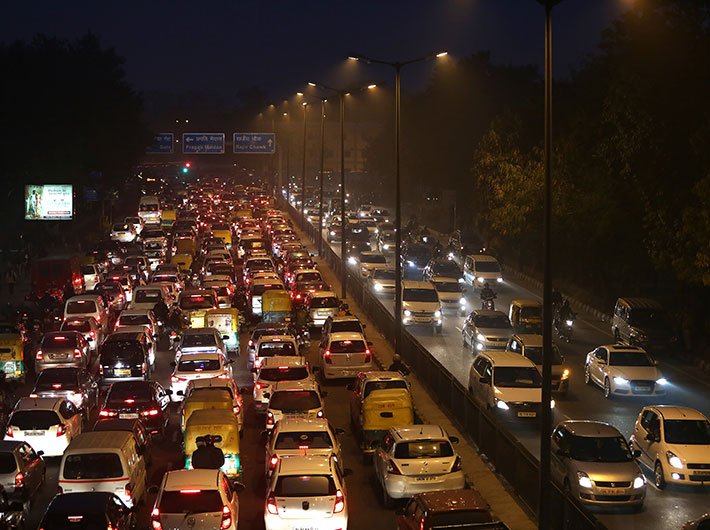


There are numerous arguments in favour of the Delhi government’s odd-even scheme of road rationing, and of course there are as many arguments against it. That is understandable, given the complexities and a vast range of factors involved.

Yet, grudgingly or otherwise, with or without rampant violations, it is finally happening.

The cynicism is slowly giving way to a good-natured acceptance, leading to a sense of civic participation. People are coming to look at it as a cause or mission – to solve a common problem, even if it is not a full solution. If Arvind Kejriwal can consolidate this civic sense, more eco-friendly measures can be built on it.

In the meanwhile, here are some pointers that need to be kept in mind, to make the scheme more effective, when the government reviews it at the end of the fortnight:

* Exemptions kill the spirit of the common fight. They also make implementation more difficult, the police chief has said. The exemption list has to be reworked after January 15. Either women – that is, half the population – should not be exempted, or male co-travellers should be alright.

* Timings need to be relaxed. The current range, from 8 am to 8 pm, is full 12 hours, and it can be restricted only two hours when people commute to or from work, say, 9 am to 11 am and 5 pm to 8 pm.

* Days too need a rethink. Why include Saturday in the scheme, when a significant population of Delhi is either working for government or with government? A Saturday, for many, is the first half of the weekend, and it should have the same status in the scheme as a Sunday.

* Private vehicles operators have been roped in to augment the capacity of public transport, but it’s going to take a while before commuters realise that the white private bus or the yellow school bus is actually in DTC (Delhi Transport Corp) service. In any case, this is supposed to be a temporary measure, and the number of DTC’s own buses will have to be increased. More than the Metro, it is the bus that ensures – if not the last-mile, at least the later-mile reach.

* Punishing the violator is crucial to the success of the scheme. These days, Delhiites’ favourite time-pass on the road is to spot the violating odd- (or even-) numbered car. The more violators there are on the roads, more the temptation will be for many others to join in. The police, understandably, does not have the numbers to monitor every nook and corner of the vast city. Maybe, someone will come up with an app to report the violations.

Comments


Other News

India faces critical shortage of skin donors amid rising burn cases

India reports nearly 70 lakh burn injury cases every year, resulting in approximately 1.4 lakh deaths annually. Experts estimate that up to 50% of these lives could be saved with adequate access to skin donations.   A significant concern is that around 70% of burn victims fall wi

Not just politics, let`s discuss policies too

Why public policy matters Most days, India`s loudest debates stop at the ballot box. We can name every major leader and recall every campaign slogan. Still, far fewer of us can explain why a widow`s pension is delayed or how a government school`s budget is actually approved. That

When algorithms decide and children die

The images have not left me, of dead and wounded children being carried in the arms of the medics and relatives to the ambulances and hospitals. On February 28, at the start of Operation Epic Fury, cruise missiles struck the Shajareh Tayyebeh school – officially named a girls’ school, in Minab,

The economics of representation: Why women in power matter

India’s democracy has grown in scale, but not quite in balance. Women today are active participants in elections, influencing outcomes in ways that were not as visible earlier. Yet their presence in legislative institutions continues to lag behind. The Nari Shakti Vandan Adhiniyam was meant to addres

India will be powerful, not aggressive: Bhaiyyaji

India is poised to emerge as a global power but will remain rooted in its civilisational ethos of non-aggression and harmony, former RSS General Secretary Suresh `Bhaiyyaji` Joshi has said.   He was speaking at the launch of “Rashtrabhav,” a book by Ravindra Sathe

AI: Code, Control, Conquer

India today stands at a critical juncture in the area of artificial intelligence. While the country is among the fastest adopters of AI in the world, it remains heavily reliant on technologies developed elsewhere. This paradox, experts warn, cannot persist if India seeks technological sovereignty.


Archives

Current Issue

Opinion

Facebook Twitter Google Plus Linkedin Subscribe Newsletter

Twitter






