
Government wants to roll out GST by April 1, 2017: Jaitley

So far the government is following the road map for implementation of GST as per schedule

GN Bureau | September 30, 2016

#GST   #Arun Jaitley   #finance ministry   #VAT  
Arun Jaitley
Arun Jaitley

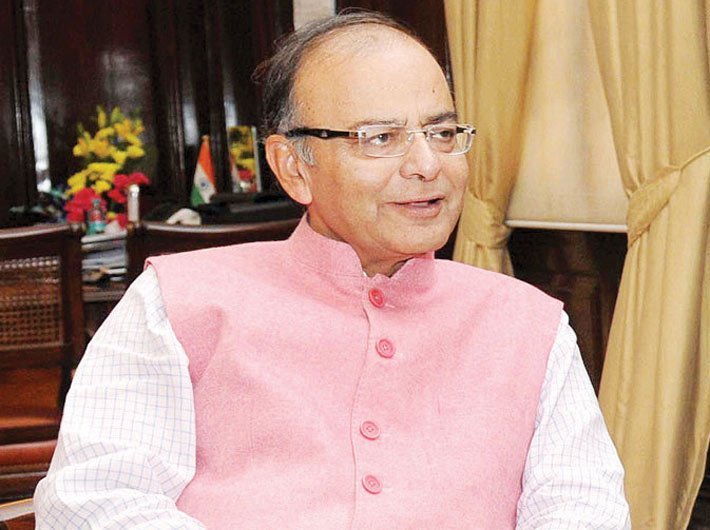
Finance Minister Arun Jaitley on Friday said that the government is working on a target date of April 1, 2017 for the roll out of the Goods and Services Tax (GST) in the country.

He said that till September 16, 2017, that is one year after the provisions of the Constitution (101st Amendment) Act, 2016 being brought into force, the Constitution empowers the central government to levy excise duty on manufacturing; and service tax on the supply of services. He added that the Act also empowers the state governments to levy sales tax or Value Added Tax (VAT) on the sale of goods till September 16, 2016.

Speaking at a meeting of Parliamentary Consultative Committee attached to the finance ministry, Jaitley said that so far the government is following the road map for implementation of GST as per schedule.

During the meeting, some of the major suggestions include need for absolute clarity and transparency with regard to where taxes will be collected, assessed and where the appeal will be filed in case of GST regime.

The members said that it will be challenging task to tackle complex situation arising-out of implementation of GST law in a federal system. Some of the members suggested there is a need for launching a large scale awareness campaign especially for the small traders as most of them are still unaware about the complex procedures and processes under GST regime including for registration and filing of returns. Some of the members suggested that availability of IT network in all parts of the country, especially in small towns and rural areas, must be ensured as GST system will work only online.
 

Also read.

Comments


Other News

Not just politics, let`s discuss policies too

Why public policy matters Most days, India`s loudest debates stop at the ballot box. We can name every major leader and recall every campaign slogan. Still, far fewer of us can explain why a widow`s pension is delayed or how a government school`s budget is actually approved. That

When algorithms decide and children die

The images have not left me, of dead and wounded children being carried in the arms of the medics and relatives to the ambulances and hospitals. On February 28, at the start of Operation Epic Fury, cruise missiles struck the Shajareh Tayyebeh school – officially named a girls’ school, in Minab,

The economics of representation: Why women in power matter

India’s democracy has grown in scale, but not quite in balance. Women today are active participants in elections, influencing outcomes in ways that were not as visible earlier. Yet their presence in legislative institutions continues to lag behind. The Nari Shakti Vandan Adhiniyam was meant to addres

India will be powerful, not aggressive: Bhaiyyaji

India is poised to emerge as a global power but will remain rooted in its civilisational ethos of non-aggression and harmony, former RSS General Secretary Suresh `Bhaiyyaji` Joshi has said.   He was speaking at the launch of “Rashtrabhav,” a book by Ravindra Sathe

AI: Code, Control, Conquer

India today stands at a critical juncture in the area of artificial intelligence. While the country is among the fastest adopters of AI in the world, it remains heavily reliant on technologies developed elsewhere. This paradox, experts warn, cannot persist if India seeks technological sovereignty.

RBI pauses to assess inflation risks, policy transmission

The Reserve Bank of India (RBI) has begun the new fiscal year with a calibrated pause, keeping the repo rate unchanged at 5.25 per cent in its April Monetary Policy Committee (MPC) meeting. The decision, taken unanimously, reflects a shift from aggressive policy action to cautious observation after a signi


Archives

Current Issue

Opinion

Facebook Twitter Google Plus Linkedin Subscribe Newsletter

Twitter






