
Government working on PPP model in agriculture

The way forward is that we build public-private integrated value chain systems to meet the nutritional requirements, said a senior official

GN Bureau | September 29, 2017

#PP Model   #Agriculture   #Assocham  
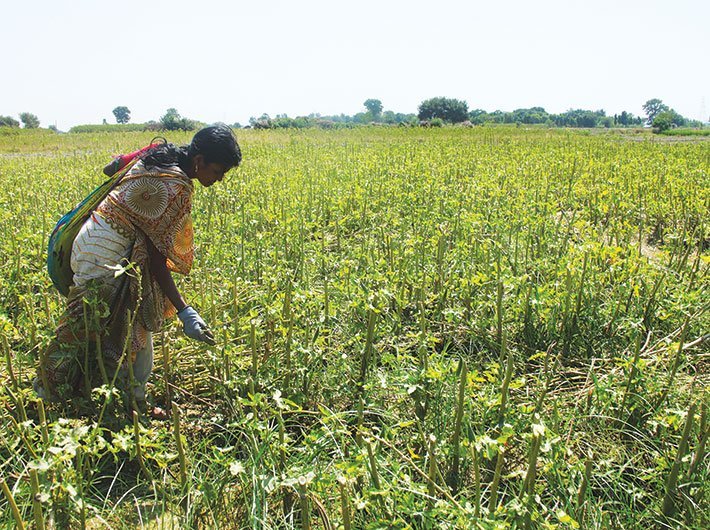
Representational image

The union government is building robust agri-value system in collaboration with private players to transform agriculture sector from pure production system into an agri-business, said a top official.

“Producers, manufacturers, wholesalers, retailers, storehouses and packaging houses representing private sector can come forward and partner with government at district level, thereby taking the responsibility for building a value chain system,” said Ashok Dalwai, additional secretary, department of agriculture co-operation and farmer welfare while addressing an ASSOCHAM conference on nutrition and food security.

“The way forward is that we build public-private integrated value chain systems which can partner state-level production systems thereby meeting the nutritional requirements,” said Dalwai on Thursday.

“We need to reduce production of commodities that are not sold, but boost the production of what actually is sold. As such we need to build a market-related economy rather than a supply-driven economy,” he added.

He also said that the main problem being faced by agriculture sector in India is that we have not been able to connect the production centres with consumption centres.

“We need to integrate series of value chains into vertically integrated supply chain management facilitated by robust agro-logistics in terms of storage, transportation, handling as it would ensure that uncompromised agricultural produce reaches the farm gate, the place where it is required,” said Dalwai.

He said that considering about 52 percent of agriculture system in India is rain-fed, there is a need to grow crops which can grow under low-water requirement conditions. “We need to bring them to the center of our policy.”

“Rather than focusing on producing crops like paddy and wheat, we need to grow crops like bajra and jawar which have high fibre content and have iron, zinc, manganese, vitamins, minerals, are anti-oxidants and very good for health as they are low-calorie crops,” said Dalwai.

Stressing upon the need to focus on retaining freshness of produce he said that Indians need not follow western model of eating processed food all the time. “We must try and improve agro-logistics including transportation system in a way that consumers are able to eat fresh.”

He said that agriculture sector related research orientation has to change in the country. “There has been some kind of fatigue during the course of last decade (in agriculture research institutes countrywide) and as such they need to re-group as per the new mandate of agriculture which is just not producing food but also ensure nutrition security and produce agricultural commodities that generate raw material for agro-processing industry and manufacturing sector.”
 

Comments


Other News

India faces critical shortage of skin donors amid rising burn cases

India reports nearly 70 lakh burn injury cases every year, resulting in approximately 1.4 lakh deaths annually. Experts estimate that up to 50% of these lives could be saved with adequate access to skin donations.   A significant concern is that around 70% of burn victims fall wi

Not just politics, let`s discuss policies too

Why public policy matters Most days, India`s loudest debates stop at the ballot box. We can name every major leader and recall every campaign slogan. Still, far fewer of us can explain why a widow`s pension is delayed or how a government school`s budget is actually approved. That

When algorithms decide and children die

The images have not left me, of dead and wounded children being carried in the arms of the medics and relatives to the ambulances and hospitals. On February 28, at the start of Operation Epic Fury, cruise missiles struck the Shajareh Tayyebeh school – officially named a girls’ school, in Minab,

The economics of representation: Why women in power matter

India’s democracy has grown in scale, but not quite in balance. Women today are active participants in elections, influencing outcomes in ways that were not as visible earlier. Yet their presence in legislative institutions continues to lag behind. The Nari Shakti Vandan Adhiniyam was meant to addres

India will be powerful, not aggressive: Bhaiyyaji

India is poised to emerge as a global power but will remain rooted in its civilisational ethos of non-aggression and harmony, former RSS General Secretary Suresh `Bhaiyyaji` Joshi has said.   He was speaking at the launch of “Rashtrabhav,” a book by Ravindra Sathe

AI: Code, Control, Conquer

India today stands at a critical juncture in the area of artificial intelligence. While the country is among the fastest adopters of AI in the world, it remains heavily reliant on technologies developed elsewhere. This paradox, experts warn, cannot persist if India seeks technological sovereignty.


Archives

Current Issue

Opinion

Facebook Twitter Google Plus Linkedin Subscribe Newsletter

Twitter






