
Human rights activists harassed, attacked in Bastar: Amnesty

Over the last six months, human rights activists in Bastar, Chhattisgarh have faced crackdown by the police and self-styled vigilante groups, Amnesty International India said on Tuesday

GN Bureau | April 19, 2016

#amnesty   #Chhattisgarh   #human rights   #Bastar  
Human rights activists harassed, attacked in Bastar: Amnesty

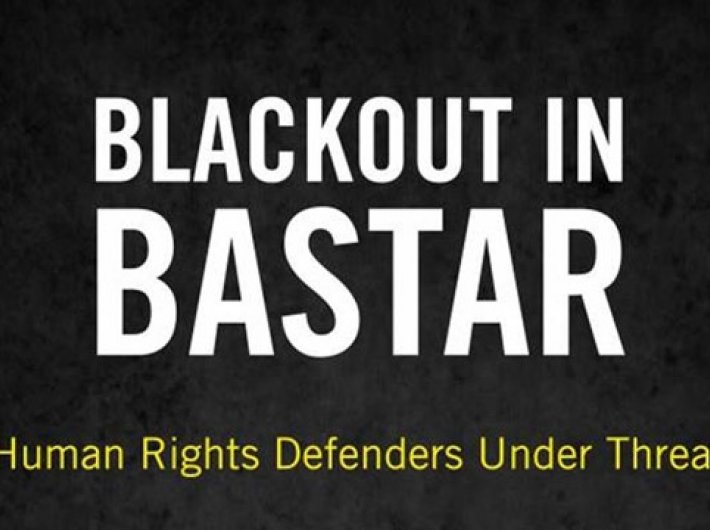
The Amnesty International India report ‘Blackout in Bastar: Human Rights Defenders Under Threat’ describes how journalists, lawyers and activists have been harassed, attacked and locked up for investigating excesses by security forces and seeking justice for human rights abuses.

“Over and over again, Chhattisgarh authorities have stood by and watched as their critics are intimidated and attacked by groups which seem to enjoy police support,” said Aakar Patel, executive director, Amnesty International India.

“Even worse, the police have themselves arrested journalists on trumped-up charges. The ominous message the state government is sending to defenders is clear: shut up or face the consequences.”

Amnesty International India said that four journalists – Santosh Yadav, Somaru Nag, Prabhat Singh and Deepak Jaiswal – have been arrested on politically motivated charges since July 2015. Another journalist – Malini Subramaniam – was forced to leave her home in February 2016 following attacks on her home and police pressure on her landlord.

In February, Adivasi activist Soni Sori had a chemical substance thrown at her face by unknown assailants who warned her not to file a complaint against a high-ranking Bastar police official for an alleged extrajudicial execution.

Amnesty International India said that Bela Bhatia, an independent researcher, has faced intimidation and harassment from so-called vigilante groups called the Samajik Ekta Manch (Social Unity Forum) and Mahila Ekta Manch (Women’s Unity Forum), for helping Adivasi women file police complaints of large-scale sexual assault and other abuses allegedly committed by security force personnel.

Isha Khandelwal, a lawyer from Jagdalpur Legal Aid Group, said, “Chhattisgarh has become like a police state now. What the police can’t do legally they make these vigilante groups and what’s really worrying is that these vigilante groups openly and blatantly threaten and harass people.

Chhattisgarh has become a very dangerous place for those who question the government.”

“The state police continues to use abusive laws like the Unlawful Activities Prevention Act and the Chhattisgarh Special Public Security Act to stifle the right to freedom of expression,” Aakar Patel said and added: “The Chhattisgarh government’s open contempt for constitutionally guaranteed rights and freedoms needs to end now.”

To know more read Amnesty International India's report

ALSO READ: Why Bastar women are scared
 

Comments


Other News

“Cancer is just a mind game”

Dr. Ananda Shankar Jayant, a Padma Shri awardee, inspired audiences for decades through her mastery of Bharatanatyam and Kuchipudi. But it was her journey through cancer that taught some of life`s most powerful lessons in courage and resilience.

Why Swami Vivekananda is the pathfinder for our times

Swami Vivekananda for Our Times  Edited and compiled by Rajiv Sikri, with Introduction by S. Gurumurthy Rupa Publications, 552 pages, Rs 695  

Five ways to realise the potential of India’s handicraft and handloom sector

India`s economic ambitions are increasingly defined by the industries of the future. Semiconductors, electronics, artificial intelligence and advanced manufacturing dominate policy conversations. Yet one of India`s largest employment-intensive sectors continues to occupy a surprisingly marginal place in ec

Beyond toilets: Why open defecation persists in rural India

Despite the awareness campaigns on sanitation across India, open defecation (OD) is practised openly and widely in both rural and urban areas. Research shows that rural respondents are well aware of the negative impacts of OD, yet this awareness does not lead to toilet construction or use. In rural North I

What unpaid nation builders want from policymakers

The Supreme Court recently described homemakers as “nation builders” and fixed a notional monthly income of Rs 30,000 for them in motor accident compensation cases. The judgment was not about wages. It was about compensation. Yet it inadvertently raised a larger economic question: If a homemake

What the US–Iran peace deal means for India

After months of rising tensions, the United States and Iran have reached a memorandum of understanding called the "Islamabad Agreement." This agreement allows for the immediate reopening of the Strait of Hormuz without tolls and provides Iran with relief from sanctions, depending on its complianc


Archives

Current Issue

Opinion

Facebook Twitter Google Plus Linkedin Subscribe Newsletter

Twitter






