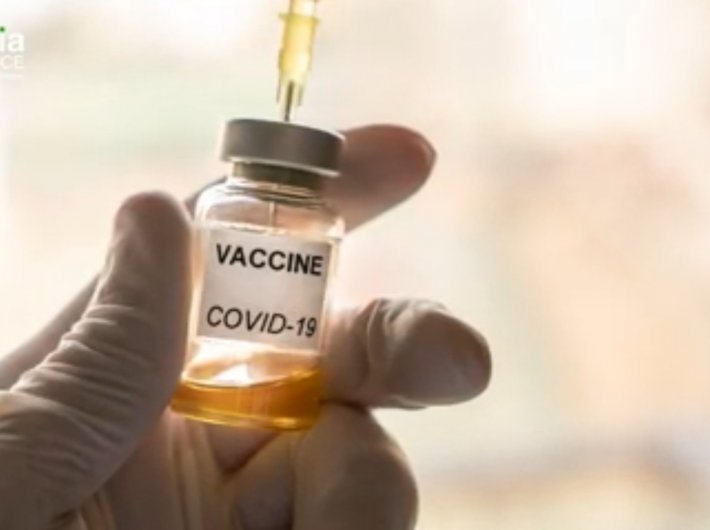
The central government is gearing up for the roll out of Covid-19 vaccine across India. As the vaccine administrators will play an important role in the process, training of trainers and those who shall administer the vaccine has been taken up across various states.
To strengthen the capacity of human resource for Covid-19 vaccine introduction and rollout, detailed training modules have been developed for different categories of vaccine handlers and administrators including medical officers, vaccinators, alternate vaccinators, cold-chain handlers, supervisors, data managers, ASHA coordinators and all others involved in the implementation process at different levels. The training includes all operational aspects of training like organisation of vaccination sessions, use of Co-WIN IT platform for management of the entire vaccination process, deployment of HR cold-chain preparedness, management of adverse events, communications and intersectoral coordination, biomedical waste management, infection prevention protocols etc, an official release said on Friday.
As many as 2,360 participants were trained during national level Training of Trainers which comprised state immunization officers, cold-chain officers, IEC officials, development partners etc. As on date, the state level trainings had been completed in all states/UTs with participation of more than 7,000 district level trainees (except Lakshadweep which will conduct it on December 29). Cascading down, 681 districts (49,604 trainees) have completed the training of medical officers on operational guidelines. Vaccination team trainings have been completed in 1,399 out of 17,831 blocks/ planning units. It is ongoing in the other blocks.
To facilitate redressal of queries on Covid-19 vaccination and Co-WIN portal related queries, national 1075 and state 104 Helpline capacity has also been strengthened to address queries beyond their routine support.
As a step to prep up for administration of Covid-19 vaccine and to assess the readiness of the planned activities, a dry run has been planned in four states – Andhra Pradesh, Assam, Gujarat, Punjab – considering the geographical locations. Each state will plan it in two districts and preferably in different (five) session type settings, e.g., district hospital, CHC/PHC, urban site, private health facility, rural outreach etc. This will exercise enable end-to-end mobilisation and testing of Covid-19 vaccination process (except the vaccine) and check the usage of Co-WIN in field environment, the linkages between planning, implementation and reporting mechanisms and identify challenges and guide way forward prior to actual implementation including improvements that may be required in the envisaged process.
This will also provide a hands-on experience to programme managers at various levels. This two-day activity is planned on 28th & 29th December 2020, and will include activities from the necessary data entries in Co-WIN to vaccine receipt & allocation to deployment of team members, mock drill of session sites with test beneficiaries to reporting and evening meeting. This will also include testing for cold storage and transportation arrangements for Covid-19 vaccine, management of crowd at the session sites with proper physical distancing.
An important focus of the dry run will be on management of any possible adverse events following immunisation (AEFI). In addition, adherence and management of infection control practices at the session site, to prevent disease transmission. The mock drill will include concurrent monitoring and review at the block and district levels, and preparation of feedback to be shared with the state and union health ministry.
A detailed checklist has been prepared by the union health Ministry and shared with the four states to guide them in the dry run.
The National Expert Group on Vaccine Administration of Covid-19 (NEGVAC) has recommended three prioritised population groups including healthcare workers (HCWs) (about 1 crore), frontline workers (FLWs) (about 2 crore), and prioritized age group (about 27 crore). As vaccines are temperature sensitive and need to be stored in specific temperature, the present cold chain system consisting of 85,634 equipments for storage of vaccine at about 28,947 cold chain points across the country will be used for the cold chain administration. The current cold chain is capable of storing additional quantity of Covid-19 vaccine required for the first 3 Crore prioritised population, i.e., HCWs and FLWs.