
India plans to eradicate begging

Beggars had been removed from Hyderabad ahead of Ivanka Trump’s visit

GN Bureau | January 5, 2018

#JJ Act   #Vijay Sampla   #Beggars  
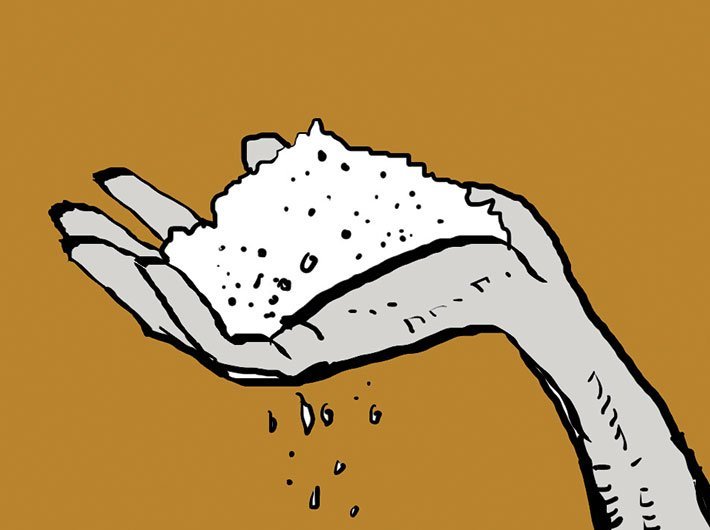
Illustration: Ashish Asthana

India is making efforts to eradicate begging, but it is going to be an uphill task to resettle over 4 lakh beggars who are spread across the country.

In fact, beggars had been removed from Hyderabad, ahead of the visit of US president Donald Trump’s daughter Ivanka Trump who attended the three-day Global Entrepreneurship Summit (GES) that began on November 28.

The local administration faced sharp criticism for its ‘over enthusiasm’ in clearing beggars from city roads and restricting movement in areas that the Ivanka was scheduled to visit, reported Hindu Business Line.

The union government is now charting a comprehensive effort to address the issue.

Union minister Vijay Sampla informed parliament on Thursday that the ministry of women and child development is implementing a centrally sponsored Integrated Child Protection Scheme (ICPS) for children in need of care and protection (CNCP).

As per JJ Act, a child who is found working in contravention of labour laws for the time being in force or is found begging, or living on the street is included as a “child  in need of care and protection”.

The minister said the primary responsibility in execution of the JJ Act lies with the state governments/UTs.  Under ICPS, financial assistance is provided to the State Governments/UT Administrations for, inter-alia, undertaking a situational analysis of children in difficult circumstances, for setting up and maintenance of various types of Chid Care Institutions (CCIs).  The scheme, provides institutional care through CCIs.

As a rehabilitative measures in these CCIs, children are provided age appropriate education either within the institution or outside in a formal education system through convergence with other schemes and programs of the Government or Civil Society.  The Scheme also provides for family based non-institutional care through adoption, sponsorship and foster-care.

In December 2014, Sampla in a written reply in Rajya Sabha had said that the states are responsible for taking necessary preventive and rehabilitative steps.

As per available information, 20 States and 2 Union Territories have enacted their own anti-beggary legislation or adopted legislations enacted by other State/UTs.

The challenge is to rehabilitate 4,13,670 beggars - 2.2 lakh males and 1.91 lakh females.

NDTV reported that West Bengal with 81,244 beggars topped the list followed by 65,835 in Uttar Pradesh, 30,218 in Andhra Pradesh, 29,723 in Bihar and 28,695 in Madhya Pradesh.

Incidentally, in Assam, Manipur, and West Bengal female beggars outnumbered their male counterparts.

The union territories recorded the least number of beggars.


Comments


Other News

The women India doesn`t count enough

She runs a tailoring shop from a single room in her house. Every morning she stitches school uniforms, answers queries on WhatsApp, collects payments through UPI and orders fabric online. Officially, she still belongs to India`s informal economy. Yet her enterprise is no longer disconnected from the formal

“Cancer is just a mind game”

Dr. Ananda Shankar Jayant, a Padma Shri awardee, inspired audiences for decades through her mastery of Bharatanatyam and Kuchipudi. But it was her journey through cancer that taught some of life`s most powerful lessons in courage and resilience.

Why Swami Vivekananda is the pathfinder for our times

Swami Vivekananda for Our Times  Edited and compiled by Rajiv Sikri, with Introduction by S. Gurumurthy Rupa Publications, 552 pages, Rs 695  

Five ways to realise the potential of India’s handicraft and handloom sector

India`s economic ambitions are increasingly defined by the industries of the future. Semiconductors, electronics, artificial intelligence and advanced manufacturing dominate policy conversations. Yet one of India`s largest employment-intensive sectors continues to occupy a surprisingly marginal place in ec

Beyond toilets: Why open defecation persists in rural India

Despite the awareness campaigns on sanitation across India, open defecation (OD) is practised openly and widely in both rural and urban areas. Research shows that rural respondents are well aware of the negative impacts of OD, yet this awareness does not lead to toilet construction or use. In rural North I

What unpaid nation builders want from policymakers

The Supreme Court recently described homemakers as “nation builders” and fixed a notional monthly income of Rs 30,000 for them in motor accident compensation cases. The judgment was not about wages. It was about compensation. Yet it inadvertently raised a larger economic question: If a homemake


Archives

Current Issue

Opinion

Facebook Twitter Google Plus Linkedin Subscribe Newsletter

Twitter






