
Indian labour laws being rationalised

The initiatives will reduce the complexity in compliance due to multiplicity of labour laws and facilitate setting up of enterprises

GN Bureau | February 6, 2017

#Labour Laws   #Bandaru Dattatreya   #Lok Sabha   #Labour and Employment  
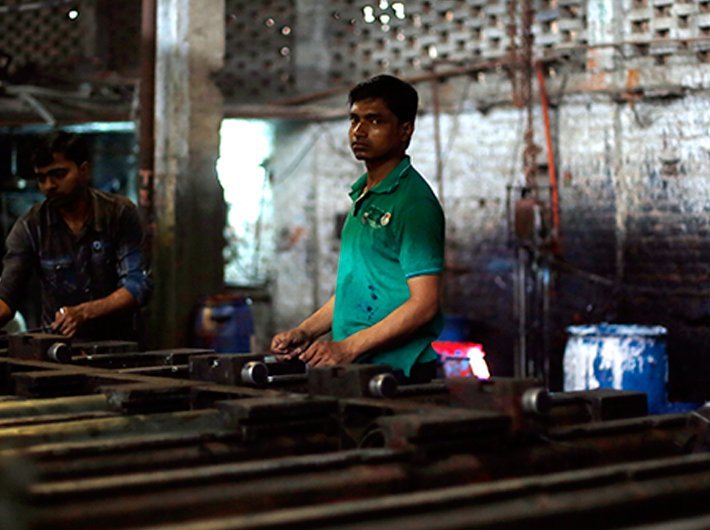
Representational illustration

The labour ministry has taken steps for drafting four labour codes on wages; industrial relations; social security & welfare and safety and working conditions, by simplifying, amalgamating and rationalizing the relevant provisions of the existing central labour law.

Bandaru Dattatreya, minister of state (IC) for labour and employment, in written reply to a question in Lok Sabha said that these initiatives will reduce the complexity in compliance due to multiplicity of labour laws and facilitate setting up of enterprises and thus creating the environment for development of business and industry in the country and generating employment opportunities without diluting basic aspects of safety, security and health of workers.

Read: What labour law reforms imply

Reforms in labour laws are an ongoing process to update legislative system to address the need of the hour and to make them more effective and contemporary to the emerging economic and industrial scenario.

The Second National Commission on Labour  which submitted its Report in 2002 had recommended that the existing Labour Laws should be broadly grouped into four or five Labour Codes on functional basis.


Read: Labour laws are not a problem to industrial development

Conventions of International Labour Organization (ILO), on ratification create legally binding obligation for ratifying country. Ratification of a convention is a voluntary process. India ratifies a convention only when our national laws and practices are in full conformity with the Convention.  So far, India has ratified 45 Conventions and 1 Protocol.
 

Comments


Other News

Lokayan 26: Indian naval ship sets sail from Livorno, Italy

The Indian Navy’s sail training ship, INS Sudarshini, set sail from Livorno, Italy, on Saturday on completion of a successful port call. During her stay, the ship participated in a series of professional interactions and cross-training visits, strengthening bonds of friendship and maritime partners

Global South: Health cooperation needs institutions to make solutions scalable

September 12 marks the International Day for South-South Cooperation, commemorating the 1978 Buenos Aires Plan of Action (BAPA). Forty-eight years later, its central proposition remains relevant: countries of the Global South can draw on their own knowledge, experience and innovations to address shared d

Reading the mind of Xi Jinping

As India prepares to host the 18th BRICS Summit this weekend, and as prime minister Narendra Modi is set to hold a bilateral meet with president Xi Jinping, China’s growing global influence and the changing dynamics of India-China relations will be under focus. But to understand where China is head

BRICS at 20: From economic weight to global influence

This year marks 20 years of BRICS, with India set to host the grouping’s leaders’ summit this weekend. The anniversary offers an opportune moment to assess BRICS’ growing importance at a time when the effectiveness of global governance and the credibility of multilateralism are under in

Former president Ram Nath Kovind on some of his unforgettable journeys

Triumph of the Indian Republic: My Life, My Struggles By Ram Nath Kovind Rupa Publications, 400 pages, Rs 795   All our presidents so far stand out, each for a different reason. Ram Nath Kovind, the 14th president of India, from 2017 t

Uday Kotak on history, Indian economy, growth and more

Pathbreakers: How 10 Visionary Leaders Transformed India by award-winning journalists  By Sucheta Dalal and Debashis Basu Rupa Publications, 304 pages, Rs 695  

Upcoming Conferences


-->

Archives

Current Issue

Opinion

Facebook Twitter Google Plus Linkedin Subscribe Newsletter

Twitter






