
Massive tree felling in Thane forests for mega infra projects

RTI reply: Over 81,000 trees already felled in Shahapur alone as highways, rail lines, irrigation schemes eat into critical carbon sinks

geetanjali

Geetanjali Minhas | March 4, 2026 | Mumbai

#Environment   #Infrastructure  
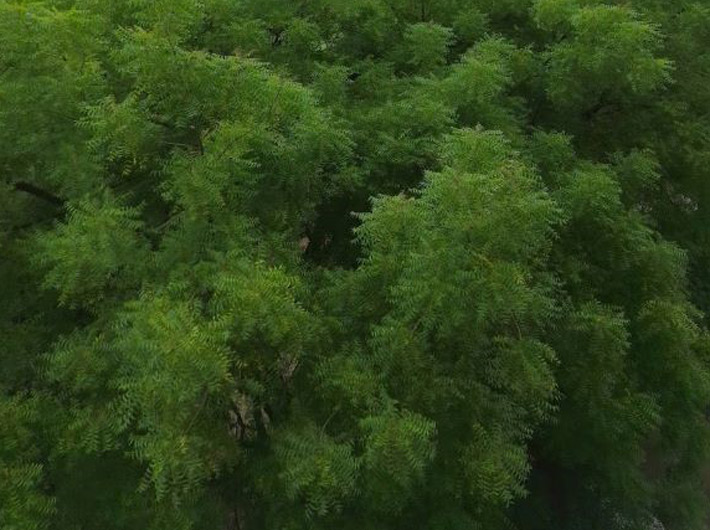
(File photo: Governance Now, for representation only)

As the Mumbai Metropolitan Region (MMR) accelerates infrastructure expansion, new data obtained through the Right to Information (RTI) Act has revealed extensive deforestation across the Thane and Shahapur forest divisions, raising serious environmental concerns.

 
The information, accessed by activist Jeetendra Ghadge, points to large-scale diversion of forest land and the felling of tens of thousands of trees for railway lines, expressways, irrigation works, and pipeline projects.
 
“The numbers we have uncovered through the RTI are just the tip of the iceberg,” said Ghadge. “While mega-projects are promoted as progress, the data shows systematic destruction of our natural carbon sinks. We are trading long-term climate security for short-term convenience.”
 
One of the major impacts is linked to the Kalyan–Kasara 3rd Railway Line project handled by Central Railway.
 
Forest land diverted: 16.6846 hectares (Shahapur division)
Trees marked for felling: 921
Trees already felled: 851

The RTI reply from the Deputy Conservator of Forests (DCF), Shahapur, also revealed additional forest diversion under the MUTP-III project for the 3rd and 4th railway lines between Kalyan and Badlapur, including tree felling in Morivali village.
 
The Shahapur forest division has emerged as the epicenter of forest diversion.
 
Mumbai–Nagpur Samruddhi Expressway (Package-V)
 
Forest land diverted: 385.6147 hectares
Trees proposed for felling: 110,765
Trees already cut: 79,540
Other Projects in Shahapur
 
Ambyacha Pada Electrification: 1,295 trees felled
Nampada Minor Irrigation Project: 292 trees cleared
Gas Pipeline Project (including GAIL): 979 trees felled
Across just seven major proposals in Shahapur, 81,662 trees have already been felled out of 111,442 proposed, according to RTI documents.
 
Deforestation is also accelerating in the Thane division due to road expansion and irrigation schemes.
 
Mumbai–Vadodara Expressway (Phase II)
 
Forest land diverted: 111.7321 hectares
Trees proposed for felling (Thane division): 6,597
Road Expansion Projects
 
Nirmal Road (NH-61):
26.3889 hectares diverted
181 trees marked for removal
NH-3 (New NH-848):
3,317 trees marked for felling
Irrigation Projects
 
Bhuvan Minor Irrigation Scheme, Murbad:
24.2375 hectares diverted
7,043 trees marked for felling
Asnoli Minor Irrigation Scheme:
23.89 hectares diverted
9,084 trees proposed for felling
Environmentalists warn that the cumulative impact of these projects could have long-term consequences for the region’s climate resilience.
 
“The scale of deforestation revealed in these RTI documents is heart-breaking,” said environmentalist Rajesh Ruparel. “Planting saplings elsewhere can never replace a 50-year-old tree that sustains an entire ecosystem. If this continues, Thane and surrounding areas risk becoming an un livable concrete desert.”
 
As Thane grapples with fluctuating air quality and rising urban heat, the figures highlight the mounting ecological cost of rapid infrastructure development.
 
Activists argue that while development is essential, greater transparency, stricter environmental safeguards, and effective monitoring of compensatory afforestation are urgently needed to prevent irreversible environmental damage.

Comments


Other News

AI: Code, Control, Conquer

India today stands at a critical juncture in the area of artificial intelligence. While the country is among the fastest adopters of AI in the world, it remains heavily reliant on technologies developed elsewhere. This paradox, experts warn, cannot persist if India seeks technological sovereignty.

RBI pauses to assess inflation risks, policy transmission

The Reserve Bank of India (RBI) has begun the new fiscal year with a calibrated pause, keeping the repo rate unchanged at 5.25 per cent in its April Monetary Policy Committee (MPC) meeting. The decision, taken unanimously, reflects a shift from aggressive policy action to cautious observation after a signi

New pathways for tourism growth

Traditionally, India’s tourism policy has been based on three main components: the number of visitors, building tourist attractions and providing facilities for tourists. Due to the increase in climate-related issues and environmental destruction that occurred over previous years, policymakers have b

Is the US a superpower anymore?

On April 8, hours after warning that “a whole civilisation will die tonight,” US president Donald Trump, exhibiting his unique style of retreating from high-voltage brinkmanship, announced that he agreed to a two-week ceasefire with Iran. The weekend talks in Islamabad have failed and the futur

Machines communicate, humans connect

There is a moment every event professional knows—the kind that arrives without warning, usually an hour before the curtain rises. Months of meticulous planning are in place. And then comes the call: “We’ll also need a projector. For the slides.”   No email

Why India is entering a ‘stagflation lite’ phase

India’s macroeconomic narrative is quietly shifting—from a rare “Goldilocks” equilibrium of stable growth and contained inflation to a more fragile phase where external shocks are beginning to dominate domestic policy outcomes. The numbers still look reassuring at first glance: GDP


Archives

Current Issue

Opinion

Facebook Twitter Google Plus Linkedin Subscribe Newsletter

Twitter






