SC: We keep no record of pending judgments

The apex court reply baffles RTI applicant

danish

Danish Raza | February 1, 2010


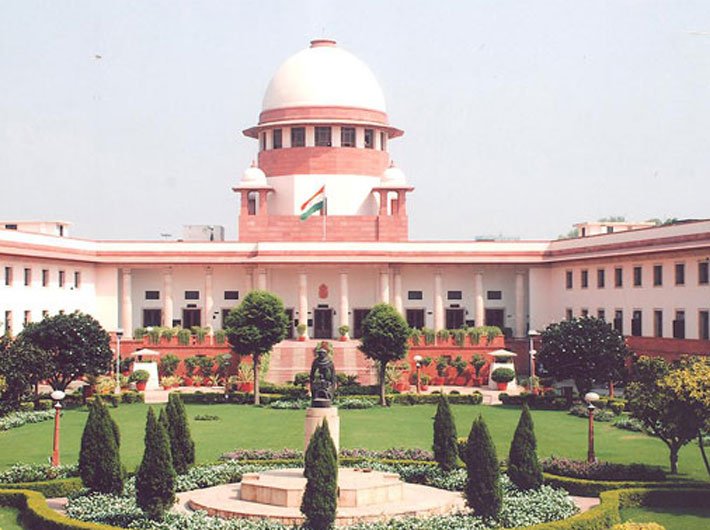
A view of the majestic Supreme Court building at night

Believe it or not, the apex court doesn't keep record of things that the high courts do as a matter of routine.

This came to light after an RTI applicant wanted to know the number of cases for which hearings have been completed but the judgments are pending. The Supreme Court said it did not keep such records.

L.K. Batra, a Noida resident, had sought to know in December 2009 the number of cases pending for judgments where arguments have been heard from December 2007. He was told that "the Supreme Court does not hold a record of the number cases where judgments are reserved. To obtain any information on sub judice matters, one should refer to Supreme Court Rules, 1966. Judgments are also available on the Court’s website."

When Governance Now decided to cross-check with additional registrar Raj Pal Arora, who had replied to Batra, he repeated himself: “We don’t have any such data with us. If someone wants to know the status of a particular case, he can see it on the website."

Reacting to the apex court's reply, senior lawyer K.T.S. Tulsi said: “This is absurd. They have all the details of every case with them. They are trying to withhold it."

Interestingly, Batra had sought answer for the same set of questions to the Delhi High Court which promptly delivered the relevant information. The high court wrote back saying there were 6, 4 and 367 such cases for 2007, 2008 and 2009, respectively.

On December 11, 2009, Chief Justice of India K.G. Balakrishnan had said that pendency of cases would lead people to revolt and the legal system to crumble. "We cannot have this much of delay at any cost. It should be reduced," he had said while attending a conference in Bangalore.

But it seems his observations have been completely ignored by the apex court officials.

Comments


Other News

Doctors, experts call for ban on junk food ads, mandate warning labels

More than 30 doctors, medical scientists and public health professionals have urged the government to take decisive action against the aggressive advertising and marketing of junk food, calling for a watershed ban on advertisements for foods high in fat, sugar and salt (HFSS) and ultra-processed foods (UPF

Asiatic Lion population rises from 523 in 2015 to 891 in 2025

On World Lion Day 2026, environment, forest and climate change Minister  Bhupender Yadav celebrated India’s remarkable journey in lion conservation and reaffirmed the country’s unwavering commitment to protecting wildlife and biodiversity.   In a post on soc

Railways imposed ₹5.13 crore fine for food quality and hygiene violations

Indian Railways serve about 58 crore meals every year on an average. About only 0.0008% food quality related complaints are received on average. Based on complaints during the last three years, appropriate penal actions have been taken by IRCTC. Such actions include imposition of fines amounting to ₹5.13

STHAVAR: Why every Indian built asset needs a permanent digital identity

India has built digital systems for identity, payments, taxation, documents, logistics and public services. State governments, ministries, infrastructure agencies and urban local bodies have also created portals for land records, building permissions, project monitoring, property taxation and municipal s

Saksham Skill census identifies 22,000 job-ready candidates in one Mumbai ward

A first-of-its-kind AI-enabled skill census conducted in Mumbai`s H-West Ward has identified a potential livelihood pipeline of nearly 22,000 candidates, generated over 32,000 provisional job matches while revealing that 71.2 per cent of surveyed homemakers are willing to join the workforce, according to

GI tags: Scaling traditional wealth into global brands

Geographical Indication (GI) tags have emerged as a powerful tool for protecting India`s cultural heritage, while creating economic opportunities for local communities. By linking products to their place of origin, GI tags preserve traditional knowledge, prevent misuse, and enhance consumer trust. They h

Upcoming Conferences


-->

Archives

Current Issue

Opinion

Facebook Twitter Google Plus Linkedin Subscribe Newsletter

Twitter