
See documentary on gangrape, BBC producer urges Modi

BBC shows documentary on December 16 rape case in the UK and will abide by the ban in India

GN Bureau | March 5, 2015

#bbc   #rape victim   #india   #india’s daughter   #leslee udwin  


The BBC, while declaring that it has no plans to telecast the controversial documentary on December 16, 2012 gangrape incident in India, it went ahead and broadcast it in the UK. Earlier, the documentary was scheduled for March 8, coinciding with International Women’s Day, but suddenly the British media company decided to advance it to Wednesday night.

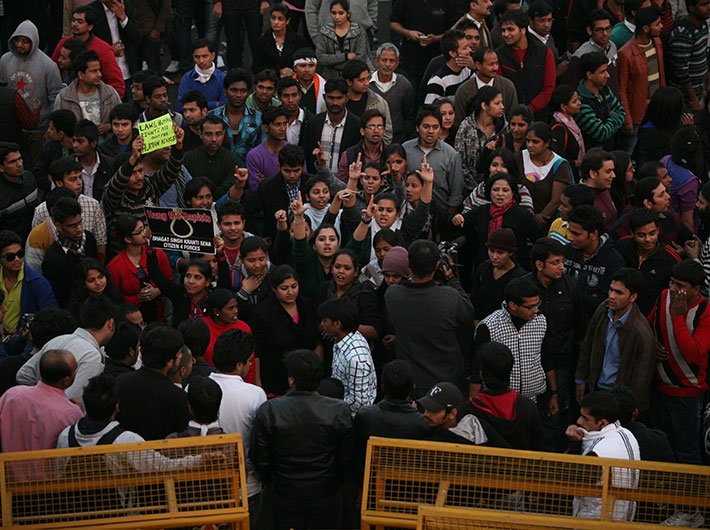
It said the film had handled the issue “responsibly”.  “This harrowing documentary, made with the full support and cooperation of the victim’s parents, provides a revealing insight into a horrific crime that sent shock waves around the world and led to protests across India demanding changes in attitudes towards women,” the BBC said.


 “The film handles the issue responsibly and we are confident the programme fully complies with our editorial guidelines. The documentary has the backing of a number of other public service broadcasters, however the BBC is only responsible for transmission of the film in the UK,” the broadcaster said.

The BBC broadcast was on in the UK on a day the Indian Parliament witnessed outrage over the interview of gangrape convict.  “Under no circumstances, this documentary will be allowed to be broadcast… Government has taken necessary action and secured an order restraining the telecast of the film,” Union Home Minister Rajnath Singh told Parliament.


The documentary included an interview conducted by British filmmaker Leslee Udwin and BBC, of Mukesh Singh, the driver of the bus in which the 23-year-old paramedical student was brutally gangraped by six men on December 16, 2012. Mukesh has made derogatory statements against women, Delhi police said.

A Delhi court has restrained media from publishing, broadcasting, telecasting or uploading the interview on the internet.

On her part, Udwin appealed to Prime Minister Narendra Modi to view the documentary, which, she said, was a “gift to India”, before any action was taken on it.

She said India has shown the lead globally in the wake of the horrific crime which had led to protests across the country. Rape was an issue of global concern which she has highlighted in the documentary, she said.

Meanwhile, speaking to media, the rape victim’s father said “I heard what the rapist Mukesh Singh said in the documentary. He thinks that my daughter asked to be raped. It made me feel sad, but not angry. It disturbs me when people like him say it was the girl's fault that she was raped. But I have stopped getting angry now because many men, even from good families and with good degrees, seem to think like this. How can our daughters study and work freely if society thinks like this?”

“It is worse when politicians sitting in Parliament say the girl could have prevented rape. How can they make such irresponsible statements? Don't they understand that what they say will be heard by hundreds of people? I think these men have no respect for women, which automatically means they have no respect for their parents. Their thinking is sick. Also, Mukesh is challenging society and the judicial system,” he told a newspaper.


Comments


Other News

Not just politics, let`s discuss policies too

Why public policy matters Most days, India`s loudest debates stop at the ballot box. We can name every major leader and recall every campaign slogan. Still, far fewer of us can explain why a widow`s pension is delayed or how a government school`s budget is actually approved. That

When algorithms decide and children die

The images have not left me, of dead and wounded children being carried in the arms of the medics and relatives to the ambulances and hospitals. On February 28, at the start of Operation Epic Fury, cruise missiles struck the Shajareh Tayyebeh school – officially named a girls’ school, in Minab,

The economics of representation: Why women in power matter

India’s democracy has grown in scale, but not quite in balance. Women today are active participants in elections, influencing outcomes in ways that were not as visible earlier. Yet their presence in legislative institutions continues to lag behind. The Nari Shakti Vandan Adhiniyam was meant to addres

India will be powerful, not aggressive: Bhaiyyaji

India is poised to emerge as a global power but will remain rooted in its civilisational ethos of non-aggression and harmony, former RSS General Secretary Suresh `Bhaiyyaji` Joshi has said.   He was speaking at the launch of “Rashtrabhav,” a book by Ravindra Sathe

AI: Code, Control, Conquer

India today stands at a critical juncture in the area of artificial intelligence. While the country is among the fastest adopters of AI in the world, it remains heavily reliant on technologies developed elsewhere. This paradox, experts warn, cannot persist if India seeks technological sovereignty.

RBI pauses to assess inflation risks, policy transmission

The Reserve Bank of India (RBI) has begun the new fiscal year with a calibrated pause, keeping the repo rate unchanged at 5.25 per cent in its April Monetary Policy Committee (MPC) meeting. The decision, taken unanimously, reflects a shift from aggressive policy action to cautious observation after a signi


Archives

Current Issue

Opinion

Facebook Twitter Google Plus Linkedin Subscribe Newsletter

Twitter






