
UIDAI on a roll as Aadhaar gets Modi government's nod

Decision taken at high-level meet with PM, Rajnath, Jaitley and top officials; UIDAI set to continue to report to planning commission and, eventually, to PM

pratap

Pratap Vikram Singh | July 5, 2014 | New Delhi
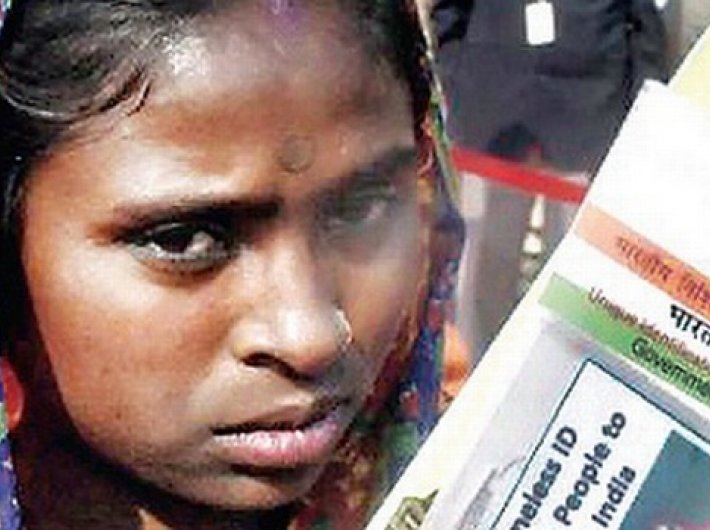


Going against speculation that he would do away with UPA’s ambitious UID project, prime minister Narendra Modi has decided to continue with the Aadhaar scheme and its usage in direct transfer of fuel subsidy and social security payments.

The decision was taken at a high-level meeting chaired by the prime minister on Saturday, Governance Now has learnt.

Senior cabinet ministers Arun Jaitley and Rajnath Singh, minister of state for planning, statistics and programme implementation Rao Inderjit Singh, home and planning commission secretaries and mission director of unique identification authority of India (UIDAI) were present at the meeting.

Governance Now had reported on July 3 that money has been allocated for UIDAI in the budget, to be presented on July 10, and that the Aadhaar scheme would continue to operate (read UPA's pet UIDAI set to get Rs 2,000 cr in Modi budget).

According to two senior government officials working with different ministries who are familiar with developments in today’s meeting, said UIDAI will continue to report to the planning commission and, eventually, to the prime minister. Of late, there have been reports, most of them quoting anonymous officials in the home ministry, that the national population register (NPR) will soon overtake the UIDAI database and also the enrollment.  

Reports also indicated that UIDAI, at best, would be merged with NPR, if not scrapped altogether.

But one of the officials said that a merger was never being mulled between UIDAI, which completed its target of 60 crore enrolment before time, and NPR, which could not cover beyond 10 crore. “How can a highly efficient system be merged with an inefficient system,” he asked.

The two officials said that Modi, in today’s meeting, has agreed that UIDAI would enroll another 30 crore people in Uttar Pradesh, Bihar, Chhattisgarh and Uttarakhand. These states were supposed to be covered by the NPR but were given to UIDAI due to slower pace of enrollment.

Taking back the responsibility of enrollment in these four states from the authority was also among the demands made by the home ministry, according to some media reports. 

Apparently, no UIDAI representative was called in inter-ministerial meetings after formation of the new government. This was UIDAI’s first presentation to the prime minister.

According to sources, there is also an agreement on introducing the pending national identification authority of India bill in parliament. The officials, however, are not clear whether it would be done in the budget session, beginning Monday.

The Congress-led UPA government had made Aadhaar mandatory for transfer of fuel subsidy to consumers, with intent to eliminate ghost LPG cylinder connections and control its diversion to open market. A UIDAI official said the countrywide DBTL (direct benefit transfer of LPG cylinder) rollout could lead to savings of Rs12,000 crore, if one were to extrapolate the figures for savings accrued in 100 districts where it was aggressively implemented early this year.

“No government will be foolish to scrap the most efficient model of distributing subsidy,” the UIDAI official said, referring to the possible gains of using Aadhaar in service delivery.

Earlier, Governance Now had reported that the government has approved a budget of Rs 2,000-crore for UIDAI for this financial year. Without giving out the exact figure earmarked for UIDAI in the budget, to be presented by Arun Jaitley on July 10, the official told Governance Now that “funds are not going to be an issue any longer”. He added that the Modi government has approved of all existing operations.

Comments


Other News

India gets the first hydrogen train

Prime minister Narendra Modi on Friday laid the foundation stone and dedicated to the nation various development projects worth around ₹14,700 crore in Jind, Haryana.   The PM positioned the city as a shining reflection of the good governance model. Emphasizing that the entire Haryana

Climate change is stealing sleep

Climate change has at least doubled the temperature-related sleep loss across 1,338 major cities worldwide over the past five decades, highlighting an emerging but often overlooked public health consequence of rising global temperatures. A new study by Climate Central estimates that between 2020 and

Cabinet approves Mobile Phone Manufacturing Scheme

The union cabinet chaired by PM Narendra Modi has approved the Mobile Phone Manufacturing Scheme (MPMS) with a budgetary outlay of Rs 62,500 crore. It aims to further scale up the production, deepen domestic value addition, strengthen supply chain resilience, enhance global competitiveness. It

Building infrastructure is only half the job

Recent stories of stolen railway wires, disappearing communication towers and missing public infrastructure are often treated as bizarre law-and-order failures of India. Yet they raise a more fundamental question. Why does the State often discover the disappearance of a public asset only after it has alrea

New Delhi’s Indo-Pacific strategy enters a new phase

India appears to be investing fresh dynamism in its Indo-Pacific strategy. At the time when the US, under president Donald Trump, has adopted a conciliatory approach towards China and has changed the name of America’s Indo-Pacific Command to just Pacific Command, India has quietly moved towards con

CAG flags major fiscal lapses in Maharashtra

Maharashtra`s fiscal management has come under sharp scrutiny after the Comptroller and Auditor General (CAG) of India, in its State Finances Audit Report for 2024-25, flagged significant budgetary inefficiencies, accounting irregularities, understatement of key fiscal indicators and widespread governanc

Upcoming Conferences


Archives

Current Issue

Opinion

Facebook Twitter Google Plus Linkedin Subscribe Newsletter

Twitter






