
What does ISRO’s IRNSS-1H satellite launch fail means?

IRNSS-1H is the first satellite jointly built by ISRO and the private sector

GN Bureau | September 1, 2017

#GPS   #navigation   #NAVIC   #satellite launch   #IRNSS   #ISRO  
Courtesy: ISRO
Courtesy: ISRO

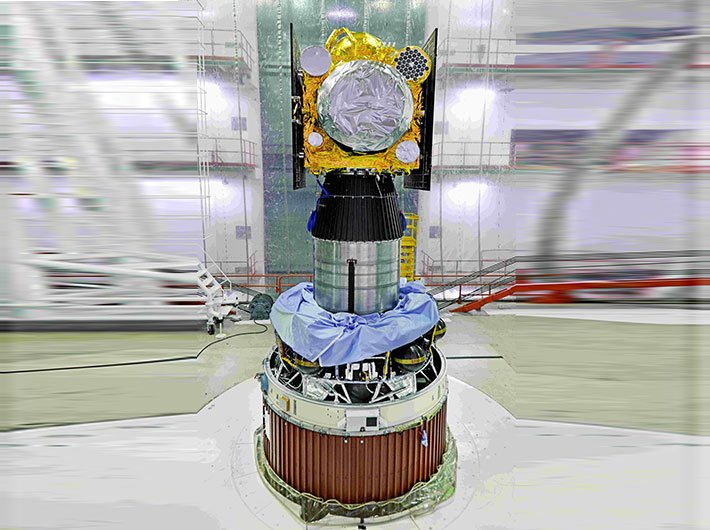
On August 31, the Indian Space Research Organisation (ISRO) failed to launch IRNSS-1H, India's eighth navigation satellite, from the Satish Dhawan Space Centre at Sriharikota in Andhra Pradesh. The satellite was onboard the ISRO’s trusted workhorse PSLV, which failed to separate the heat shield, thus trapping the satellite within the shield.  

ISRO chairman AS Kiran Kumar described the failed mission as a “mishap” and has said the investigation would be conduction soon by a committee of experts. 
 
The unsuccessful mission though might appear as a technical glitch but the space agency has to answer many questions as it might put its reputation at stake.
 
Here’s why the mission was important
  • PSLV has been the space agency’s old and trusted workhorse and has successfully carried out 39 consecutive missions. Thursday’s failure has been its first since 1993. It has successfully carried out India’s mission to the Moon and the Mars, and the recent launch of 104 satellites (including satellites of other countries) in February. However, the IRNSS-1H failure may dent the space agency’s, especially PSLV’s, image in the international market. But ISRO has dismissed these fears by claiming that the rocket performed perfectly through the first three stages and the problem arrived in the fourth stage of the launch. 
  • The IRNSS-1H was a replacement satellite for the IRNSS-1A, which was launched in July 2013, in the seven-satellite constellation. Three rubidium atomic frequency standard atomic clocks were not functioning on the IRNSS-1A because of which the satellite was developing problems in delivering navigation services. IRNSS, also called NAVIC (Navigation through Indian Constellation), is India’s answer to the USA’s GPS. Atomic clocks are a key component of a satellite navigation system as they help in pinpointing an accurate location on the Earth. Though ISRO maintains that stopping of these atomic clocks has not affected the overall performance of the navigation system, yet the failure to launch a replacement satellite may serve as a setback to India’s GPS dreams. 
  • In this mission, ISRO for the first time had roped in the services of the private sector to jointly build IRNSS-1H satellite. Before this mission, private sector industries only supplied satellite parts and other material required to build a satellite. The move was seen as a major boost to the domestic industry to produce satellites. Kumar has clarified that it would be "unfair to target the private sector for the failure." 

Also Read: Get ready to use India’s own GPS


Comments


Other News

India faces critical shortage of skin donors amid rising burn cases

India reports nearly 70 lakh burn injury cases every year, resulting in approximately 1.4 lakh deaths annually. Experts estimate that up to 50% of these lives could be saved with adequate access to skin donations.   A significant concern is that around 70% of burn victims fall wi

Not just politics, let`s discuss policies too

Why public policy matters Most days, India`s loudest debates stop at the ballot box. We can name every major leader and recall every campaign slogan. Still, far fewer of us can explain why a widow`s pension is delayed or how a government school`s budget is actually approved. That

When algorithms decide and children die

The images have not left me, of dead and wounded children being carried in the arms of the medics and relatives to the ambulances and hospitals. On February 28, at the start of Operation Epic Fury, cruise missiles struck the Shajareh Tayyebeh school – officially named a girls’ school, in Minab,

The economics of representation: Why women in power matter

India’s democracy has grown in scale, but not quite in balance. Women today are active participants in elections, influencing outcomes in ways that were not as visible earlier. Yet their presence in legislative institutions continues to lag behind. The Nari Shakti Vandan Adhiniyam was meant to addres

India will be powerful, not aggressive: Bhaiyyaji

India is poised to emerge as a global power but will remain rooted in its civilisational ethos of non-aggression and harmony, former RSS General Secretary Suresh `Bhaiyyaji` Joshi has said.   He was speaking at the launch of “Rashtrabhav,” a book by Ravindra Sathe

AI: Code, Control, Conquer

India today stands at a critical juncture in the area of artificial intelligence. While the country is among the fastest adopters of AI in the world, it remains heavily reliant on technologies developed elsewhere. This paradox, experts warn, cannot persist if India seeks technological sovereignty.


Archives

Current Issue

Opinion

Facebook Twitter Google Plus Linkedin Subscribe Newsletter

Twitter






