The biggest political battle between 2014 and 2019 is now on, will impact national politics like nothing else
The dangal is on.
The election commission has announced dates to the assembly elections to five states of Uttar Pradesh, Punjab, Uttarakhand, Goa, and Manipur. Chief election commissioner Nasim Zaidi noted that a total of about 60 million voters will be eligible to vote in these elections. The overall outcomes from the five states, thus, matters a lot for national politics.
Yet, no state will impact national politics like Uttar Pradesh will. It is India’s largest state in terms of population, and wields even more political power. Wikipedia informs us that it has a population of about 199,581,477 as per the 2011 census. If it were a separate country, UP would be the world's fifth most populous nation, next only to China, India, the USA and Indonesia – and of course bigger than Pakistan.That is why nearly every move made by the Modi government over the past year – including the historic, ambitious demonetisation – was seen from the prism of how it will sway the UP voter.
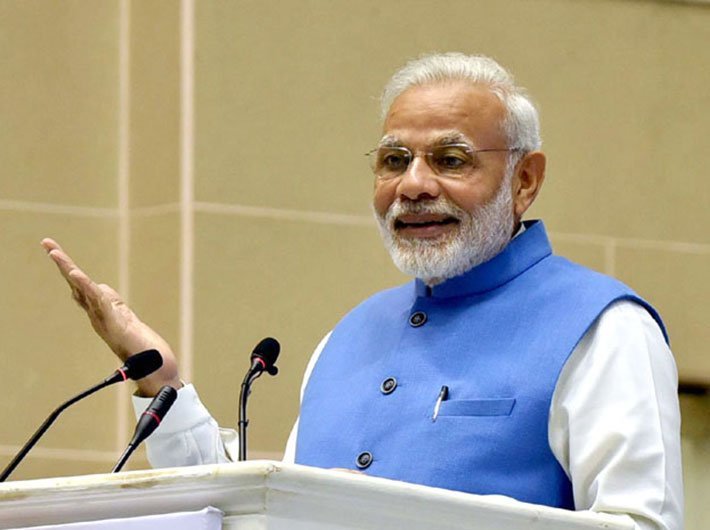
For Modi, who represents a UP constituency in Lok Sabha – and helps the state carry on the legacy of giving the nation the highest number of prime ministers – this is the most daunting challenge after 2014 and before 2019.
A win here can boost his political weight and embolden him to take some tough decisions on economy and governance front before the final sprint in 2019. A win can also, albeit in distant future, give his party better numbers in the Rajya Sabha, where its minority has been blocking his legislative initiatives.
A loss here, on the other hand, can unnerve him into going the populist way all along.
Modi, along with his Man Friday Amit Shah, of course has made an all-out effort to woo the UP voter. Up has been a centre of his government’s slew of initiatives, ranging from the cooking-gas distribution and rural electrification to Swach Bharat and Namami Gange campaigns.
The big move of banning higher-denomination currency notes ostensibly to weed out black money, if seen politically, was taken keeping the UP voter in mind. The assembly election, thus, becomes a sort of referendum on demonetisation, after conflicting reports of people facing unimaginable hardships and yet apparently supporting the move, and reports of across-the-board negative impact on various sectors of economy
The UP voter is known to be capricious, and no government has had a consecutive second term for a while.
The Samajwadi Party, which had a pleasant surprise with a clear majority in 2012, is facing all the troubles of a generation change with the friction between the party supremo, Mulayam Singh Yadav, and his son, chief minister Akhilesh Yadav, has come out in open with a daily run of a soap opera. Akhilesh’s government has a mixed card to offer: he connected with the youth and can claim to have offered a new kind of post-caste, governance-oriented politics which may appeal to young and first-time voters.
But the law-and-order condition, especially on communal lines, remained worrisome to say the least. In government recruitments, there were allegations of outright caste bias. And allegations of corruption are never far from whoever is ruling Lucknow.
In the normal scheme of things, Mayawati of the Bahujan Samaj Party should have been the gainer from the Samajwadi Party’s dwindling fortunes. She may keep her caste-based support base intact (all dalits put together are 21.1 percent), and also secure votes from the Muslims (19.3 percent of the population) who can be expected to turn to whichever party can deliver the strongest challenge to Modi’s BJP.
If statistics can win elections, Mayawati should be laughing all the way to the vote bank. But the caste equations have wheels within wheels, and there is a hierarchy of castes. Also, with the highest seats in decades to its account, the Modi government at the centre going to the polls in the biggest state is not the normal scheme of things. Modi with his own brand of politics brings an X factor which helped him win 73 out of the state’s 80 Lok Sabha seats – putting all caste and community statistics aside.
That of course was a wave, based on expectations. Now that more than half his term is over, the voter will decide on the basis of his performance. Also, that was a national election, this is a state election, and the perennial conundrum of making sense of a state vote will come into play. (The winner and loser always interpret the results in their own terms.)
Yet, Akhilesh, Mayawati and Rahul Gandhi of Congress (he and his party hardly figures in any serious discussion about the UP outcome) can afford to lose; Modi can’t. Expect him to pull out all plugs.