
BJP wipes out a huge BE (Brand Equity) gained (for itself) in a day - in just a day. Alas, it deprives all Indians, a good chance of reaping the benefit from the noble thought of PM Narendra Modi

Adve Srinivasa Bhat | September 24, 2014
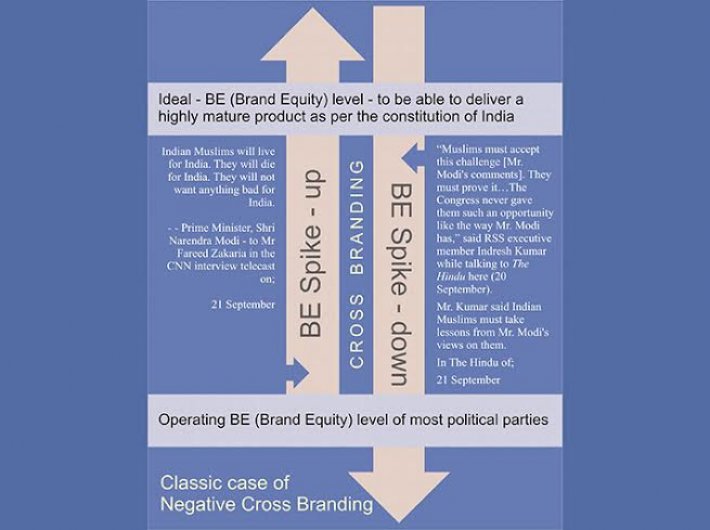
BJP wipes out a huge BE (Brand Equity) gained (for itself) in a day - in just a day. Alas it deprives us all – all Indians – a very good chance of reaping the benefit from the noble thought of the Prime Minister – Shri Narendra Modi.
That thought was indeed exemplary and highly actionable. For sure, the deeper sense in that must have kindled certain pleasant and a hopeful feeling in every Indian irrespective of the religion he/she belongs to. Early reports in the media on the responses on the thought proves its potential for working with it expansively towards creating a more harmonious nation – bolstering the pursuit of nation development for the happiness of all sections of the society.
In business, cross branding is tried between or with a set of brands belonging to a group or partnered with other brands for deriving relative brand advantages. Rarely cross branding is tried abusing rival brands notoriously for clinching a certain brand advantage. Cross branding in another lesser known sense refers to negative moves that diminish brand equity which essentially happen owing ignorance about branding and sheer greed.
In politics, negative cross branding is in fact the undying trait that is practiced rampantly between political parties and their factions and also at individual levels within the parties. In spite of the task of serving a highly mature product (rule by the nation’s constitution) politics seem to thrive on habitually negative cross branding owing to grossly immature market (larger ignorant populace) and willful immature competition (self-serving political parties).
But politics, as also true of most other countries – particularly the developing ones, is an indulgent occupation ‘for’ fulfilling the narrow interests of a very, very few, ‘by’ themselves, at the cost of vast populace.
Here, the border runs through a house. A man can sit down to a meal in one country and fall asleep in another, and nobody in Longwa gives it a second thought. The village is cut through by an invisible border line. For them, their village came first and then the border. The residence of the village chief
A prolonged dry spell across several parts of Maharashtra has revived old anxieties about Kharif crop losses, shrinking farm incomes and rising rural indebtedness. The concern is sharpest in Marathwada and Vidarbha, and it has placed the state’s agricultural relief and climate-resilience policies u
The Maharashtra Food and Drug Administration (FDA) has issued a comprehensive state wide compliance order tightening regulations governing health supplements, nutraceuticals, sports nutrition products and foods for special dietary and medical purposes. The order, issued by Commissioner of Food Safety, Tu
States across India are facing increasing fiscal pressures, with revenue expenditure growing faster than revenue receipts since 2022-23, largely driven by rising subsidies and transfers, according to the annual ‘State of State Finances 2026-27’ report released by PRS Legislative Research.
When a country’s factories become part of global supply chains, making parts or products that feed into goods sold around the world, the economy usually looks stronger. Output rises, exports grow, and technology improves. But the research behind this article [Bhayana and Nag, 2026] asks a harder qu
In today’s world, competition between countries is not limited to military strength or economic power. It also takes place through the stories countries tell about themselves and the way others describe them. Social media and digital platforms have made this competition faster and more visible. Whe










