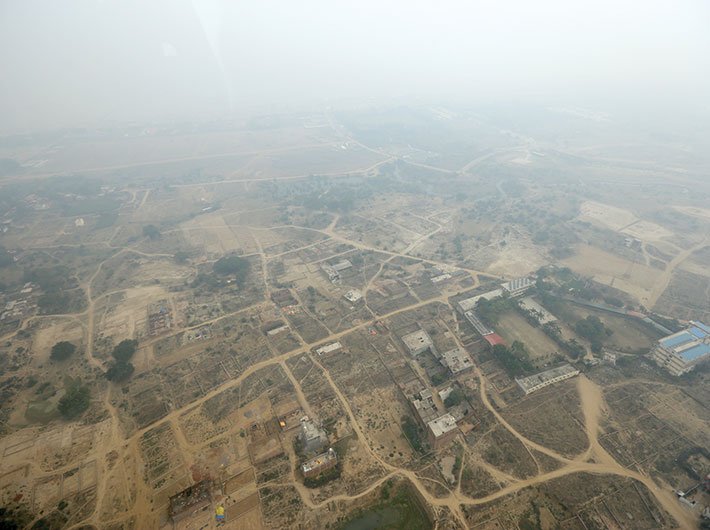
Despite continued efforts to computerise land records, the overall pace of transformation in records management system has been sluggish
The World Bank’s Ease of Doing Business report 2019 ranks India at 166 out of 190 countries in ‘Registering Property’, lower from last year’s ranking of 154. This, in spite of a 53-place jump in India’s overall ranking in the last two years alone!
In Mumbai, it takes a little less than three months to get a property registered in the name of the new owner post a purchase of land, while in Delhi it takes about two months. The World Bank calculates the Quality of Land Administration index, which is based on five dimensions – reliability of infrastructure, transparency of information, geographic coverage, land dispute resolution and equal access to property rights. On a scale of 0 to 30, Mumbai scored 9 in 2018 and Delhi 7.5. On the other hand, China’s index score is at 18, and the best performing country, Singapore’s at 29. Needless to say, India has a long way to go in revamping its land administration system.
It has long been established that clearly defined and enforceable property rights are indispensable for economic development. They are likely to reduce land related litigation, smoothen the process of land acquisition and improve the doing business environment. The Land Titling Bill was introduced in parliament in 2011, but it did not receive much traction from the states. Instead, improving the quality of land records and creating a system of clean and updated records, was consensually acknowledged as a pragmatic prerequisite. Launched in 2014, the Digital India Land Records Modernization Programme (DILRMP) is an overarching version of the previous efforts of the government in updating land records. It aims to develop a modern, comprehensive and transparent land records management system, minimise scope of land disputes, and facilitate gradually moving towards a conclusive land-titling system with government-guaranteed titles, from the existing presumptive-titling system. One of the most important positive externalities of an efficient and transparent land records database is the ease of doling out targeted development programmes for the governments.
In spite of continued efforts since the inception of computerisation of land records in the 1990s, and an impressive financial progress in terms of utilisation of funds, the overall pace of transformation in the land records management system at the ground level, has been sluggish. As per the DILRMP portal, even though computerised copies of Record of Rights are available in 86 percent of the villages through kiosks located at the tehsil offices, handwritten records continue to be used in 11 states and UTs. Studies conducted in Karnataka, West Bengal, Andhra Pradesh, and other states to assess their performance in improving land records, suggest that the computerised records obtained by villagers usually have discrepancies as the survey/re-survey work using modern techniques is completed in only 8.5 percent of the villages in the country. As a result, computerisation of records has largely meant converting paper records into digital format without proper verification. A key challenge that remains is one of ensuring real-time accuracy, that is, up-to-date land records, beyond mere formalities of computerisation and digitisation. The integration of textual records with spatial records is a significant problem in every state in India, as
the records remain to be updated and verified with the help of fresh cadastral surveys before digitisation.
The India Consensus Project undertaken by Copenhagen Consensus and Tata Trusts aims to identify the smartest solutions to some of India’s most pressing development challenges. The case in point is the study conducted by Pahle India Foundation as part of the project, for improving ease of doing business in the state of Rajasthan. The study recommends that the first step towards improving land records management system involves having clean and updated land records, which entails conducting fresh round of land surveys and digitisation of spatial records (cadastral maps) – a two-part intervention. This is supported by a cost-benefit analysis for implementing this intervention in the state.
The cost of survey/re-survey was determined from the assessment study of DILRMP in Rajasthan conducted by Lal Bahadur Shastri National Academy of Administration (LBSNAA), released in 2016 and revised according to the minutes of the meeting of the core technical advisory group for DILRMP. For the purpose of computing the cost of digiti-sation of maps, average of the costs incurred by six states that have successfully digitised nearly 97 percent of the maps was taken. The analysis also assumes an annual marginal increase in the existing operational costs of 0.22 percent of the fixed costs of implementing the proposed intervention. In coherence with the existing literature on the positive relationship between secured property rights and economic growth, the economic benefits from secured property rights were taken as an addition of 0.024 percentage point annually in the growth rate of the economy. The present values of costs and benefits are calculated for a period of 50 years to obtain the benefit-to-cost ratio. The results show that every Re 1 spent on surveying and digitising the cadastral maps will lead to an additional benefit of Rs 12 to Rajasthan’s economy.
Availability of land is of utmost importance for doing business in any economy. With respect to that, the most important functionality of the state land departments is to provide a smooth and simple process for land acquisition. According to the World Bank’s study, India has not undertaken any major reforms towards easier registration of property in the last decade.
At a time when private investment has slowed down and perceptions are crucial for investment decisions, states need to play their part and streamline the process of land acquisition and transfer. They must prioritise these overdue reforms, and make the land records management system clean and transparent.
Khurana is a senior research associate, Pahle India Foundationww
(This article appears in the March 31, 2019 edition)