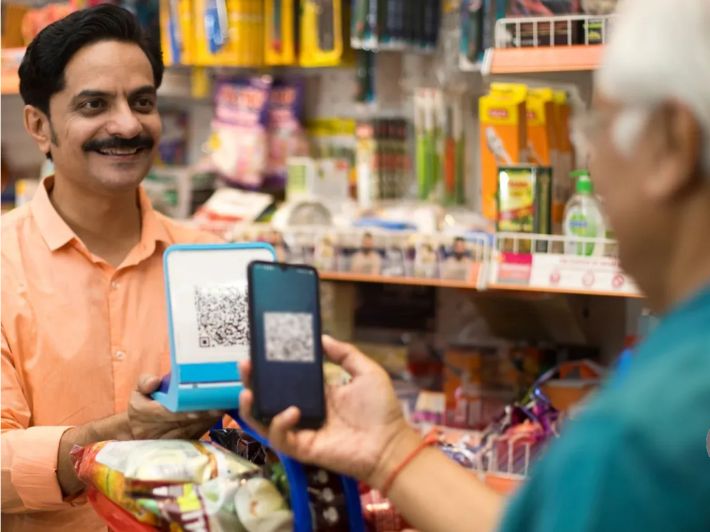
The story of UPI is not merely a penetration of technological innovation in the financial sector; it is a story of economic incentives, scale and network effects
The extraordinary transaction volumes and value (₹29.82 Lakh crore in August 2026 alone) of the Unified Payments Interface (UPI) have made it not only an Indian success story, but a global one. In 2024, UPI accounted for nearly 49% of the world’s real-time payment transaction volume, with more than 66 crore transactions processed daily. Its success has also become an important part of India’s international narrative on Digital Public Infrastructure (DPI), including BRICS Chairship 2026 where India highlighted the potential of digital technologies and DPI for inclusive development. From a technological innovation to an everyday digital public infrastructure, UPI has fundamentally changed how Indians pay. It is precisely this scale and ubiquity that makes the introduction of a Merchant Discount Rate (MDR) more than a question of a 0.4% charge on specified Person-to-Merchant (P2M) transactions above ₹2,000. It raises a larger question: How can UPI evolve towards financial sustainability without weakening the simplicity, affordability and trust that made it a global success?
Its interoperability and near-zero transaction costs established an easy proposition for both consumers and merchants. Every new merchant accepting UPI gave consumers another reason to leave their wallets behind, while every new user made it increasingly difficult for merchants to stay outside the network. This two-sided network effect between consumers and merchants helped turn UPI from a payment option into everyday infrastructure. The new MDR policy, therefore, brings a change to the economic incentives underlying the UPI ecosystem. For a network whose adoption has been strongly supported by its low transaction costs, even a limited price signal can influence the behaviour of merchants and, indirectly, consumers. Therefore, the broader economic question then becomes: What happens when a network built on “free” suddenly acquires a price?
Even though the finance ministry advised the incidence of the MDR should remain with the merchant, the formal payer and the economic bearer of a cost need not be the same. A merchant may absorb the charge, pass its economic incidence on to customers through higher prices, or encourage them to pay in cash or through another method. What begins as a fee on one side of the network can therefore alter behaviour on the other and, in turn, affect the network effect that helped drive UPI’s rapid adoption.
This is where UPI's two-sided nature becomes important. If some merchants become less willing to accept or encourage UPI, consumers may encounter a less ubiquitous network. If consumer usage subsequently weakens, the incentive for merchants to accept UPI can also decline. The effect of introducing a price may therefore extend beyond the individual transaction on which the MDR is levied.
Furthermore, the response will not be determined by the size of the MDR alone, but perception also influences how the network shall respond. For most users, the economics of UPI will be far less complicated than the payment ecosystem behind it. They will not distinguish between MDR and the various participants involved; they will simply ask one question: Is UPI still free? Merchants, meanwhile, will need to navigate which transactions attract MDR and which remain exempt. If that distinction is unclear, the policy could face a perception problem even without placing a direct charge on consumers. As a result, in a two-sided network, perception can itself shape behaviour. This neither means that MDR will necessarily weaken UPI nor that zero MDR is financially sustainable indefinitely. A payment network of UPI's scale requires continuous investment, and those costs must be financed somewhere. As a result, one must wonder what funds are being allocated via the government budgets.
Lastly the timing is also striking, and potentially intentional. The new MDR framework is set to take effect in October, just as India’s festive shopping season gathers pace with merchant activity and digital payments typically intensify. This matters because a period of heightened transaction volumes can reveal behavioural responses more quickly. With merchants having to comply with the new MDR framework and consumers engaging more frequently with digital payments, its effects could become visible not only through a potential decline in UPI transaction values, but also in the broader pattern of network participation. The timing could therefore make the festive season an early test of this framework on this two-sided network.
The real policy challenge, therefore, is to balance sustainability with adoption. UPI has evolved from a payment innovation into critical digital infrastructure, with its value extending well beyond any individual transaction. By reducing payment friction and expanding participation in the digital economy, the network generates a broader public value that cannot be captured by transaction revenues alone. The question, then, is not simply whether UPI should have a fee, but how its financing can evolve without weakening the network effects that made it so valuable in the first place.
The test of the new MDR framework should consequently go beyond revenue generation. Policymakers will need to watch merchant acceptance, transaction volumes, payment costs, consumer awareness, the continued participation of small businesses, and finally, if users continue to perceive UPI as predictable, affordable and easy to use.
Avinash is Research Assistant, Research and Information System for Developing Countries (RIS), New Delhi. Ishanvi Goyal is Research Assistant, RIS. Dr. Priyadarshi Dash is Associate Professor, RIS.