
The rise and fall of Tamil Maanila Congress

With an eye on May 16 assembly polls in Tamil Nadu, TMC joins hands with People's Welfare Front (PWF)

shivani

Shivani Chaturvedi | April 13, 2016 | Chennai

#Tamil Maanila Congress   #TMC   #assembly elections 2016   #tamil nadu elections   #GK Vasan  
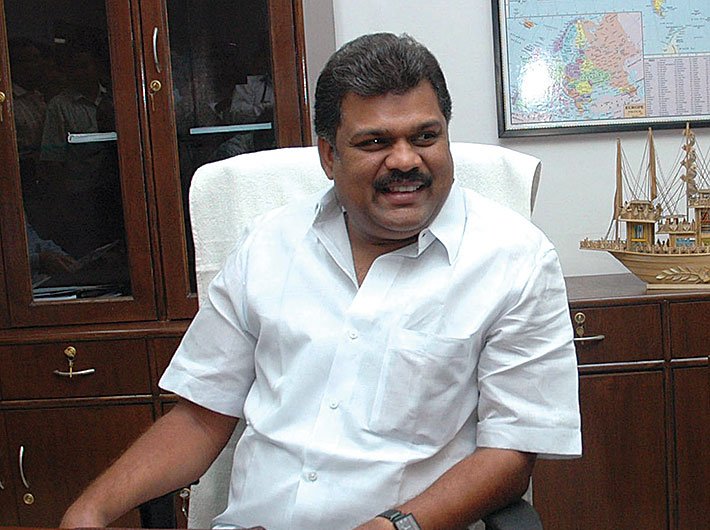
GK Vasan, president, Tamil Maanila Congress

Tamil Maanila Congress (TMC) – once a major political force in Tamil Nadu—seems to be losing steam today. With no following at the grassroot level, the party is practically a spent force.

 
Political observers feel that part of the TMC’s current plight comes from having a party president – GK Vasan – who came of age as a hothouse flower. “He never really learned how to work with political opponents or assuage the concerns of voters. The party which was once a force is now revived by a handful of leaders only for personal survival,” experts say.
 
Talking to Governance Now, novelist-journalist Vaasanthi, who has penned books like ‘Jayalalithaa: A Portrait and Cut-outs, Caste And Cine Stars: The World Of Tamil Politics’, says, “TMC is just a group of handful of leaders now. The party may gather just a few thousand votes in the coming assembly elections and [impact] the Congress votes.”
 
GK Vasan's father and veteran leader GK Moopanar had launched the TMC in 1996 after quitting the Congress. After Moopanar’s death, Vasan merged the party with the Congress. The DMK-Congress combine had swept the 2006 assembly polls winning 163 of the 234 seats. In November 2014, however, Vasan broke away from the Congress to revive the TMC.
 
Vaasanthi says that there was a genuine reason for late Moopanar to split from the Congress. There was considerable anger at the decision taken by the Congress high command under PV Narasimha Rao to  join hands with AIADMK for Lok Sabha and assembly elections. At that time, there was a growing unpopularity of Jayalalithaa government in Tamil Nadu. The centre was alerted about this by the state Congress unit but the local unit’s sentiments were ignored. “Moopanar was strong and he stood for a cause. But his son Vasan had no particular reason to split from the Congress. Actually, Vasan was holding ministerial post when he was in Congress,” she says.
 
In her book, ‘Cut-outs, Caste And Cine Stars: The World Of Tamil Politics’, Vaasanthi notes that the TMC had emerged as the third major political force in Tamil Nadu, eclipsing the Congress (I). “But besides harping on ‘bringing back Kamaraj rule’, by which it meant a corruption free rule, the TMC did not seem to have a clear ideology,” says Vaasanthi in her book.
 
Even now the TMC dreams of bringing the rule of Kamaraj back as an alternative to the Dravidian parties, despite knowing that it is not easy.
 
Admitting that bringing back Kamraj rule may be a difficult task, GK Vasan says, “The party revived just 14 months back, though we have long political experience. And we always had the goal to revive Kamaraj rule. But for that to be possible, we have to have a greater party structure and greater party percentage, which we don’t have at present.”
 
“Lifestyle of the poor, downtrodden, minorities, SC/ST should be improved and that would also be one of our main goals. Other than this, the party would focus on education, agriculture, industry and health,” Vasan told Governance Now.
 

Comments


Other News

New pathways for tourism growth

Traditionally, India’s tourism policy has been based on three main components: the number of visitors, building tourist attractions and providing facilities for tourists. Due to the increase in climate-related issues and environmental destruction that occurred over previous years, policymakers have b

Is the US a superpower anymore?

On April 8, hours after warning that “a whole civilisation will die tonight,” US president Donald Trump, exhibiting his unique style of retreating from high-voltage brinkmanship, announced that he agreed to a two-week ceasefire with Iran. The weekend talks in Islamabad have failed and the futur

Machines communicate, humans connect

There is a moment every event professional knows—the kind that arrives without warning, usually an hour before the curtain rises. Months of meticulous planning are in place. And then comes the call: “We’ll also need a projector. For the slides.”   No email

Why India is entering a ‘stagflation lite’ phase

India’s macroeconomic narrative is quietly shifting—from a rare “Goldilocks” equilibrium of stable growth and contained inflation to a more fragile phase where external shocks are beginning to dominate domestic policy outcomes. The numbers still look reassuring at first glance: GDP

Labour law in India: A decade of transition

The story of labour law in India is not just about laws and codes, but also about how the nation has continued to negotiate the position of the workforce within its economic framework. The implementation of the Labour Codes across the country in November 2025 marks a definitive endpoint in the process. Yet

Time for India to build genuine resilience in energy security

There is a strip of water barely 33 kilometres wide between Iran and Oman that connects the Persian Gulf to the rest of the world`s oceans. For most of India`s history, it was a distant geographic fact. Since late February, it has been a kitchen problem.   The Strait of Hormuz. T


Archives

Current Issue

Opinion

Facebook Twitter Google Plus Linkedin Subscribe Newsletter

Twitter






