Learning Begins with Wellbeing
The future of education is often discussed through the lens of classrooms, technology, and learning outcomes. Yet one of the most critical drivers of a child’s ability to learn remains surprisingly overlooked: their health.
Before a child can learn, participate, or thrive in a classroom, they must first be healthy enough to do so. While children may be enrolled in schools, many are unable to engage consistently due to recurring but preventable health concerns. Lack of access to basic and preventive healthcare continues to be a significant reason behind missed classes, reduced concentration, and declining participation in classrooms.
Dental problems, infections, nutritional deficiencies, poor hygiene, and untreated health conditions can quietly affect a child’s focus, confidence, energy levels, and overall learning experience. Even when children are physically present in classrooms, these challenges often limit their ability to actively participate and absorb what is being taught. These conditions remain significantly under-addressed in broader conversations around educational outcomes.
For the CSR community, this gap represents both a responsibility and an opportunity.
Moving Beyond Traditional Education Support
Corporate social responsibility in education has traditionally focused on building infrastructure such as classrooms, toilets, and libraries, or on improving learning outcomes through remedial coaching and digital interventions. While these investments are valuable, they often rest on an unexamined assumption: that the child sitting in that classroom is physically well enough to learn.
Preventive healthcare challenges this assumption by asking a more fundamental question: is the child healthy enough to fully participate in their education, and does the school environment support their wellbeing?
Research across low- and middle-income countries has consistently shown that children with access to regular health screenings, hygiene awareness, and nutritional support demonstrate better attendance, improved concentration, and stronger academic performance. When a child’s body is not in distress, their mind is freer to engage, interact, and learn.
The impact extends beyond academics. Access to clean toilets, safe drinking water, and basic hygiene essentials is also deeply linked to dignity, especially for children navigating school environments every day.
This is why preventive healthcare is emerging as one of the most consequential and underleveraged levers available to CSR practitioners working in the education space.
Strengthening the Gaps within School Ecosystems
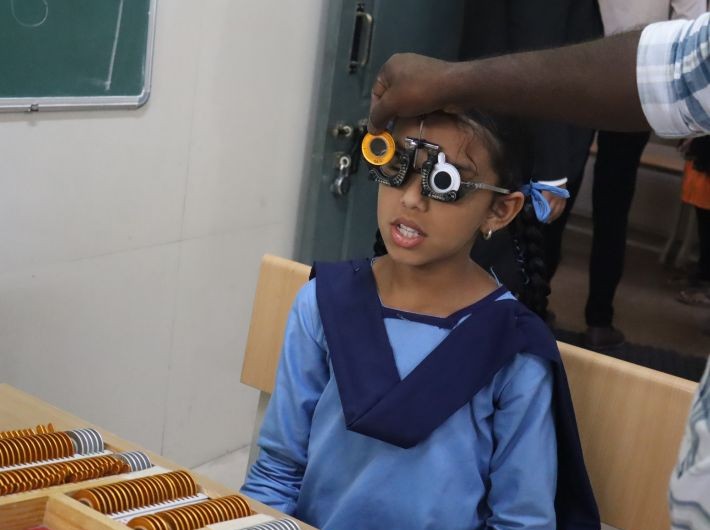
India’s public health infrastructure, while improving, still struggles to reach school-age children in a structured and preventive manner. Annual health check-ups in government schools are mandated but are often inconsistently delivered. Dental hygiene, eye care, menstrual hygiene awareness, and early detection of conditions such as anaemia or skin infections rarely receive sustained attention.
The result is that many children continue to carry preventable health burdens silently, often only becoming visible when they escalate into serious concerns.
This is precisely where thoughtfully designed CSR programmes can play a transformative role, not by replacing government systems, but by complementing and strengthening them. By embedding preventive healthcare within school ecosystems, such initiatives can normalise health and wellbeing as an essential part of the learning experience.
The most effective models go beyond one-time health camps. They are structured, year-round, and multi-dimensional, combining screenings with hygiene education, nutrition support, access to clean water and sanitation, and infrastructure maintenance. This enables schools to evolve into spaces that support holistic child development, rather than functioning solely as centres for academic instruction.
In rapidly growing urban communities, where overcrowding, pollution, water scarcity, and sanitation challenges intersect, preventive healthcare within schools becomes even more critical.
What Sustained Community Engagement Reveals
School ecosystems are shaped by far more than academics alone. Factors such as hygiene, access to clean water, sanitation infrastructure, and preventive healthcare practices can significantly influence a child’s overall wellbeing and ability to participate consistently in the classroom.
Preventive healthcare interventions within schools are often most effective when implemented as part of regular, ongoing engagement rather than through one-time activities. Simple measures such as handwashing awareness, access to hygiene essentials, and age-appropriate health education can help reinforce healthier habits over time.
The importance of enabling infrastructure also becomes evident in school environments. Functional toilets, access to clean drinking water, maintained handwashing stations, and clean classrooms all contribute towards creating spaces where children are able to attend school more regularly and engage more confidently in their learning journeys.
Periodic health screenings, nutrition awareness initiatives, and consistent upkeep of school facilities can further support student wellbeing by helping address preventable health concerns before they become larger disruptions to attendance and participation. These interventions are often most impactful when delivered consistently and in collaboration with school communities and local stakeholders.
In rapidly growing urban communities, where overcrowding, sanitation challenges, and water access issues can place additional pressure on school ecosystems, preventive healthcare becomes increasingly important as part of creating supportive learning environments.
Over time, preventive healthcare initiatives can also influence habits and awareness beyond schools, encouraging conversations around hygiene and wellbeing within families and communities as well.
Building Long-Term Impact through Preventive Care
As ESG frameworks mature and CSR strategies become increasingly outcome-oriented, there is a growing imperative to measure impact beyond outputs. The question is no longer just how many schools were reached, but whether children in those schools experienced meaningful improvements in wellbeing, participation, and learning.
Preventive healthcare represents one of the most sustainable and long-term investments CSR can make because its impact compounds across education, confidence, wellbeing, and future economic participation. It is measurable, scalable, and capable of creating systemic change that outlasts individual programme cycles.
Healthy schools create stronger learning environments. Stronger learning environments create more confident children. And confident children ultimately build more resilient communities.
Preventive healthcare, therefore, is not an adjacent CSR intervention. It is foundational to the future we are collectively trying to build.
Shaina Ganapathy is Head of Community Outreach, Embassy Group