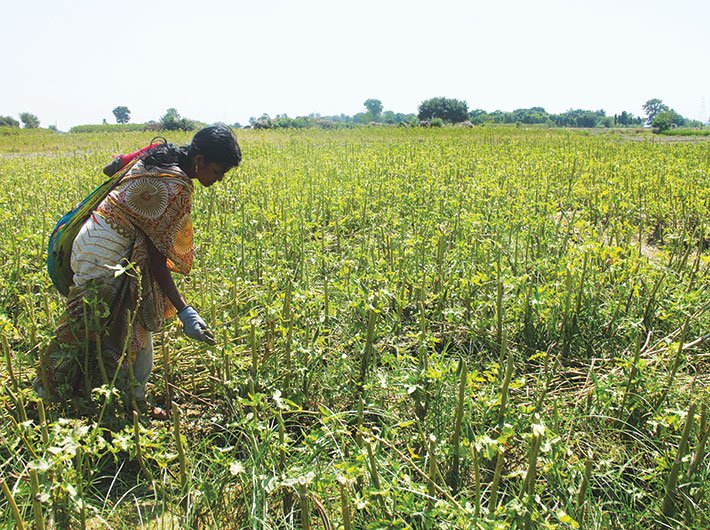
It’s not about whether we can afford to value women’s work. It’s whether we can afford not to
As India enters 2026 amid optimism about growth and Viksit Bharat 2047, a harder question remains unanswered: who is this growth actually for? Currently, India is the most populous country, with the largest labour force and labour market. This huge working-age population, if invested properly in health, education, and skills, could generate a demographic dividend that could multiply income, savings, investment, and growth. Yet, the most important and underutilised human resource in India remains women, who are yet to contribute to development with their full potential.
As India speaks confidently about harnessing its demographic dividend, it cannot ignore the gender dividend, without which this growth narrative remains fundamentally incomplete. In reality, the demographic dividend itself is deeply gendered. Behind all the celebratory language of optimism lies a stubborn truth: Indian women still earn less, work harder, and remain unfairly disadvantaged in the economic story we tell ourselves. One of the most striking failures is India’s persistent underinvestment in women’s health, education and skill leaving them vulnerable in economic and development arena. Social and structural discrimination compound this further, creating a vulnerability cycle from which escape is extremely difficult.
At this point, the existence of structural inequality isn’t up for debate – the data has spoken, time and again. Yet, women's contributions still need to be justified – especially when they are poorer, from Dalit, Adivasi, or other marginalised communities, or living at the fringes of the formal economy. The real question we need to face is why, after so many years of new policies, improved education, and promises of equality, women’s work still has to be defended and explained. Why is it that men’s labour is taken as the backbone of economic value, while women’s contributions still need to be justified?
The problem isn’t about missing numbers or gaps in the labour market. It’s about the deeper lack of empathy built into the way our institutions and workplaces function. Gender inequality isn’t something that will just dissolve as the economy grows; it is rather a part of the system itself. The World Inequality Report 2024 by the World Inequality Lab makes this clear, framing gender disparity as one of the main pillars of global inequality, alongside income, wealth, and climate vulnerability.
Inequality beyond Income: What the World Inequality Report Reveals
The World Inequality Report 2024 lays bare just how concentrated global wealth has become. The numbers are staggering: the richest 10% of people earn more than the other 90% combined, while the poorest half of humanity together takes home less than 10% of total global income. And when it comes to wealth rather than income, the gap turns into a chasm, with the top 10% owning nearly three-fourths of all global wealth, while the bottom half of the world owns barely 2%. Perhaps the most startling figure is this: fewer than 60,000 people, the richest 0.001%, now control three times more wealth than half of the world’s population put together. It’s a statistic that reads like fiction, but it’s the reality of our times.
Within this sharply tilted economic landscape, gender inequality makes the imbalance even worse. Women remain overrepresented in low-paying jobs, informal work, and among those shut out of asset ownership. They are marginalised in terms of access to quality education, nutrition, and employment opportunities, and even when they engage in the labour market, they are usually paid less than their male counterparts. The report highlights a telling fact that women collectively earn just about 28% of the world’s labour income, a number that has barely moved since 1990. All this reminds us that growth alone doesn’t guarantee fairness and that rising GDP hasn’t meant rising justice for half the world’s people.
Tangible inequality in intangible Institutional Framework
Institutions generate and sustain inequality through norms and regulations that systematically reduce women’s ownership, empowerment, representation, and opportunities. As a result, women’s underrepresentation in the economy, society, and politics is not accidental but deeply institutionalised. Women’s bargaining power is structurally constrained by institutions that limit their presence and voice across key decision-making spaces—economic, political, and social.
This institutional exclusion weakens women’s ability to influence policies, schemes, and laws that govern collective life. For instance, although the Indian Constitution guarantees equal opportunities to all women, representation in political institutions tells a very different story. According to the Inter-Parliamentary Union, India ranked 149th out of 193 countries in 2019 in terms of women’s parliamentary representation, lagging behind neighbouring countries such as Nepal, Pakistan, and Bangladesh. The Global Gender Gap Report 2024 further highlights this imbalance, ranking India 65th out of 146 countries in women’s political empowerment, with a low score of 0.251 out of 1. India performs particularly poorly in women’s representation in parliament (rank 117, score 0.172) and in ministerial positions (rank 132, score 0.069).
This underrepresentation becomes especially critical because these very institutions are responsible for framing policies, welfare schemes, and legislative acts meant for the broader population. When women are largely absent from these spaces, whose voices shape public priorities? In the 2024 general elections, women constituted only 13.65% (74 out of 543) of Lok Sabha members—a slight decline compared to earlier elections. Such exclusion ensures that women’s concerns remain peripheral, reinforcing cycles of inequality and marginalisation.
Across mainstream institutions—political, economic, and social—women’s representation remains strikingly low. More importantly, within this limited representation, women from poor, Dalit, backward, and minority communities are almost invisible. This layered exclusion compounds institutional inequality, as those most vulnerable are systematically denied both voice and power. Thus, inequality is not merely an outcome of institutions; it is produced, normalised, and reproduced by them.
Working More, Earning Less: The Gendered Burden of Labour
One of the clearest takeaways from the World Inequality Report 2024 is both simple and unsettling: when you count all the hours women work, not just at their jobs, but also at home, they actually work more than men. On average, women put in about 53 hours a week, compared to 43 for men. The difference comes from unpaid tasks like cooking, cleaning, and caregiving, the essential but invisible work that keeps families and societies running. Further, Time Use survey 2024 shows that women’s share is around 95% of total household level daily work as per time use. Even women who are employed are compelled to perform domestic work.
And despite this extra labour, women earn far less. Looking only at paid work, their hourly wages average around 61% of what men make. But when unpaid work is factored in, the gap becomes staggering: women’s effective earnings fall to just 32% to men’s. The tragedy is that this invisible work isn’t a side story to the economy; it’s the backbone of it. Care work keeps households functioning, allows men to participate in the paid workforce, and fills in where public systems fall short. Yet it rarely appears in national statistics or economic policy debates. The result is a silent inequality, one that continues to undervalue the very work that holds everything else together.
India’s low female labour force participation must be understood within this structural context. Female participation fell to one of the lowest levels globally in 2017–18, at around 17.5%, and although recent years have seen some improvement, much of this increase has occurred in agriculture and informal sectors. This indicates not a genuine expansion of decent employment opportunities, but rather a continued reliance on low-paid, insecure, and undervalued forms of work. State-level variations further reflect deep regional and structural inequalities, reinforcing the idea that women’s exclusion from quality employment is not accidental, but systemic.
Claudia Goldin and the Structural Roots of Gender Inequality
Claudia Goldin, who won the Nobel Prize in Economics in 2023 for her work on women and the labour market, shows that gender inequality in pay is less about women’s talent or education and more about how modern work is organised. Today’s labour markets heavily reward “greedy jobs” that demand long, inflexible hours and constant availability, a model historically built around men without major caregiving duties. Women, especially mothers, are more likely to seek flexibility, reduce hours, or take career breaks, and they are punished not only with lower total earnings but also with lower hourly pay for doing so. Studies of professionals show that men and women start with similar salaries, but gaps widen sharply after the first child, as women shift to more flexible roles and face a steep “motherhood penalty”.
This pattern helps explain why global gender gaps barely move even as women surpass men in education. Women still receive only a bit over 28% of total labour income worldwide, a share that has barely increased over the past three decades. At the same time, they perform around 2.5 to 3 times more unpaid care and domestic work than men, which keeps many out of higher-paid, full-time jobs.
Goldin’s key message is clear: women are not less productive; they are rather squeezed by systems built for an ideal worker with no caregiving responsibilities. Real equality will require changing how work is structured and valued, so flexible and caregiving-compatible jobs do not come with a built-in pay penalty.
India’s Gender Pay Gap: Evidence of Systemic Undervaluation
In India, the gender pay gap isn't some hidden issue; it's glaring and backed by hard numbers. Reports from the World Economic Forum's Global Gender Gap Index (2024, 2025) show Indian women earning just Rs 40 for every Rs 100 men make, putting the country near the bottom globally for economic parity between genders.
Even in formal jobs, the disparity holds firm. Business Standard data from the 2024 index confirms women's incomes lag far behind men's, despite more women getting educated and entering the workforce. National surveys like the Periodic Labour Force Survey (PLFS) paint the same picture across salaried roles, casual work, and self-employment, showing that women earn less in nearly every category, even when doing similar jobs.
Blaming it on women choosing lower-pay gigs misses the point. Occupational segregation, biased hiring, and blocked promotions are the real drivers. This isn't just stories or outliers; it's baked into the system, clear as day in the stats.
Why Gender Inequality Is an Economic Failure
Gender inequality gets talked about as a "social problem," but that's selling it short. It is a massive economic failure too. Studies show that fixing gaps in jobs and pay could pump trillions into global GDP, and India, with its population dividend, has the most to gain. Those benefits won't happen on their own. Workplaces need redesigning with real empathy for caregiving duties, family life stages, and the barriers women face every day.
One clear starting point lies in how caregiving is institutionally treated. While Indian law mandates 26 weeks of paid maternity leave under the Maternity Benefit Act, and government employees can combine this with other accrued leave, compliance in the private sector remains weak and uneven. If the state already accepts that caregiving limits women’s ability to work continuously in its own workforce, then it must go a step further and mandate the private sector to implement these standards sincerely, along with proper childcare and eldercare facilities, instead of leaving them to voluntary or uneven practice. And for the vast informal sector, where most women are employed and where employer enforcement is unrealistic, caregiving support cannot be left to firms at all. It must come through public provisioning—universal childcare centres, and social security systems that recognise care work as a collective economic responsibility, not a private burden.
Overall, we need tough changes like strict equal pay enforcement, open wage info, big investments in childcare and eldercare, flexible hours without pay cuts, and a mindset shift that counts caregiving as real economic work. Equality won't just grow out of economic booms; it has to be built right into our systems.
Women’s economic inequality isn’t about personal shortcomings or lack of drive. It’s the result of systems that routinely undervalue what women do, whether paid or unpaid. Until economies face this head-on, any progress will stay shallow and shaky. In the end, it’s not about whether we can afford to value women’s work. It’s whether we can afford not to.
Dr. Vaishnavi Sharma is a freelancer researcher and economist. She did her PhD from Indira Gandhi Institute of Development Research (IGIDR), Mumbai.
Dr. Balhasan Ali is an Assistant Professor in the School of Public Policy and Governance at Tata Institute of Social Sciences (TISS), Hyderabad.
Views expressed are personal.