Countdown to budget 2011-2012

Where are the children in our budget?

trithesh

Trithesh Nandan | February 25, 2011


Do Indian budgets ever consider children? No, according to different civil society groups working on children rights.

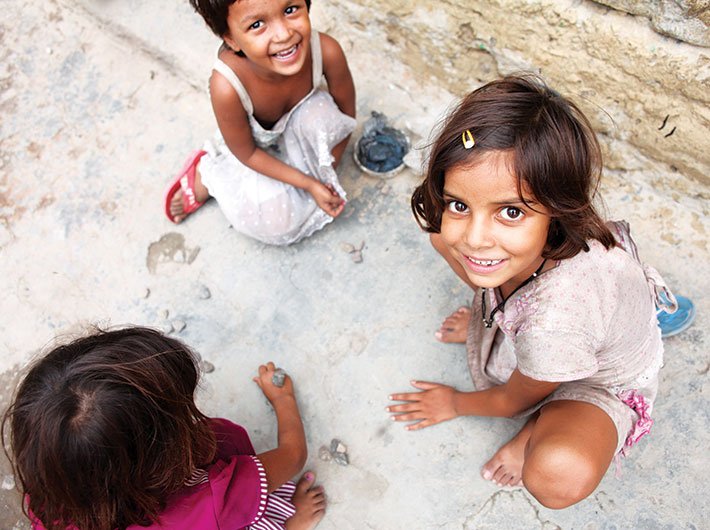
Different surveys say India is home to one-fifth of world’s children, but their condition needs a lot of introspection. Most children in India suffer from starvation, hunger, disease, are sexually abused, and drop out from the primary schools. Our country is also home to the highest number of underweight children in the world. Compared to the developed and many developing countries, infant mortality rate (IMR) in India is still high.

The country is also home to the largest number of child labourers. Save the Children says there are 13 million children engaged in child labour; unofficial estimates put this figure at over 40 million. 

Despite such chronic situation, are we paying enough attention to children? A report by Haq – Centre for Child Rights, Delhi based NGO working for child rights in the country said that children remain out of focus at all levels of governance, including the general budget. “Children have received an average of 3.75 percent of the union budget,” said the report released in November last year.

What will the budget 2011-12 provide 440 million children in this country?

New Delhi based think-tank, Centre for Budget and Government Accountability (CBGA), has highlighted some of the gaps between the governmnet planning and the welfare of children. In a recent report, it said, there is mismatch between outlays recommended by the planning commission and allocations made in the union budget (2007-08 to 2010-11).

CBGA cited few examples to show how union budgets (2007-08 to 2010-11) have neglected child welfare, specially in child health and protection even after the planning commission recommended increased spendning during the eleventh five year period.

•    The total plan allocation in the budget stands at 57.5 percent in the national rural health mission (NRHM) of the quantum of funds recommended by the planning commission.

•    The total plan allocation in the budget stands at 65 percent in the integrated child development services (ICDS) of the quantum of funds recommended by the planning commission.

Both the programmes have direct impact on children’s growth. But the implementation has not been satisfactory. Other programmes have also not produced desired results. In budget outlays since 2007, “total provisioning has been only 12 percent of the recommended outlay for rashtriya madhyamik shiksha abhiyan (RMSA), 36 percent for teacher training.” Only government schemes like sarva shiksha abhiyan (SSA) and mid day meal (MDM) fared better with 77 percent and 66 percent respectively.

According to CBGA, “It reflects the lack of seriousness on the part of the government to implement the planning commission’s recommendations pertaining to allocation of funds for some of the important programmes/schemes in the social sectors.”

Children got just 4.1 percent allocations in 2010-11, though it was an increase from 2009-10 (3.7 percent). CBGA terms this increase as "miniscule".

The CBGA in charter of demands for union budget 2011-12 has recommended government to step up overall priority for child-specific schemes in the budget. It also asked government to address children’s malnutrition, which is a cause of concern for India.

“Allocation for ICDS should be enhanced significantly in 2011-12 in order to ensure universal coverage with good quality of services,” CBGA charter said.

Comments


Other News

In Varanasi, fringe expansion vs. core heritage

For centuries, the urban framework of Varanasi was defined not just by its relationship with the sacred Ganga but by its multifaceted network of urban commons. Historic kunds, seasonal talabs (ponds), and open maidans served as the city’s basic ecological infrastructure. Th

What ails India`s skill development ecosystem

India’s skill development programmes were designed with a goal to make the young population ready with market-required skills and competencies, and to provide them with better employment opportunities. Yet the outcomes have fallen short of that goal: though over 1.6 crore individuals were trained acr

Cabinet passes resolution applauding PM on term record

The Union Cabinet on Wednesday passed a resolution marking June 10, 2026, as a historic milestone in the journey of Indian democracy applauding Narendra Modi for becoming the longest-serving elected PM of the country. By establishing a record of 4,399 days of continuous service as an elected PM, he has s

Testing the teachers, moving the goalposts

A teacher was appointed in 1999, before the Right to Education (RTE) Act came into force, and appointed under the rules that existed at that time. She gave the necessary test, passed it, passed the interview, and was appointed. Over the next 26 years, she taught thousands of children, faced transfer orde

`Focus on infra, reforms, digital connectivity has created strong foundation for growth`

In a step towards the operationalisation of the Bharat Audyogik Vikas Yojana (BHAVYA), union minister of commerce & industry Piyush Goyal launched the BHAVYA Portal on Monday in New Delhi.   Addressing the gathering, Goyal said that the BHAVYA scheme will adopt a competit

Govt, RBI announce major reforms to attract FPI

The finance ministry on Friday announced a series of measures aimed at enhancing the ease of investment for individual Persons Resident Outside India (PROIs) and Foreign Portfolio Investors (FPIs), and to attract stable long-term foreign capital flows.   Building on the recent in



Archives

Current Issue

Opinion

Facebook Twitter Google Plus Linkedin Subscribe Newsletter

Twitter