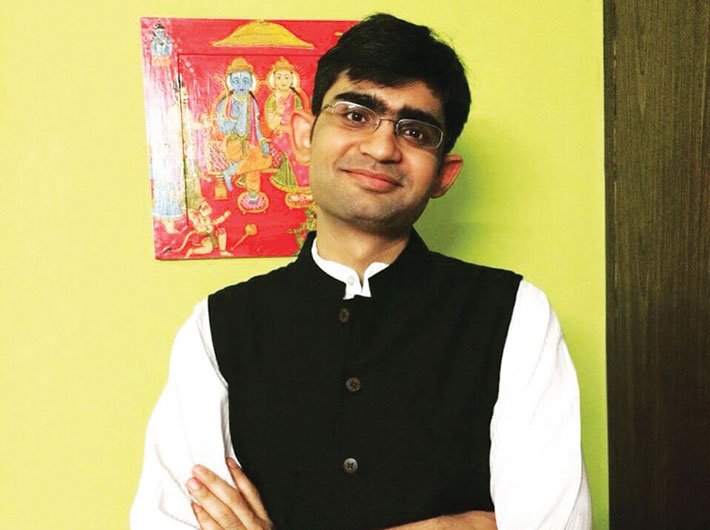
Because it allows you to understand the pulse of economy. That’s the reason behind the AIIMS doctor’s counter-intuitive move
Dr Sri Vatsa Sehra cracked the civil services examinations, considered one of the world’s toughest, and did the unthinkable by deciding against joining the much sought after Indian Administrative Service (IAS). Instead, the doctor from AIIMS told Pankaj Kumar that he opted for the Indian Revenue Service (IRS) as it provides an amazing opportunity not just to administer the complex tax structure but also to learn the entire economic framework of the country.
Congratulations on clearing the UPSC exam again. But why are you not opting for the IAS?
Thank you. To answer this question I will have to tell you a little bit [about the] background.
Last year I got selected in my first attempt at the UPSC examination, securing a rank of 148. I was allocated the Indian Revenue Service (income tax) which was among my top three service preferences – the first two being the Indian Foreign Service (IFS) and Indian Administrative Service (IAS) respectively.
I appeared for the exam again in December and joined the service [IRS] immediately after. By god’s grace, I was able to clear the mains exam this year in the results declared in February. I was reluctant to appear for the interview as I had started to immensely enjoy the training and I was looking forward to my future in the service. Some seniors and friends prevailed upon me to sit for the interview and not to close my options early on. I was lucky enough to score rank 92 in the final list, which should be good enough to join the IAS.
But I have decided against joining the IAS as I have learned and have started liking the IRS(IT). Like most candidates, I too did not have much knowledge about other services like IRS(IT) before joining.
IRS(IT) provides an amazing opportunity not just to administer the complex tax structure, but also to learn about the entire economic framework of the country. Officers of this service interact with and analyse income tax assessees from all spheres of the economy, from backgrounds as diverse as small, single proprietorship businesses to large multinational corporate houses, from the salaried class to self-employed professionals, from NGOs to local authorities and evaluating exempt agricultural income. This service allows you to understand the pulse of the economy.
Also, income tax, contrary to popular perception, is not just a revenue earning tool for the country, it is also a form of regulating the domestic economy as well as our economic interactions with the rest of the world through transfer pricing, international taxation, etc. Activities which aid in the development of the economy are incentivised through the means of deductions and exemptions, and detrimental activities are penalised. IRS(IT) thus enables you to acquire expertise in almost all aspects of the economy.
Many IRS or IPS officers often take the exam again so that they can get the IAS. What are your reasons for not opting for the same?
I am a firm believer that everyone knows where their true ability lies, and in this they should follow their heart. That is the best way of excelling and doing justice to society. Excelling in the IRS requires a sharply analytical mind, a genuine liking and curiosity about the financial and commercial aspects of governance. I feel that I am up to this challenge and that my contribution to nation-building will be best by working in this service.
There is a notion that IRS is a good service to make money. What do you have to say about this allegation?
This notion is absolutely wrong. This is a misconception often propagated by rumour mongers. The department has taken measures recently which have ensured that not only corruption is eliminated, but perception in this regard improves as well. With the introduction of computerised processing of income tax returns, computer-aided scrutiny selection and e-assessment, I believe that this problem will soon become history.
Can you explain what purpose will be served by your continuing in the IRS? Don’t you think you can serve people better [by becoming a collector]?
Like I said, every service has its role in the government. The IAS being directly responsible for implementation of government schemes is the most visible in this regard. It has a very important role to ensure a clean and efficient service delivery and participatory governance in conjunction with institutions of local self-government. The revenue services have an equally important role in the government through the dimensions of revenue collection, tax administration, international taxation, regulation of transfer pricing and deputations in enforcement and policy making.
Do you believe that IRS should be treated at par with IAS?
Yes, definitely. Not only the IRS, I believe all civil services should be treated at par, whether it be the IPS, IFS, IAS, or railways. Since the competition is very tough, everyone who clears the civil services examinations has similar competency and merit. The difference in marks between the candidates is miniscule. Also, different services provide you with different specialisations, viewpoints and capabilities.
I believe that the country must utilise this diverse pool of expertise, talent and merit in the civil services to its fullest extent. Only then can we achieve the high ideals of our constitution and remain on the path of development.
You have been a doctor and that too at the AIIMS. What prompted you to go for civil services?
I come from a family of doctors. To take up medicine after class 12 was for me but a natural progression. I managed to secure admission in the prestigious AIIMS, New Delhi. I pursued my MD in ophthalmology in AIIMS as well.
However, during my MD I realised that as a doctor you can only have a limited impact on society. For example, I could prescribe and learn to treat complex diseases like retinal detachment and glaucoma. Yet when I would prescribe medicines, I could not ensure that the patients were able to afford them, or for the medicines which were required to be kept in refrigeration, I could not ensure if patients had access to this luxury or electricity in their native areas. I realised that most diseases are but symptoms of a larger socio-economic malaise plaguing our society. Thus to have the opportunity to work on a larger canvas and be involved in nation-building, I decided to go for the civil services.
Can you tell us how you managed to succeed in the exams?
I managed to succeed in the UPSC exam through a mixture of dedication, consistency and hard work. Another very important factor was support from my wife. This exam is like a marathon. It requires daily study for about nine to 12 months. You only have to study about four-five hours per day, that is enough to complete the syllabus and study the newspaper daily, but all consistently.
[email protected]
(The interview appears in the June 16-30, 2016 issue of Governance Now)