
Eight Indian states have more poor than 26 African countries

Half of the world’s poor live in the South Asia

GN Bureau | July 17, 2010
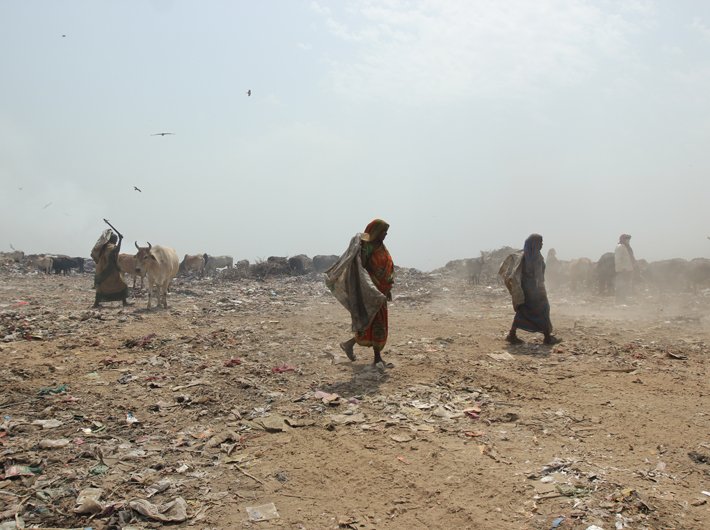


There are more poor in eight Indian states tahn there are in 26 African countries, according to a report brought out by the United Nations Development Programme (UNDP) and Oxford university.

The study says that there are more poor people as per Multidimensional Poverty Index (MPI) in eight Indian states - a total of around 421 million in the states of Bihar, Chhattisgarh, Jharkhand, Madhya Pradesh, Orissa, Rajasthan, Uttar Pradesh, and West Bengal than in the 26 poorest African countries combined (410 million).

The study mentioned that the population of the poorest state Bihar with 95 million people exceeds the total of nine of the ten poorest African countries.

The study reported that the Scheduled Tribes (ST) have the highest MPI (0.482), almost the same as Mozambique and the Scheduled Castes (SC) have a headcount of 66 percent and their MPI is a bit better than Nigeria. “58 percent of other Backward Castes are MPI poor,” the report added.  

However the report mentioned that the states like Delhi, Kerala, Goa, Punjab and Himachal Pradesh have least number of poor people in India. Other ‘top ten’ states with the least number of poor in India are Tamil Nadu, Uttarakhand, Maharashtra, Haryana and Gujarat.

The study analysed that South Asia and Africa are two places where poverty are widespread as half of the world’s poor live in South Asia (51 percent or 844 million people) and one quarter in Africa (28 percent or 458 million).

The MPI has taken into account a range of factors or “deprivations” at the household level: from education to health outcomes to assets and services to calculate the number of poor people around the world. The multidimensional approach to assessing poverty has been adapted in Mexico. Now Chile and Colombia are also trying to use the same figure to calculate the number of poor people.

The new index will come in the forthcoming edition of the UNDP Human Development Report in October this year and will the Human Poverty Index, which had been included in these reports since 1997.

Read the report

Comments


Other News

In Varanasi, fringe expansion vs. core heritage

For centuries, the urban framework of Varanasi was defined not just by its relationship with the sacred Ganga but by its multifaceted network of urban commons. Historic kunds, seasonal talabs (ponds), and open maidans served as the city’s basic ecological infrastructure. Th

What ails India`s skill development ecosystem

India’s skill development programmes were designed with a goal to make the young population ready with market-required skills and competencies, and to provide them with better employment opportunities. Yet the outcomes have fallen short of that goal: though over 1.6 crore individuals were trained acr

Cabinet passes resolution applauding PM on term record

The Union Cabinet on Wednesday passed a resolution marking June 10, 2026, as a historic milestone in the journey of Indian democracy applauding Narendra Modi for becoming the longest-serving elected PM of the country. By establishing a record of 4,399 days of continuous service as an elected PM, he has s

Testing the teachers, moving the goalposts

A teacher was appointed in 1999, before the Right to Education (RTE) Act came into force, and appointed under the rules that existed at that time. She gave the necessary test, passed it, passed the interview, and was appointed. Over the next 26 years, she taught thousands of children, faced transfer orde

`Focus on infra, reforms, digital connectivity has created strong foundation for growth`

In a step towards the operationalisation of the Bharat Audyogik Vikas Yojana (BHAVYA), union minister of commerce & industry Piyush Goyal launched the BHAVYA Portal on Monday in New Delhi.   Addressing the gathering, Goyal said that the BHAVYA scheme will adopt a competit

Govt, RBI announce major reforms to attract FPI

The finance ministry on Friday announced a series of measures aimed at enhancing the ease of investment for individual Persons Resident Outside India (PROIs) and Foreign Portfolio Investors (FPIs), and to attract stable long-term foreign capital flows.   Building on the recent in



Archives

Current Issue

Opinion

Facebook Twitter Google Plus Linkedin Subscribe Newsletter

Twitter

